One injured by debris after ballistic missile intercepted over Riyadh
One resident was injured and a home and vehicle sustained limited damage after debris fell following the interception of a ballistic missile over Riyadh, Saudi Civil Defense said.
One resident was injured and a home and vehicle sustained limited damage after debris fell following the interception of a ballistic missile over Riyadh, Saudi Civil Defense said.





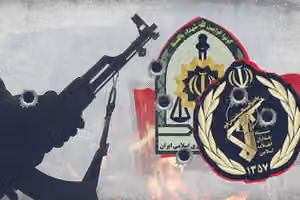
A women’s Basij commander and a police officer were killed in separate attacks on Wednesday in Iran’s southeastern Sistan-Baluchestan province, adding to a series of deadly shootings, bombings and armed clashes in the region.
The IRGC-linked Tasnim news agency said a commander of a women’s Basij unit in Mehrastan County was shot dead outside her home.
Tasnim attributed the killing to what it described as militants linked to the United States and Israel, but did not identify a group or provide evidence supporting that assertion.
The Basij is a paramilitary organization operating under Iran’s Islamic Revolutionary Guard Corps.
Police vehicle attacked in Mehrastan
In a separate incident in the same county, unidentified gunmen attacked a police vehicle, killing First Sergeant Mohammad Ali Shahriari, Tasnim reported.
The outlet did not provide details about the attackers, the circumstances of the shooting or whether anyone else was wounded.
The two killings came a day after major armed confrontations elsewhere in Sistan-Baluchestan that left casualties on both sides, according to Iranian authorities and local reporting.
Six killed in operation near Zahedan
The Revolutionary Guards said on Tuesday that five members of an alleged kidnapping cell and one of its personnel were killed near Zahedan, the provincial capital.
The IRGC Ground Force’s Quds regional headquarters said its forces located the group in the Kurin area after an engineer working on construction projects west of Zahedan was abducted a day earlier.
It said five members of the group were killed, the hostage was freed and one IRGC member was killed.
According to the statement, the kidnappers had links to armed groups and intended to take the engineer into a neighboring country. It did not identify the group or the country.
An earlier Tasnim report had put the number of people killed in that operation at three.

More than 20 Fatemiyoun casualties reported
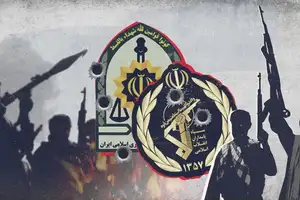
Separately, Haalvsh, which covers developments in Sistan-Baluchestan, said more than 20 members of the Fatemiyoun were killed or wounded Tuesday during more than seven hours of fighting in the mountainous Chah Ahmad and Arzan Tak areas of Taftan County. The figure could not be independently verified.
Citing local sources and eyewitnesses, Haalvsh said armed men who had taken positions in the mountains opened heavy fire on a group that included Fatemiyoun fighters traveling on motorcycles.
Fatemiyoun is an Iran-backed Shiite militia composed largely of Afghan fighters and organized with support from the Revolutionary Guards. Its members have fought alongside Iranian forces in regional conflicts.
Haalvsh said reinforcements later arrived with more than 40 vehicles as well as reconnaissance and combat drones. It also reported mortar and heavy-weapons fire in the surrounding mountains.
The identities and affiliation of the armed men involved in the fighting remained unclear.
Series of attacks on security personnel
Sistan-Baluchestan, which borders Pakistan and Afghanistan, has seen repeated attacks on police and military personnel in recent weeks.
On October 9, Iranian state media reported that Nosrat Eftekhari, a senior provincial police official, was killed in a roadside bombing near Zahedan.
A day earlier, a police commando was killed in an armed attack near Nosratabad, while a separate attack on a vehicle carrying Iranian Army personnel near Nikshahr killed another serviceman.
On September 23, an armed confrontation in Saravan killed Hossein Zarifi, a commander with the IRGC’s Sajjad base, according to the Guards’ Quds regional headquarters. Haalvsh separately reported that another intelligence official was killed and at least 13 other personnel were wounded.
At least five Fatemiyoun members were also reported killed in an armed attack near Zahedan on October 2.
More than 90 killed since March - HRANA
The US-based Human Rights Activists News Agency said this week that at least 94 people were killed and 33 wounded in 63 armed incidents across southeastern Iran between March 31 and October 10.
HRANA said attacks on patrol vehicles and military convoys were the most common incidents it documented, followed by targeted shootings.
It also reported increased use of mines, rocket-propelled grenades and other heavier weapons by armed groups, while forces of the Islamic Republic used drones, artillery and armored vehicles in several operations.
The group said the People’s Fighters Front, an alliance formed in December 2025 that includes Jaish al-Adl and several smaller Baluch armed groups, had taken responsibility for six of the incidents it documented. Most attacks remained unattributed or could not be reliably linked to a particular group, HRANA said.
Sistan-Baluchestan, one of Iran’s poorest provinces and home to much of the country’s Sunni Baluch minority, has long seen armed confrontations between the Islamic Republic’s security forces and Baluch armed groups. The frequency and intensity of such incidents have increased in recent months.
Iranian wheat farmers told Iran International that delayed government payments for their previous harvest are leaving them short of cash for autumn planting, while inflation and the falling rial erode the value of money they are still owed.
Farmers described having to pay cash for seeds, fertilizer, pesticides, labor, irrigation and other costs while waiting for the government to settle payments for wheat already delivered.
A farmer in the Sanjabi area of the western province of Kermanshah told Iran International that the delays were making it increasingly difficult to cover essential expenses.
"Most of my farming expenses have to be paid in cash, while the government pays us our own money in installments," the farmer said.
Another farmer in western Iran said inflation and the rial's depreciation meant that delayed payments were worth considerably less by the time they arrived.
"By the time they pay us everything they owe for our wheat, gold and dollar prices and inflation will have multiplied, and the value of our money will have fallen sharply. Which official cares about the difference?" the farmer told Iran International.
Even when farmers eventually receive the full amount originally agreed, the money may buy considerably less than it would have when they delivered their crop.
Between 10% and 30% of payments owed to wheat farmers remain outstanding in different provinces, according to Ghadam Borbor, deputy head of Iran's National Wheat Foundation.
Rial depreciation cuts dollar value of wheat payments by 36%
Earlier this year, the government set its guaranteed wheat purchase price for the previous agricultural year at between 475 million and 495 million rials per metric ton, depending on the type and quality of the crop.
At the time, the dollar traded at 1,663,700 rials on the open market, making the highest guaranteed price equivalent to approximately $298 per ton.
At the current open-market rate of about 2.615 million rials to the dollar, that same 495 million-rial payment is worth about $189, a decline of roughly 36%.
The figures illustrate how the depreciation of the rial has reduced the dollar value of farmers' earnings while the government's nominal debt has remained unchanged.
The actual loss of purchasing power depends on changes in domestic prices and agricultural production costs, but farmers say they are increasingly unable to afford supplies needed for the next harvest.
Billions owed as government cites administrative delays
Borbor said the new 1405–1406 agricultural year (2026–2027) had begun without a guaranteed wheat purchase price and with preparations for autumn planting still incomplete.
Iran's government says it has settled most of its debts to wheat farmers but has not announced a deadline for paying the remainder.
According to figures released by the Targeted Subsidies Organization, the government body responsible for administering subsidy payments, on October 9, approximately 3,920 trillion rials ($1.50 billion at the current open-market rate) of the 4,100 trillion rials ($1.57 billion) owed to wheat farmers had been paid.
That left about 180 trillion rials ($69 million) outstanding.
Hassan Norouzi, head of the organization, said some payments were being held up by discrepancies between its records and those of the Ministry of Agriculture.
He said the remaining payments depended on correcting information in the government's administrative system.
For farmers who need the money for autumn planting, that means continuing to cover new production costs while government agencies resolve the discrepancies.
The Ministry of Agriculture has set wheat seed prices at between 720,000 and 756,000 rials ($0.28–$0.29) per kilogram, at least 45% above the highest guaranteed government purchase price of 495,000 rials ($0.19) per kilogram for harvested wheat.
Although seeds prepared for planting differ from ordinary harvested wheat, the price difference illustrates the financial burden facing farmers as they prepare for the new season.
A farmer in Nourabad told Iran International that the situation was becoming increasingly difficult.
"We have to buy seeds with cash, even though the government owes us money. Under these circumstances, what motivation is left to continue?" the farmer said.
Farmers turn to middlemen for immediate payment
The payment delays have prompted some farmers to sell their wheat to middlemen at prices below the government's guaranteed purchase rate.
Peyman Alemi, head of Iran's Chamber of Agricultural Guilds, said farmers urgently needing cash were selling wheat to intermediaries for between 380,000 and 440,000 rials ($0.15–$0.17) per kilogram.
That compares with the government's highest guaranteed purchase price of 495,000 rials ($0.19) per kilogram.
The difference means farmers accepting lower prices for immediate payment are sacrificing part of their potential income to cover mounting expenses.
Alemi warned that continued delays could discourage farmers from selling wheat to the government and potentially reduce domestic production in the next agricultural year.
Lower government purchases or falling domestic wheat output could complicate efforts to maintain strategic wheat reserves and increase reliance on imports, particularly as the rial's depreciation raises the cost of purchasing grain from abroad.
Bread prices climb despite unpaid farmers
The payment delays also come as bread prices rise across Iran, adding to the financial pressure on households.
Under the latest officially approved prices in Tehran, a loaf of sangak, a traditional Iranian flatbread, costs 155,000 rials (about $0.06), while barbari bread costs 100,000 rials (about $0.04).
Prices are considerably higher at bakeries operating outside the subsidized pricing system.
A review of prices recorded in October showed some varieties of sangak selling for as much as 500,000 rials ($0.19) in Tehran and 400,000 rials ($0.15) in the northeastern city of Mashhad.
The increases mean consumers are paying more for bread while some farmers who produced the wheat are still waiting for their earnings.
However, the current rise in bread prices cannot be directly attributed to delayed government payments, and the potential effects on future wheat production and imports have yet to materialize.
New planting season begins without guaranteed prices
Farmers face further uncertainty because the government has yet to announce the guaranteed purchase price for wheat from the current agricultural year.
The lack of a confirmed price makes it harder for farmers to calculate expected income and decide how much they can afford to spend on the new crop.
Many are therefore beginning the new planting season with part of the money for their previous harvest still unpaid, production costs that must largely be met in cash and no certainty over what the government will pay for their next crop.
Even if the government settles all outstanding payments, farmers may not recover the purchasing power lost during months of delays or the opportunities missed to buy agricultural supplies earlier.
Their previous wheat harvest has already been delivered to government storage facilities, but some producers are still waiting to be paid.
Agricultural officials warn that continued delays could undermine farmers' willingness to plant wheat or sell it to the government, potentially creating further challenges for Iran's domestic wheat supply.
Iran’s stock market is raising eyebrows with a sustained rally even as the country’s economy struggles with dwindling foreign-currency inflows, energy shortages and uncertainty over the war.
The divergence is particularly striking after the International Monetary Fund on Tuesday forecast Iran's economy would contract 7.6% in 2026, far more sharply than the 0.3% decline expected across the Middle East and Central Asia.
Against that backdrop, the strength of Tehran's stock market raises a question: are investors betting that the worst is approaching an end, or simply running out of places to protect their money?
Recent analyses in Iranian media offer competing explanations, ranging from expectations of an Iran-US agreement to the immediate pressures of dwindling foreign currency and energy shortages.
Dollars in short supply
Iran's oil exports have effectively stopped under the US blockade, while non-oil exports including steel and petrochemicals have also fallen. Delays in repatriating export earnings have further restricted the supply of hard currency.
Fararu identifies dwindling foreign-exchange inflows, energy shortages and uncertainty as the three principal pressures on the economy. Khabar Online puts the currency shortage at the center of its analysis, pointing to a 35,000-toman rise in the free-market dollar over the past month.
The widening gap between official and market exchange rates has added to volatility, while businesses dependent on imported machinery and raw materials face higher costs and tighter access to foreign currency.
Energy shortages are compounding those problems. Years of underinvestment have left Iran struggling to meet domestic demand, while wartime damage to infrastructure has added pressure on production.
Hovering over both is uncertainty about what comes next. The economic consequences of renewed fighting would differ dramatically from those of a negotiated settlement, making long-term investment all but impossible and pushing businesses and households toward assets that can preserve value.
Why are stocks rising?
That makes the performance of Tehran's stock market more striking.
Rouydad24 interprets its wartime strength as a sign that investors increasingly expect an Iran-US agreement. On that reading, equities are looking beyond present economic conditions toward possible de-escalation, sanctions relief and improved access to international markets.
But there is another explanation that requires no assumption that investors know where negotiations are heading: they may simply have nowhere better to go.
With the rial losing value, foreign currency increasingly scarce, property relatively illiquid and bank deposits losing purchasing power to inflation, domestic equities can become attractive even when confidence in the underlying economy is weak.
A rising stock market, in other words, may say less about optimism over Iran's economic prospects than about the scarcity of alternatives for preserving wealth.
That would also help reconcile what otherwise appear to be conflicting signals. The currency market reflects immediate scarcity and fear of further deterioration, while stocks may reflect either hopes for political relief or an effort to escape the declining value of cash.
Different markets, different futures
The IMF's latest forecast represents another substantial downgrade from the 5.4% contraction it expected as recently as July. Iranian government data has meanwhile shown GDP contracting 10% year-on-year in the spring, with the downturn extending beyond the oil sector.
For businesses and investors, much now depends on which of two very different futures emerges: renewed conflict and prolonged restrictions on oil exports, or de-escalation that begins restoring access to foreign currency and international trade.
Iran's markets may therefore be pricing different risks rather than delivering contradictory verdicts. The currency market reflects a shortage that already exists. The stock market may be looking toward political relief or reflecting the capital having nowhere else to go.
Iran's surge in attacks on commercial shipping in the Strait of Hormuz may be an attempt to exploit US restraint ahead of the midterm elections and undermine a recovery in Persian Gulf oil shipments, experts told Iran International.
Twelve vessels were attacked between October 5 and 11, including six on Sunday alone, and on Tuesday a tanker and a container ship were struck by unknown projectiles, according to UK Maritime Trade Operations (UKMTO), marking one of the most intense periods of attacks since the war began.
Rear Admiral Ali Azmaei of Iran’s Islamic Revolutionary Guard Corps Navy warned Tuesday that Iranian forces would sink US warships approaching the Strait of Hormuz, saying they were “counting down” to a possible confrontation in the strategic waterway.
The escalation comes as the US blockade has effectively halted Iran's crude oil exports, while other Persian Gulf producers have increasingly succeeded in moving their oil through the strategic waterway, threatening to erode one of Tehran's remaining sources of leverage. Brent crude settled at $105.69 per barrel Tuesday, snapping three consecutive sessions of gains, as traders weighed continued Middle Eastern supply disruptions against other market developments.
Charlie Brown, a maritime security expert with United Against Nuclear Iran (UANI), believes the timing may be linked to President Donald Trump's announcement that Washington would not launch new attacks against Iran before the November 3 midterm elections.
"I think Trump signaled it, right? He said he wouldn't attack until the election," Brown told Iran International.
"So, you know, now they're taking that as word, I guess. And testing it and taking advantage of the situation."
Brown said the absence of direct American retaliation for the latest strikes may be encouraging Tehran to push further.
Two senior Iranian officials separately told Reuters that Tehran had changed the type and pace of its attacks, with one goal being to influence the US midterm elections and frustrate efforts to lower global oil prices.
"Every attack that goes without a response probably encourages a follow-on attack," he said.
The calculation extends beyond the military confrontation. Although the United States is less dependent on Persian Gulf oil than many Asian economies, disruptions affect global energy prices and American consumers.
Brown suggested Tehran may be exploiting that vulnerability at a politically sensitive moment, when rising gasoline prices could increase pressure on the White House.
An October surprise?
Shahram Kholdi, a historian of Iran, sees a potentially more ambitious calculation: an attempt to engineer an "October surprise" that could put Trump under pressure ahead of the elections.
Kholdi believes Tehran may have used the relative lull in hostilities to preserve its remaining military capabilities, replenish weapons stockpiles and prepare for a politically advantageous moment to escalate.
"It seems to me that they are headed towards that October surprise moment," he told Iran International.
But Kholdi warned that the strategy could backfire if Tehran moves beyond commercial shipping and attempts to strike American naval assets with advanced missiles.
The danger, in his assessment, is that Tehran may mistake temporary American restraint for an unwillingness to retaliate.
Iran threatens recovery in Persian Gulf oil flows
The latest attacks threaten to reverse a recovery in Persian Gulf oil shipments that had begun to weaken Tehran's ability to disrupt global energy supplies.
Despite the war, producers had managed to increase exports through Hormuz, aided by US protection measures, larger tankers and costly arrangements to move cargo through the threatened waterway.
Oil flows out of the Persian Gulf averaged approximately 15.5 million barrels per day in September, their highest level since the war began, according to recent data by Kpler.
But shipments have since fallen sharply. Just 2.9 million barrels passed through Hormuz on October 11, the lowest daily volume recorded this month, according to Kpler.
The figures underscore the vulnerability of the recovery, although daily flows can fluctuate significantly and do not alone establish how much of the decline resulted directly from the attacks.
Brent crude settled at $104.77 per barrel Tuesday after three consecutive sessions of gains, as traders weighed continued Middle Eastern supply disruptions against other market developments.
Tom Sharpe, a former Royal Navy commander, said the earlier recovery in oil volumes had masked the dangers facing commercial vessels.
"We're at sort of pre-war levels of oil, but in far fewer ships," he told Iran International.
Sharpe described large tankers making high-risk passages with enhanced American protection, sometimes sustaining strikes before reaching safer waters and transferring cargo to other vessels.
In some cases, he said, crews are also transferred after completing the most dangerous part of the journey.
"It's not working. Iran is still striking," Sharpe said of the enhanced protection measures.
According to the Joint Maritime Information Center, US-facilitated vessel movements through Hormuz averaged approximately 29 per day over a recent 72-hour period, compared with a historical average of roughly 138 daily transits.
Undermining confidence in shipping
Brown said Iran does not need to stop every vessel to undermine confidence in the safety of the waterway.
Exceptionally high tanker charter rates have encouraged some operators to continue despite the danger, but others may decide the financial rewards are not worth risking their vessels and crews.
"There will always be some that take the risk because the profits are so big right now," he said.
The threat has also spread beyond the strait, with vessels attacked near Oman's Sohar anchorage and elsewhere in the Persian Gulf.
Brown believes Iran continues to receive Russian and Chinese intelligence assistance, potentially including satellite imagery and vessel-tracking information that does not rely on ships' Automatic Identification System signals.
"I'm confident that that's still happening on a daily basis," he said.
The escalation comes amid renewed diplomatic contacts between Tehran and Washington, with Iranian officials saying the United States has accepted some of Tehran's conditions for de-escalation but that its response remains insufficient.
Trump said Tuesday that Washington would make a decision on Iran “very soon.”
"We'll make a decision on Iran very soon," Trump told reporters, describing Iran as a "failed country" with no economy, inflation of 300 percent and a government unable to pay its troops.
The United States continues enforcing its maritime blockade, while Trump has said Washington will not resume strikes against Iran before the November 3 elections.
Sharpe noted that the surge in attacks on shipping is occurring alongside intensified strikes by the Iran-backed Houthis against Saudi Arabia.
"There's an Iranian and Houthi escalation going on here that's not being matched. How long will that carry on for?" he said.
The simultaneous pressure on Persian Gulf shipping and Saudi infrastructure risks widening the confrontation at a time when diplomatic efforts have yet to produce a settlement.
The stakes for Tehran are particularly high.
Kpler data shows no Iranian crude oil or condensate loaded onto tankers throughout September, leaving the Islamic Republic increasingly dependent on its ability to threaten shipments from neighboring producers to maintain leverage over Washington.
But the strategy carries a significant risk: an attack causing substantial casualties or striking US military assets could trigger the kind of direct American retaliation Kholdi warned Tehran may be underestimating.
Iran on Tuesday summoned Britain’s ambassador and threatened to reconsider diplomatic relations after London blamed the IRGC for a suspected plot targeting a US-used airbase and Britain’s intelligence chief warned of growing Iranian threats to military sites.
The confrontation stems from a September 27 security incident near RAF Fairford in Gloucestershire, southwest England. Five British men were initially arrested after three suspicious vans were stopped near the base. Police found gasoline in the vehicles but no explosives.
Two more men, including a dual British-Iranian national, were subsequently arrested. All seven have been released on bail.
US officials told Reuters that the suspected plot involved a possible Iranian drone attack. Trump later said a threat linked to Iran prompted Washington to withdraw its B-1 bombers from Fairford, adding that the United States knew who had made the threat.
The Trump administration believes the Iranian threats were intended to kill US personnel and destroy American aircraft, AP reported Tuesday, citing a US official. British officials have not confirmed that assessment, and it remains unclear whether those arrested near Fairford were connected to the alleged drone threat.
RAF Fairford has been used by US bombers involved in strikes against Iran. Tehran has previously said bases used to attack its territory could be considered legitimate targets.
Fairford fuels Iran-UK confrontation
British Prime Minister Andy Burnham said Monday the suspected plot was “highly likely” coordinated in Iran and “almost certainly” directed by the Islamic Revolutionary Guard Corps. Home Secretary Shabana Mahmood said investigators believed an individual based in Iran was behind the incident.
Britain summoned Iran's ambassador and sanctioned two Iranian nationals over alleged involvement in hostile operations abroad.
Tehran responded Tuesday by summoning British Ambassador Hugo Shorter. Iranian Foreign Ministry official Alireza Yousefi rejected the accusations, demanded evidence and warned that Tehran would “seriously reconsider” bilateral relations if Britain failed to substantiate its claims.
The diplomatic confrontation came as MI5 Director General Ken McCallum warned Tuesday that Iran was increasingly turning its attention to military sites and other “harder targets” in Britain.
McCallum said the Fairford incident was “not unique” and that more than 50 people had been arrested in Iran-linked operations in Britain over the previous 12 months. He said Iranian activity had increasingly extended beyond traditional targets such as opponents of Tehran to Jewish sites and military installations.
Britain, the United States and 27 other countries also backed London's attribution of Iranian involvement in the Fairford incident, saying it followed a broader pattern of alleged Iranian attacks and hostile activity abroad.
Iran has denied involvement in the Fairford incident and rejected British accusations of directing hostile operations in the country.