US sends Patriots to Saudi, Qatar amid possible renewed Iran war — Axios

The US military has sent two additional Patriot missile batteries to Saudi Arabia and Qatar in recent weeks to protect key oil and gas facilities amid the possibility of renewed US military operations against Iran, Axios reported, citing two US officials and a regional source.
One Patriot battery was deployed to Saudi Arabia to protect a key oil facility, while another was sent to Qatar to defend a natural gas facility, according to the report.
Axios said the deployments were intended to reassure the two US allies that Washington would help protect their energy infrastructure if President Donald Trump decides to resume major combat operations against Iran.
Saudi and Qatari leaders had urged Trump in August not to launch strikes targeting Iranian energy infrastructure, fearing Tehran could retaliate against their own oil and gas facilities, the report said. US officials told Axios those concerns were a key factor in Trump opting at the time for an economic pressure campaign instead.
The deployments come as Washington sends additional warships, troops and aircraft to the Middle East. The USS Theodore Roosevelt carrier strike group and the Makin Island Amphibious Ready Group are among the forces heading to the region.


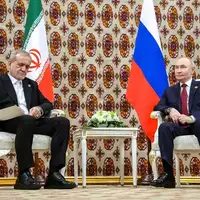





A leaked Russian government roadmap obtained by Fox News put the share of Russia-Iran trade settled in national currencies at 68%, far below Moscow’s public claims that nearly all bilateral trade had shifted to rubles and rials.
The push to settle bilateral trade outside the dollar has drawn renewed US scrutiny. Last month, the US Treasury imposed new sanctions on Russia’s VTB Bank, in part for its role in creating a ruble-rial settlement system.
On Thursday, Treasury also targeted the Russia-linked A7 Network, describing it as a “shadow banking network” used by Iran to evade sanctions. It said A7’s sub-agents formed a money-laundering and sanctions-evasion mechanism connected to Russian illicit finance that Iran used to move funds, including for oil sales and weapons procurement.
Both governments have spent years insisting they don’t need the dollar, but the amount of trade settled in each other’s currencies isn’t a number you need to announce unless you’re trying to convince people that sanctions aren’t working.
Sanctions leverage only works if people believe it is there. To convince people otherwise, Russia has since 2019 announced a rising share of its Iran trade settled in rubles and rials: from 40 percent to 50, 60, 80, until Putin himself claimed 95 percent in January 2025.
The Islamic Republic communicates in broad proclamations rather than Soviet-style quarterly statistical reports: its central bank governor said in November 2024 that Iran had “completely excluded the dollar” and traded only in rubles and rials.
But the internal plan, approved in September 2024, put it at 68 percent, with a goal of 71 by 2026.
The reality doesn’t fit the claim
The Kremlin’s claim of a working ruble-rial payment system is harder to sustain when the two sides have an imbalance in trade, because that can leave one side without enough of the other’s currency to meet demand. Russian figures put 2023 bilateral trade at about $4 billion, comprising $2.7 billion in Russian exports and $1.3 billion in Iranian exports.
The two countries also simply do not like holding each other’s currencies. Russia’s central bank described its problem with currencies like the rial in 2023: they are “often non-convertible or only partially convertible,” carry “higher volatility,” and trade in markets too thin to hedge.
Iranian exporters, according to Iran’s Resistance Economy Think Tank, refuse rubles when they can, and if they accept them sell them for dirhams as quickly as possible.
The usual fix for a shortage like this is a central bank swap line, which Iran and Russia signed in July 2024. Two years on, however, the only money either side has publicly put behind it was a 1 billion-ruble deposit, worth about $10 million at the time, at VTB to cover “possible ruble shortages,” and any further draw would leave Russia holding rials as collateral — a currency it cannot sell at home and that has lost 29 percent against the ruble since January.
An Iranian MP says Russia has offered a $20 billion ruble loan that Iran has not taken.
The trade goes around it
If the ruble-rial system worked as advertised, Iranian merchants wouldn’t be paying exchange houses in Dubai and Turkey to reach Russian suppliers.
Iranian MP Meysam Zohourian told Fars News in June that before the war even essential goods bought from Russia were routed through the UAE and settled in dirhams.
Fars asked in August why merchants still settle Russia trade through exchange houses and trustees in Turkey.
Iran’s central bank governor, Abdolnaser Hemmati, called his June trip to Moscow “an operational mission to untie the knots” in foreign trade, starting with letters of credit for Iranian merchants.
What the number counts
Whatever number is claimed, it doesn’t measure money moving between Russia and Iran — it’s a bookkeeping instrument, recording which currency left a Russian company’s account, not what currency reached the other side.
If a Russian importer’s bank takes rubles out of its account, converts them to dollars, and pays the seller in dollars, Russia’s Central Bank counts that as a ruble settlement, despite a contract priced in dollars and a seller that receives dollars.
The number also leaves out trade arranged without conventional cross-border payments. When countries are cut off from the international financial system, it’s easier to move goods than money, and Russia and Iran have increasingly turned to barter and swap arrangements.
Moscow has made barter official policy. The economy ministry issued a government manual for barter contracts in 2023, and a Russian economist says Iran is the one trading partner where barter accounts for a real share of the trade.
Russia and Iran have also pursued energy swaps. Swap deliveries of petroleum products had begun by late 2022, while the two sides were discussing a broader arrangement covering up to 5 million tons of oil and 10 billion cubic meters of gas a year. Trade conducted through such arrangements would not necessarily appear in the national-currency settlement percentage.
What the mismatch tells you
Russia and Iran’s coordination is real, but both countries overstate the impact. The public number, announced for propaganda value, doesn’t even match the government’s internal goal.
And the mechanism is in reality a cobbled-together assortment of poorly working, mismatched payment arrangements that don’t serve either side well except in their fight against the international financial system.
Iran on Thursday was linked by US and Israeli officials to the Flydubai incident, the second such case after British police opened a probe into possible Tehran involvement in a suspected RAF Fairford plot and arrested a dual UK-Iranian national.
US President Donald Trump raised the prospect of an Iranian connection, saying investigators were examining whether Tehran had a role in the incident and that, based on what he was hearing, he believed there could be one.
“We're working on it right now,” Trump said. “I would say the answer based on what I'm hearing, is yes. But we're working on it right now.”
Asked whether the co-pilot could have been placed on the flight by Iran’s Revolutionary Guards or radicalized separately, Trump said: “It could have been. Yeah.”
Trump also warned Iran of retaliation if investigators established its involvement.
“Oh they’ll be hit, very hard, don’t worry,” he told reporters Thursday. “You just ask them. They know what happened. They’ll be hit very hard.”
Israeli agencies investigate
Israel’s Mossad and Shin Bet intelligence and security agencies are also investigating the incident and whether the Omani co-pilot acted alone or was directed by others, according to i24News. Israeli officials said no Iranian involvement had been identified so far, and an initial assessment was that the co-pilot likely acted alone.
Prime Minister Benjamin Netanyahu said Thursday that the co-pilot had undergone Islamist radicalization but that it was too early to determine whether he had connections to Iran.
“I think it's too early to say whether he had any connections with Iran or with anyone else,” Netanyahu said, adding that he expected more clarity within days.
The flight from Dubai to Tel Aviv was diverted to Saudi Arabia after the co-pilot allegedly stabbed the captain and tried to bring down the aircraft. Passengers subdued him, and a reserve crew aboard the plane landed it safely in Saudi Arabia.
The United Arab Emirates has launched its own investigation into the circumstances and motives behind the incident, including whether it involved terrorist intent, prior planning or outside direction.
Iran role in UK airbase plot
The Flydubai developments came days after a separate investigation in Britain raised questions about possible Iranian involvement in a suspected plot involving RAF Fairford, an airbase used by US bombers in operations against Iran.
British counter-terrorism police on Thursday arrested a dual UK-Iranian national in London on suspicion of preparing terrorist acts as part of the investigation. Police said they were examining “all possible angles — including possible foreign state involvement.”
The arrest followed the detention Sunday of five British men in their 20s near RAF Fairford. They were arrested on suspicion of terrorism and explosives offenses but were later released on bail.
Police said petrol was found in the vans used by the men but no improvised explosive devices were discovered.
British Prime Minister Andy Burnham said Wednesday there were “strong indications that Iran played a part in what happened over the weekend at RAF Fairford,” while stressing that the case remained an ongoing police investigation.
Iran denies involvement
Foreign Minister Abbas Araghchi rejected Burnham’s assertion, pointing to the release of the initial five suspects on bail.
“I can confirm Iran's belief that releasing supposed terrorists working for foreign states really says it all,” Araghchi wrote on X. “You're barking up the wrong tree.”
Iran summoned Britain’s ambassador in Tehran on Thursday to protest the accusations, with the Foreign Ministry describing them as baseless.
The Flydubai and RAF Fairford investigations are separate, and authorities have not established Iranian responsibility in either case.
The US Treasury sanctioned Iran’s automotive and rail sectors Thursday, expanding its campaign to some of the country’s largest industrial companies as Washington seeks to choke off Tehran’s sources of revenue with Operation Economic Outcast.
The Treasury said the sectors provide important sources of revenue and logistical capacity and are intertwined with IRGC patronage, trade-based money laundering and sanctions evasion.
“The Iranian regime's ability to fund its war machine and inflict terror on the world has been severely diminished thanks to Operation Economic Outcast,” Treasury Secretary Scott Bessent said.
“Today’s action directly targets Iran’s enablers and lays the groundwork for the United States and our partners to drain the regime’s revenue once and for all.”
The automotive designations include Iran Khodro Company, SAIPA, Iran Khodro Diesel, Pars Khodro, Zamyad and Niroo Motor Shiraz.
Iran produced nearly 1.1 million vehicles in 2024, according to the International Organization of Motor Vehicle Manufacturers. Iran Khodro and SAIPA together account for more than 90% of the country’s domestic auto market.
The Treasury described the sector as a major remaining source of revenue for Iran and said Niroo Motor Shiraz had supplied more than 6,000 motorcycles for plainclothes intelligence agents working with the IRGC and Basij militia.
Foreign companies were also sanctioned for supporting Iran’s auto industry, including firms based in Indonesia, the UAE, Turkey and Hong Kong.
The Treasury said they supplied components to Iranian automakers or helped move parts into Iran, including shipments linked to Bahman Diesel, which it said produces vehicles for the Iranian armed forces and IRGC missile and drone units.
In the rail sector, the US government sanctioned the Islamic Republic of Iran Railway Company and Raja Passenger Trains Company, saying Tehran has increasingly relied on rail to move oil and sustain trade amid the US maritime blockade.
It also sanctioned Heavy Equipment Production Company (HEPCO) and its China-based subsidiary, saying HEPCO machinery has been used by the IRGC and Quds Force to build underground facilities and military training sites.
The metals sanctions targeted companies in the UAE and Germany over dealings with Iranian steel producers.
The Treasury also designated Ramin Keshvardoust and Mehnoosh Poursaraf Hamedani and companies tied to their steel and financial network in Iran, China and elsewhere.
The US government accused the network of facilitating tens of millions of dollars in Iranian steel and oil shipments and laundering transactions through Iran’s shadow banking system.
In a separate action Thursday, the Treasury targeted the Russia-linked A7 Network, describing it as a “shadow banking network” used by Iran to evade sanctions.
It said A7’s sub-agents formed a money-laundering and sanctions-evasion mechanism linked to Russian illicit finance that Iran used to move funds, including for oil sales and weapons procurement.
Operation Economic Outcast was launched in August to cut off Iran’s remaining sources of revenue and expand sanctions pressure beyond oil into industrial sectors that Tehran still relies on for trade, logistics and foreign currency.
The Treasury says the campaign is designed to isolate companies and financial channels that help Iran move funds, sustain industrial production and circumvent US restrictions.
Four men detained during Iran’s nationwide January protests have been sentenced to death by Tehran Revolutionary Courts, HRANA reported Thursday, as rights groups warn of mounting use of capital punishment against protest detainees.
HRANA identified three of the men as Khosrow Mohammadi-Nia, Masoud Tushmalani and Sirvan Shabani, all from Kermanshah province in western Iran. The fourth, Mehdi Nami, was prosecuted separately.
Citing information received from Iran, HRANA said Branch 23 of the Tehran Revolutionary Court tried Mohammadi-Nia, Tushmalani and Shabani in a joint case and sentenced them to death on charges including “moharebeh” or “waging war against God,” “assembly and collusion with the intent to disrupt national security” and “operational activity in favor of hostile states.”
HRANA said judges Karimi and Taghizadeh issued the ruling.
Security forces arrested the three in Eslamshahr during the January protests, according to HRANA. Tushmalani was initially released on bail but was detained again several days later.
The three are being held at Qezel Hesar prison in Karaj. HRANA said Shabani is around 22 years old, while Mohammadi-Nia and Tushmalani are between 30 and 50.
A woman prosecuted in the same case was sentenced to five years in prison, HRANA said. The group did not identify her and said it was still investigating details of the allegations against her.
Separately, HRANA said Mehdi Nami, who was also detained during the January protests, had been sentenced to death by a Tehran Revolutionary Court on a charge of “operating in favor of hostile governments.”
The verdicts come amid a series of death sentences and executions involving people detained during nationwide protests that began in late December 2025 and intensified in January.
Human Rights Watch and the Abdorrahman Boroumand Center said in September that Iranian authorities had announced the executions of at least 29 protest detainees between March 18 and the end of August. Five were executed publicly.
The groups said 16 of the 29 had not been accused of killing anyone, with some convicted over alleged acts such as damaging public property, throwing stones or entering government buildings. They said such conduct does not meet the threshold for capital punishment under international human rights law.
The organizations also documented allegations of torture, coerced confessions, denial of access to lawyers of the defendants’ choosing and accelerated judicial proceedings. In some protest-related cases, the period between arrest and execution was little more than five weeks.
New tanker-tracking data shows that Iran’s new oil exports have effectively ground to a halt, while crude exports from Arab countries in the region surpassed pre-war levels in the final week of September.
Data from commodities intelligence firm Kpler shows that regional crude exports reached their highest level since the war began in late February.
Average crude exports stood at around 16.5 million barrels per day in September, but the seven-day average rose to around 19.5 million barrels per day in the final week of the month, surpassing the pre-war level of approximately 17 million barrels per day.
By contrast, Iran has not loaded any new oil at its terminals since mid-August, while no Iranian oil cargo has crossed the US blockade line since mid-July. Data from tanker-tracking firm TankerTrackers also points to a halt in new Iranian crude shipments.
Homayoun Falakshahi, a senior analyst at Kpler, told Iran International that the halt in loadings has forced Iran to cut oil production to roughly the level required for domestic consumption, around 1.8 million barrels per day—roughly half its pre-war output.
Iran’s oil exports
Kpler data, seen by Iran International, shows that since mid-July, no Iranian oil cargo has crossed the blockade line and travelled through Asian waters toward China.
Iran continued loading oil for several weeks and, by mid-August, had stored around 67 million barrels aboard tankers anchored in its southern waters. But as access to empty tankers became increasingly limited, new loadings also came to a halt.
TankerTrackers data indicates that Iran’s oil terminals were effectively inactive in terms of crude loadings throughout September.
As of last week, around 15 million barrels of Iranian oil remained on the water in Asian waters. Falakshahi said most of those cargoes had already been sold, meaning Iran effectively has no new oil available for delivery to Chinese buyers.
China is the only major buyer of Iranian crude and purchased an average of around 1.5 million barrels per day from the Islamic Republic over the past year.
Iran also exported around 500,000 barrels per day of oil products and liquefied petroleum gas (LPG) last year to buyers including the UAE, China and other Asian countries. Those flows have also stopped since the start of the naval blockade.
Arab oil exports recover
By contrast, Arab countries in the region have restored much of their oil exports and established alternative routes for transporting crude.
Kpler says their crude exports averaged at least 16.5 million barrels per day in September, roughly matching their pre-war average. In the final week of the month, however, exports rose substantially further.
Before the war, nearly 17 million barrels per day of crude and 6.3 million barrels per day of oil products from Iran and Arab countries in the region, including Oman, were shipped to global markets through the Strait of Hormuz, the Gulf of Oman and the Red Sea—a combined 23.3 million barrels per day.
In the final week of September, crude exports from these countries reached nearly 19.5 million barrels per day, above the pre-war level. Oil-product exports, however, stood at around 3 million barrels per day, less than half their pre-war level.
Overall, crude and oil-product exports from the region reached more than 22.4 million barrels per day in the final week of September, just 900,000 barrels per day below the pre-war level.
The comparison is particularly striking because Iran accounted for around 2 million barrels per day of crude and oil-product exports before the war. Excluding Iran, exports from Arab countries in the region have therefore risen above their pre-war level, largely offsetting the disappearance of Iranian supplies from the market.
OPEC data shows that the UAE, which left the group in May, increased oil production to more than 3.8 million barrels per day in August—around 700,000 barrels per day above its pre-war level.
No new data has yet been released on UAE oil production in September. The country has production capacity of close to 5 million barrels per day.