• العربية
  • فارسی
Brand
  • Iran Insight
  • Politics
  • Economy
  • Analysis
  • Special Report
  • Opinion
  • Podcast
  • Live TV
  • Iran Insight
  • Politics
  • Economy
  • Analysis
  • Special Report
  • Opinion
  • Podcast
  • Live TV
  • Theme
  • Language
    • العربية
    • فارسی
  • Iran Insight
  • Politics
  • Economy
  • Analysis
  • Special Report
  • Opinion
  • Podcast
  • Live TV
All rights reserved for Volant Media UK Limited
volant media logo

Iran rules out nuclear concessions even if US accepts Hormuz proposal

Sep 25, 2026, 18:56 GMT+1
FILE PHOTO: A satellite view shows tunnel entrances at Pickaxe Mountain, of the Natanz nuclear facility, near Natanz, Iran, June 30, 2026.

Iran will not make concessions over its nuclear program even if the United States accepts Tehran’s proposal for reopening the Strait of Hormuz, Reuters reported Friday citing a senior Iranian official.


The official, who spoke on condition of anonymity, said Hormuz would remain closed until Washington met all of Iran’s conditions, including lifting its naval blockade of Iranian ports.

The position adds a significant caveat to a proposal outlined by Foreign Minister Abbas Araghchi in New York this week, under which Iran has offered to reopen the strait within seven days if the United States meets a series of demands.

Those include ending the blockade of Iranian ports, waiving sanctions on Iranian oil sales, releasing frozen Iranian funds and ending hostilities on other fronts, including Lebanon. Nuclear negotiations could then resume as part of efforts toward a broader settlement.

President Masoud Pezeshkian said Thursday that Iran was prepared to relinquish its stockpile of uranium enriched to 60% within the framework of international law and its obligations under the Nuclear Non-Proliferation Treaty.

The distinction could reflect the different questions being addressed: Pezeshkian spoke about Iran’s existing highly enriched uranium stockpile, while the senior official ruled out broader flexibility over the nuclear program.

Iran has long maintained that its nuclear program is entirely peaceful and that it does not seek an atomic weapon.

But senior officials have recently signalled that the attacks on Iran could prompt a reassessment, with Supreme National Security Council Secretary Mohsen Rezaei asking publicly why Iran should not pursue nuclear weapons itself.

The United States and Israel struck the Natanz and Fordow enrichment facilities and the Isfahan nuclear complex during the 2025 conflict, while the fate of Iran’s stockpile of uranium enriched to 60% has remained uncertain.

Natanz was targeted again after the current war began on Feb. 28.

The confrontation follows the collapse of the 2015 nuclear agreement, known as the JCPOA, under which Iran accepted restrictions on its nuclear activities in return for sanctions relief.

Trump withdrew the United States from the agreement in 2018 and reimposed sanctions.

President Donald Trump has made preventing Iran from obtaining a nuclear weapon a central US objective in the current conflict.

In his UN General Assembly address this week, he threatened further military action if an agreement was not reached while predicting that a deal could come after November’s US midterm elections.

Most Viewed

US-Iran talks focused on phased deal to reopen Hormuz
1

US-Iran talks focused on phased deal to reopen Hormuz

2
INSIGHT

Pezeshkian straddles Iran’s divide at UN as US talks test balance

3
ANALYSIS

From Hormuz to Indian Ocean: Iran threatens to redraw the map of the war

4
VOICES FROM IRAN

'Bully at home, victim abroad': Iranians on Pezeshkian's UN speech

5

China shipments help sustain Iran’s weapons programs despite US pressure - WSJ

Banner
Banner

Spotlight

  • US and Iran want a deal, but neither wants to move first
    ANALYSIS

    US and Iran want a deal, but neither wants to move first

  • Rushdie returns to the fatwa that nearly cost him his life

    Rushdie returns to the fatwa that nearly cost him his life

  • Iranians report SIM cards blocked over political posts and likes
    VOICES FROM IRAN

    Iranians report SIM cards blocked over political posts and likes

  • Pezeshkian straddles Iran’s divide at UN as US talks test balance
    INSIGHT

    Pezeshkian straddles Iran’s divide at UN as US talks test balance

  • 'Bully at home, victim abroad': Iranians on Pezeshkian's UN speech
    VOICES FROM IRAN

    'Bully at home, victim abroad': Iranians on Pezeshkian's UN speech

  • War deepens Iran’s energy crunch ahead of winter
    ANALYSIS

    War deepens Iran’s energy crunch ahead of winter

Banner
Banner
•
•
•

More Stories

US and Iran want a deal, but neither wants to move first

Sep 25, 2026, 18:17 GMT+1
•
Behrouz Turani
100%
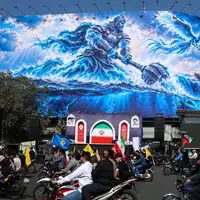
Participants ride motorcycles during a Janfada mobilisation rally in Tehran, beneath a billboard depicting a warrior emerging from the sea and confronting a burning ship, September 25, 2026

Talks between Iranian and US diplomats have continued in New York despite increasingly harsh rhetoric from both capitals, but the emerging dispute is less over whether to negotiate than over who must move first.

The discussions have increasingly focused on sequencing: Iran wants the United States to lift its economic blockade before Tehran reopens the Strait of Hormuz, while Washington is seeking movement on the strait before surrendering its principal source of leverage.

Neither side appears willing to go first despite the mounting economic and political costs of the deadlock.

On the sidelines of the UN General Assembly, Iranian President Masoud Pezeshkian said in an interview with Fox News that Tehran was willing to relinquish its stockpile of uranium enriched to 60% within the framework of international law and its obligations under the Nuclear Non-Proliferation Treaty.

The choice of Fox News may also have reflected an effort to reach President Donald Trump and his political audience more directly, given the network’s close relationship with the president.

Pezeshkian also said Tehran hoped to revive its June ceasefire understanding with Washington before the US midterm elections in November.

“We don't want it to get to the midterm elections,” he told reporters.

Trump has suggested the opposite timetable, saying in his UN General Assembly address that an agreement with Iran would likely be reached after the elections.

Who moves first?

Although both sides insist they seek peace, they remain divided over how an agreement would be implemented and in what order each should make concessions.

Tehran insists that no agreement can be reached before the United States lifts its economic blockade, while Washington and its European allies favour the opposite approach.

The disagreement is compounded by the collapse of the Islamabad Memorandum of Understanding.

From Tehran’s perspective, returning to an agreement that Washington previously failed to honour requires guarantees upfront. From Washington’s perspective, reviving the June arrangement risks appearing to reward Iran for using the Strait of Hormuz as leverage.

Supporters of diplomacy on both sides, along with mediators including Pakistan and Qatar, continue to urge the replacement of military rhetoric with political dialogue.

The problem is that each side is making a different calculation about timing and sequencing, while political considerations discourage either from moving first.

Iran’s demand that “all fronts” be addressed further complicates the equation, linking any agreement to Israel’s actions in Lebanon and elsewhere, while the widening confrontation in the Red Sea and around Bab el-Mandeb has added another layer of uncertainty to negotiations.

The midterms

The competing timetables reveal another dimension of the deadlock: both capitals have now openly linked a potential agreement to the November elections, but appear to be drawing opposite conclusions about who benefits from waiting.

It remains unclear whether Pezeshkian’s remarks will materially alter the course of negotiations. For now, each side appears to calculate that time is placing greater pressure on the other.

Trump’s threat to “annihilate Iran” raises the domestic political cost for Tehran of making concessions and increases the risk that any flexibility will be portrayed by Pezeshkian’s hardline opponents as capitulation.

Washington has political constraints of its own, with congressional hawks and influential regional lobbying groups likely to raise the political cost of concessions to Tehran ahead of the midterm elections.

The view from Tehran

The reformist daily Sharq argued on Thursday that the resumption of contacts offered an opportunity to prevent further escalation, but that significant differences between the two governments and political opposition at home made an immediate breakthrough unlikely.

“The mere continuation of mediation, or even a direct meeting between the presidents of Iran and the United States, lacks the capacity to overcome the current deadlock,” it said. “Changing this situation requires practical and reciprocal decisions from both Tehran and Washington that go beyond diplomatic messaging.”

That assessment points to the constraints facing Pezeshkian, including opposition from hardline parliamentary factions and Iran’s powerful security establishment.

For Iran’s leadership, the principal risk of an agreement is surrendering strategic leverage without guaranteed sanctions relief. For the Trump administration, moving first could expose it to accusations of appeasement ahead of the midterm elections.

The contacts in New York therefore suggest that diplomacy itself is not the missing ingredient. The harder question is whether either side is prepared to move first — and accept the political cost of doing so.

Pezeshkian straddles Iran’s divide at UN as US talks test balance

Sep 25, 2026, 00:00 GMT+1
•
Maryam Sinaiee
100%
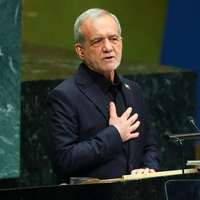
Iran's President Masoud Pezeshkian addresses the 81st United Nations General Assembly (UNGA) at UN headquarters in New York City, US, September 23, 2026.

President Masoud Pezeshkian’s UN speech won unusual praise across Iran’s political establishment Thursday, but emerging details of negotiations with the United States could soon test the president’s careful balancing act.

Conservatives embraced Pezeshkian’s defiant rhetoric at the General Assembly, while reformists highlighted his willingness to negotiate, allowing both sides to find something to welcome in an address that rejected surrender while keeping the door open to diplomacy.

The harder test may now come at the negotiating table.

US and Iranian negotiators in New York are exploring a phased agreement that could reopen the Strait of Hormuz in exchange for Washington lifting its economic blockade of Iran, Reuters reported Thursday.

Neither side wants to surrender its main source of leverage before the other acts, and the talks remain far from an agreement.

Any substantive movement toward such an arrangement could sharpen the domestic divisions that Pezeshkian’s speech temporarily managed to straddle, particularly among hardliners who have opposed negotiations with Washington.

‘We will not surrender’

Pezeshkian’s speech Wednesday night drew praise from senior officials including Parliament Speaker Mohammad Baqer Qalibaf, judiciary chief Gholam-Hossein Mohseni Ejei, Expediency Council Chairman Sadegh Amoli-Larijani and Army Commander Major General Amir Hatami.

Revolutionary Guards commander Ahmad Vahidi said Pezeshkian’s remarks reflected the position of the Iranian people.

“We are not afraid of war. This is the voice of the Iranian people that was heard by the world through him,” Vahidi wrote.

Acting Defense Minister Majid Ibn al-Reza also praised the speech, saying Iran’s message represented a “change in Iran’s defense doctrine” and that the country would accelerate the development of its military capabilities accordingly.

Kayhan, one of the strongest opponents of negotiations with the United States, said Pezeshkian had turned New York into a “court for prosecuting the crimes of Washington and Tel Aviv” and delivered a decisive response to US President Donald Trump.

Javan, a newspaper affiliated with the IRGC, put Pezeshkian’s “We will not surrender” phrase on its front page.

‘Strategic mistake’

Reformist newspapers, however, emphasized another part of the same address: Pezeshkian’s stated readiness for negotiations and engagement with the world.

Their headlines included “We are not afraid of war, we do not shy away from negotiations for peace” and “Neither warmongering nor fear of negotiations,” illustrating the markedly different ways the speech was being presented to domestic audiences.

The balancing act did not satisfy everyone.

Hardline journalist Davoud Modarresian described parts of the speech as worthy of praise but criticized Pezeshkian for travelling to New York and continuing to advocate negotiations.

In the face of Trump’s threats against Iran, he argued, declaring readiness for talks amounted to a “strategic mistake.”

Other hardline commentators complained that Pezeshkian had failed to demand retribution for US and Israeli attacks.

A speech for home?

Reformist journalist Ahmad Zeidabadi, meanwhile, questioned the enthusiastic reception from some of Pezeshkian’s most determined opponents of negotiations with the United States.

He asked whether those praising the president also supported his references to negotiations, or were selectively highlighting his more confrontational remarks in an effort to push the president in a more radical direction.

Some reformists saw the combination differently. Journalist Mohammad Sohofi argued that Pezeshkian sometimes employed populist slogans precisely to reduce tensions and marginalize hardline opponents of his policies.

Former Tehran Chamber of Commerce chairman Hossein Selahvarzi said the speech appeared designed more for a domestic audience than for the international community.

“Pezeshkian’s speech seemed to have been written more to be heard inside the country than to convince the world,” he wrote, arguing that the president should have presented more concrete proposals and initiatives.

US-Iran talks focused on phased deal to reopen Hormuz

Sep 24, 2026, 18:55 GMT+1
100%
A woman takes a photo on the shores of Iran’s Persian Gulf, with ships visible in the distance, July 2026

US and Iranian negotiators are exploring a phased agreement that could reopen the Strait of Hormuz in exchange for Washington lifting its economic blockade of Iran, Reuters reported Thursday, citing Iranian, regional and Western sources.

The emerging proposal reflects a problem that has repeatedly frustrated attempts to revive diplomacy: neither side wants to surrender its main source of leverage before the other acts.

Two Iranian sources, two regional officials and two Western diplomatic sources familiar with the discussions told Reuters the strait had become the central bargaining chip in talks taking place around the UN General Assembly in New York.

Iran wants relief from the US blockade, which has sharply restricted its trade and intensified pressure on its economy. Washington, meanwhile, is seeking the restoration of free passage through Hormuz, a crucial route for global energy supplies.

“One way forward would be to solve the crisis in stages,” a senior Iranian official said on the sidelines of the General Assembly. “The first would be to end the blockade and reopen Hormuz.”

A coalition of 80 countries called Thursday for the urgent reopening of the strait, accusing Iran and its Houthi allies of threatening navigation and disrupting international trade and energy supplies.

“We call for the full restoration of navigational rights and principles without delay,” Bahrain’s Foreign Minister Abdullatif bin Rashid Al Zayani said in a joint statement at the General Assembly.

But the US-Iran talks remain far from an agreement.

A senior European official said Iran had “a very long list of demands”, while the White House insisted that President Donald Trump was under no pressure to make concessions.

Iranian President Masoud Pezeshkian put responsibility for the repeated breakdown of diplomacy on Washington during a meeting with Dutch Prime Minister Dick Schoof on Thursday.

“We have been and remain willing to engage in dialogue, but if there is any advice to be given, it should be conveyed to the American side,” Pezeshkian said, arguing that previous rounds of negotiations had been disrupted by Washington and ultimately followed by war.

The difficulty for negotiators is therefore not only finding a sequence in which both sides relinquish leverage, but convincing each that concessions made by the other will last.

An earlier understanding reached in June collapsed the following month, leaving both sides wary of another temporary arrangement.

Trump has said he believes an agreement with Iran could be reached after the November 3 congressional midterm elections.

President Xi Jinping told Trump during their White House meeting Thursday that Beijing supported Washington and Tehran returning to the June arrangement intended to end the war and reopen Hormuz, according to China’s state-run Xinhua news agency.

Threats and counter-threats complicate new US-Iran diplomacy

Sep 23, 2026, 23:30 GMT+1
•
Maryam Sinaiee
100%
File photo: Crowds gather during a state-sponsored event in central Tehran, Iran

Iran warned Wednesday that any renewed US attack would draw a stronger military response, even as officials from the two countries pursued a new diplomatic opening in New York that has triggered a backlash among hardliners in Tehran.

The warnings followed President Donald Trump's threat at the United Nations to “annihilate” Iran, while Tehran has said further negotiations depend on Washington accepting seven conditions it has put forward for ending the conflict.

Mohsen Rezaei, secretary of Iran's Supreme National Security Council, sharply criticized Trump in remarks broadcast on state television, saying Iran would not return to what he described as the previous model of diplomacy.

He said the United States would first have to meet Iran's seven conditions before Tehran would agree to reopen the Strait of Hormuz and begin negotiations.

Rezaei said it had been agreed at a meeting with President Masoud Pezeshkian that Foreign Minister Abbas Araghchi would communicate the conditions to intermediaries during his visit to New York.

That account has become significant amid a growing dispute in Tehran over Araghchi's contact with US special envoy Steve Witkoff on Tuesday and whether the foreign minister had authorization to meet him directly.

US officials have described the latest contact between the two sides as face-to-face, while Iranian accounts have emphasized the role of mediators and said the purpose was to convey Tehran's conditions to Washington.

‘Childish and vile’

Iran's state broadcaster reported Tuesday evening that Araghchi had met Witkoff at the insistence of the American side and that the purpose of the meeting was to communicate Iran's conditions for reopening the Strait of Hormuz.

Foreign Ministry spokesman Esmail Baghaei said contact with the US side took place through Qatari mediators and was intended to communicate conditions including an end to the war on all fronts, a halt to US military operations, an end to the naval blockade and economic war, and the release of Iranian assets.

The contact prompted strong criticism of Araghchi from hardline and IRGC-affiliated media.

Tasnim News Agency, which is affiliated with the IRGC, described Araghchi's explanation as “childish and vile” and demanded an apology, questioning why he needed to meet Witkoff if Iran's conditions had already been communicated through intermediaries.

Ebrahim Rezaei, spokesman for parliament's National Security and Foreign Policy Committee, also questioned the meeting and asked Araghchi to explain what authorization he had received.

But parliament member Mojtaba Zarei defended Araghchi, saying his own review indicated that the foreign minister had been authorized to meet Witkoff.

“There was and is no negotiation,” Zarei wrote, saying Iran's seven conditions, including the lifting of the blockade of Yemen, had been communicated directly to Trump's representative.

Pezeshkian’s revised speech

The dispute unfolded as Pezeshkian and Trump publicly exchanged warnings while leaving open the possibility of diplomacy.

Pezeshkian said during his address to the General Assembly on Wednesday that he had changed his prepared remarks after hearing Trump's speech.

Holding up photographs of children killed in the attack on a primary school in Minab alongside an image of late Supreme Leader Ali Khamenei, Pezeshkian accused the United States and Israel of imposing the war on Iran and said the Islamic Republic had “powerfully” defended itself.

But he also said Iran remained open to negotiations in pursuit of peace and would not accept what he called “the language of coercion.”

Trump, meanwhile, issued a fresh warning against Iran while also expressing optimism that the dispute between Washington and Tehran could be resolved.

Speaking Wednesday at a meeting with Gulf Cooperation Council leaders in New York, Trump said the United States would “immediately” attack Iran if it carried out activities at the Kolang underground facilities.

Later Wednesday, after meeting British Prime Minister Andy Burnham, Trump said negotiations were continuing and that he believed the two sides would ultimately reach an agreement.

Iran's General Staff of the Armed Forces and the Khatam al-Anbiya Central Headquarters accused Trump of using the UN podium to justify military action and said Iran was prepared to deliver “stronger, crushing and unpredictable blows” in response to any renewed attack.

The simultaneous threats and diplomatic contacts have left the two sides pursuing negotiations while publicly warning that renewed military action remains possible.

New US-Iran talks run into old question of who speaks for Tehran

Sep 23, 2026, 17:47 GMT+1
•
Behrouz Turani
100%
Participants stand beside mock coffins draped in US and Israeli flags during a Janfada mobilisation rally in Iran, September 18, 2026

Any effort to end the Iran war faces a fundamental obstacle even after the resumption of US-Iran diplomacy in New York: apparent divisions within Tehran over who has the authority to negotiate and how far those negotiations can go.

Iranian President Masoud Pezeshkian devoted both the opening and closing sections of his address to the United Nations General Assembly on Wednesday to rejecting President Donald Trump's accusations against Tehran.

He also made clear that while Iran welcomed negotiations, it would not yield to coercion or what he described as Trump's “bullying.”

The tension between those two messages reflects the difficult political terrain surrounding the latest diplomatic opening. Pezeshkian and Foreign Minister Abbas Araghchi have signaled a willingness to pursue talks, but criticism from hardliners has raised questions about how much room they have to negotiate.

Those divisions surfaced after Araghchi's contact with US envoy Steve Witkoff in New York on Tuesday.

The IRGC-affiliated Tasnim News Agency reported Wednesday that the contact had taken place without authorization from Iran's policymaking bodies, including the Supreme National Security Council.

Citing Mohsen Rezaei, secretary of the council, Tasnim said the approved plan had been limited to conveying Iran's seven conditions through mediators. It described Araghchi's reported interaction with Witkoff as a “major error” and called on the foreign minister to explain his actions.

The criticism points to a potentially important fault line in Tehran: not necessarily over whether diplomacy should continue, but over how direct that diplomacy is permitted to become.

Accounts of Tuesday's discussions have themselves differed. US officials have described a three-hour diplomatic exchange positively, while Iranian accounts have emphasized the role of mediators and said Tehran's conditions were conveyed to Washington.

An Iranian diplomat told Reuters before Pezeshkian's speech that discussions on ending hostilities could continue in New York and described the General Assembly as “a golden opportunity for America to return to diplomacy.”

US Secretary of State Marco Rubio said any agreement would require sustained work over time and that Trump retained military options.

Rubio also pointed to divisions within Tehran, saying potential agreements had repeatedly faltered after being referred back to the country's revolutionary establishment. He blamed the IRGC for the collapse of an earlier US-Iran understanding after it attacked ships in the Strait of Hormuz.

Hardliners test the limits

Despite Tasnim's criticism of Araghchi, some hardline messaging immediately before and during the New York talks appeared to leave room for diplomacy.

Before opposition to the talks became more vocal, even the hardline Kayhan newspaper sounded unusually supportive of Pezeshkian on Wednesday morning.

IRGC spokesman Hossein Mohebbi also delivered a dual message following reports of the talks.

“We don't reject diplomacy, but we impose our own conditions. Our defensive power will be proven in the field,” he was quoted as saying.

The formulation suggested that the IRGC was not rejecting negotiations outright, even while insisting that diplomacy take place on Tehran's terms and alongside continued military pressure.

The dispute over Araghchi's contact with Witkoff suggests the argument may therefore be less about whether Iran should negotiate than about the format, limits and authorization of those negotiations.

Pezeshkian's own language at the United Nations appeared designed to preserve that room while demonstrating that negotiations would not amount to capitulation.

Responding to Trump's rhetoric, he warned the United States, Israel and regional actors that Iran would respond forcefully to threats, while insisting that Tehran still believed in diplomacy.

Major General Ali Abdollahi, chief of staff of Iran's Armed Forces, similarly argued that “rhetoric doesn't change the power calculus” and described Trump's remarks as “a sign of desperation” on the US side.

The sequencing problem

The mediation channel has so far allowed the two sides to exchange complex proposals without requiring the politically riskier spectacle of a meeting between Trump and Pezeshkian.

But even if Tehran's internal disagreements can be contained, substantial differences remain over what each side must do first.

Washington is reportedly insisting on the clearance of maritime choke points and assurances related to Iran's nuclear program before easing its naval blockade.

Tehran, by contrast, is demanding an immediate end to US interdictions and the release of $24 billion in frozen foreign assets as conditions for further progress, according to a source close to the Iranian diplomatic team.

Iran has also linked progress in negotiations to reopening the Strait of Hormuz.

The diplomatic opening in New York therefore leaves two related questions unresolved: whether Washington and Tehran can agree on the sequence of steps needed to end the conflict, and whether Iran's diplomats have sufficient authority at home to deliver whatever they negotiate.

The reaction from the IRGC and other hardline institutions in the coming days may provide an early indication of the answer.