• العربية
  • فارسی
Brand
  • Iran Insight
  • Politics
  • Economy
  • Analysis
  • Special Report
  • Opinion
  • Podcast
  • Live TV
  • Iran Insight
  • Politics
  • Economy
  • Analysis
  • Special Report
  • Opinion
  • Podcast
  • Live TV
  • Theme
  • Language
    • العربية
    • فارسی
  • Iran Insight
  • Politics
  • Economy
  • Analysis
  • Special Report
  • Opinion
  • Podcast
  • Live TV
All rights reserved for Volant Media UK Limited
volant media logo

Iran hardline daily says war no reason to ease hijab enforcement

Sep 21, 2026, 05:36 GMT+1

Iran should not abandon enforcement of mandatory hijab rules during wartime, a hardline newspaper said on Monday.

“War should not mean suspending policies related to preserving society’s identity,” Kayhan wrote, arguing that the Quranic verse on hijab was itself revealed during a war.

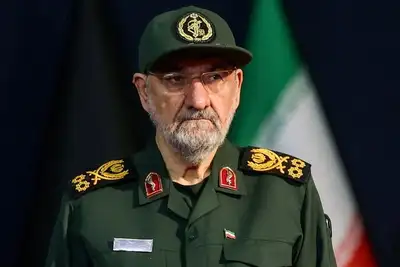
Authorities were holding back from enforcing mandatory hijab as extensively as they would like because of “war conditions,” said Gholam-Ali Haddad-Adel, a member of Iran’s Expediency Council, and Supreme Leader Mojtaba Khamenei’s father-in-law earlier this month.

The newspaper, which is published under the supervision of the supreme leader’s representative, called for stopping the growing defiance of compulsory hijab, warning that allowing one boundary to be broken would lead to others being normalized.

The commentary comes as a growing number of Iranian women appear in public without mandatory headscarves.

Banner

Most Viewed

Iran sets seven terms for renewed US talks, says ready for escalation
1

Iran sets seven terms for renewed US talks, says ready for escalation

2
ANALYSIS

Will shutdowns forced by US blockade damage Iran’s oil wells?

3

Trump weighs Iran options; Tehran signals Hormuz leverage

4

Iran mobilisation drive extends to children under 15

5

Iran threatens regional strikes as MPs question nuclear policy

Banner

Spotlight

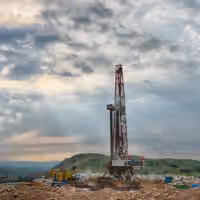
  • Will shutdowns forced by US blockade damage Iran’s oil wells?
    ANALYSIS

    Will shutdowns forced by US blockade damage Iran’s oil wells?

  • Tehran ‘ashamed’ as Iranians struggle to make ends meet

    Tehran ‘ashamed’ as Iranians struggle to make ends meet

  • Iran faces postwar winter with a third of gas capacity lost
    ANALYSIS

    Iran faces postwar winter with a third of gas capacity lost

  • Iran’s nightly pro-state rallies become factional battleground
    INSIGHT

    Iran’s nightly pro-state rallies become factional battleground

  • Woman, Life, Freedom and the Iran that cannot go back
    OPINION

    Woman, Life, Freedom and the Iran that cannot go back

  • From Halkbank to Golden Global: Turkey’s Iran banking ties under US scrutiny

    From Halkbank to Golden Global: Turkey’s Iran banking ties under US scrutiny

Banner
Banner
•
•
•

More Stories

Trump weighs Iran options; Tehran signals Hormuz leverage

Sep 20, 2026, 20:11 GMT+1
100%
Commercial vessels in the Strait of Hormuz

US President Donald Trump weighed military action, economic pressure and a possible deal with Iran, while Iranian leaders paired diplomatic overtures with warnings over the Strait of Hormuz on Sunday.

Trump told Fox News he was in a “deciding mode” over Iran and expected “very big things” soon. The network described the options under consideration as military action, allowing economic pressure to continue or reaching an agreement.

“My question is, if and when, do I blow the entire nation up? They better behave,” Trump told Fox News.

Trump also said he would probably be open to meeting Iranian President Masoud Pezeshkian during the UN General Assembly, leaving diplomacy on the table despite his warnings.

Hormuz remains central

Iranian officials continued to present the Strait of Hormuz as a source of leverage. Parliament Speaker Mohammad Bagher Ghalibaf responded to a September 17 JPMorgan oil-market report that said the bank no longer had a baseline view for how the conflict would end.

“This endgame cannot be modeled. It will be opened, and Iran's hand is already on the lever,” Ghalibaf wrote on X.

JPMorgan said assumptions underlying its earlier outlook had been overtaken by events and that it could no longer confidently model an endgame.

“For the first time since the start of the Iran conflict, we don't have a baseline view. We simply don't know how to model the endgame,” the report said.

Pressure around the waterway was also visible in maritime traffic. US Central Command said its forces had redirected 109 commercial vessels to ensure compliance by September 20.

A separate maritime security update from the UKMTO-linked Joint Maritime Information Center recorded four tankers involved in attacks or suspicious activity near the Strait over the past week. Two cases were recorded on September 17 and another two on September 18.

The economic consequences remain significant for Persian Gulf producers. QatarEnergy chief executive Saad al-Kaabi said normal gas operations could resume within weeks of the Strait reopening, but warned that disruption to shipments of critical equipment could delay the country’s expansion plans.

Iran keeps diplomatic channel open

Iranian officials also emphasized their willingness to negotiate. President Masoud Pezeshkian said Iran did not want war and considered conflict harmful to both the country and the wider world, but would not yield to force or intimidation.

“We do not want war and conflict and consider them harmful not only to the people of our country but to the world. At the same time, we will in no way yield to force and bullying,” Pezeshkian said.

Meanwhile, Foreign Minister Abbas Araghchi left for New York with a diplomatic delegation to attend the UN General Assembly, state media reported. Araghchi made a brief stop in Qatar before continuing to New York.

Iran factories face deepening raw material shortages

Sep 20, 2026, 18:34 GMT+1
•
Dalga Khatinoglu
100%
File photo of a steel production line at an industrial facility in Iran.

Iranian manufacturers are rapidly running down stocks of raw materials as supply disruptions and rising costs deepen pressure on industrial production, according to the latest survey by the Iran Chamber of Commerce.

The index measuring manufacturers’ raw material inventories fell to 39.3 in August from about 44.5 in July, while the Purchasing Managers’ Index for the overall economy dropped to 46.9, according to the survey. A reading below 50 indicates contraction.

Continued depletion of raw material inventories, combined with weakness elsewhere in the supply chain, could become one of the “most serious constraints on industrial production growth” in the coming months, the Iran Chamber of Commerce warned.

War damage adds to supply pressure

Part of the shortage cannot be explained by restrictions on imports alone. Iran was a major producer and exporter of several affected products, including petrochemicals and steel, before the war.

  • Iran faces postwar winter with a third of gas capacity lost

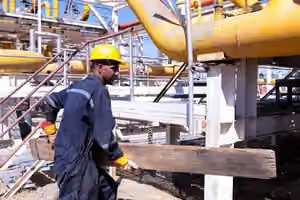
    Iran faces postwar winter with a third of gas capacity lost

Major petrochemical facilities in Asaluyeh and Mahshahr and the Mobarakeh Steel and Khuzestan Steel complexes were targeted during the war. Asaluyeh and Mahshahr together accounted for roughly three-quarters of Iran’s petrochemical production before the strikes.

Mobarakeh and Khuzestan Steel also sustained damage to production infrastructure.

The chamber attributed pressure on raw material stocks to limited access to foreign currency, difficulties with imports and customs clearance, goods being held at customs, logistical disruptions and higher procurement costs.

The oil and gas products sector recorded the lowest raw material inventory index at 23.3, followed by vehicles and related parts at 28.7. Rubber and plastics and the clothing and leather industries each recorded 32.2.

100%
Workers on an automobile production line at a factory in Iran.

Only the food industry and the wood, paper and furniture sector recorded raw material inventory readings above 50.

Input costs climb

Manufacturers also reported a sharp rise in raw material costs, with the purchase-price index increasing to 88.2 in August from 80.4 in July.

The index exceeded 100 for oil and gas products, while machinery and household appliances and non-metallic mineral products recorded readings above 92. Raw material purchase-price indices were above 50 across every industrial sector surveyed.

Other major PMI components remained below 50, including output or service activity at 47.8, new customer orders at 47.5, suppliers’ delivery times at 48.6 and employment at 47.3. All deteriorated from July except employment, which was unchanged.

Consumer prices were more than 84% higher in August than a year earlier, while annual inflation stood at about 69%, according to the Statistical Center of Iran.

  • Iran's appliance industry is collapsing, and so is the market it was built for

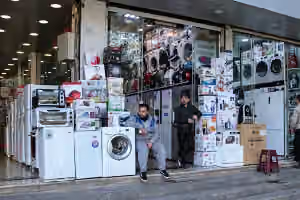
    Iran's appliance industry is collapsing, and so is the market it was built for

The sharp increase in manufacturers’ input costs adds to inflationary pressure on consumer prices. The Chamber warned that shrinking inventories could also reduce production capacity and disrupt or halt some production lines if current conditions persist.

How a Basij-linked cultural network helped identify Iran protesters

Sep 20, 2026, 17:05 GMT+1
•
Farzad Fattahi
100%
Protesters gather on a street during anti-government demonstrations in Iran in January 2026.

A local network tied to state-backed cultural and media groups helped Iranian authorities identify protesters during the January crackdown, with footage passed to Revolutionary Guards intelligence, sources familiar with the operation told Iran International.

The network operated in Fariman in northeastern Iran. Sadegh Maloul, a local figure with a background in cultural and media activities connected to the Basij and Revolutionary Guards, coordinated teams that filmed protesters, according to the sources.

Images gathered by the network were sent to the Islamic Revolutionary Guard Corps (IRGC) Intelligence Organization in Fariman and Mashhad and used to identify people who had taken part in demonstrations and add evidence to security cases against them, the sources said.

Iran International’s investigation indicates that the process contributed to the arrest of 23 people.

  • Lights out, then gunfire: Witnesses recount Mashhad protest crackdown

    Lights out, then gunfire: Witnesses recount Mashhad protest crackdown

Maloul has been identified as the head of the Basij Artists Center in Fariman and had previously collaborated with the IRGC’s public relations department.

Local media material reviewed by Iran International identifies him with the Fariman Basij Artists Center, while biographical information attributed to him described him as an “honorary reporter” cooperating with the IRGC’s public relations department.

These records link Maloul’s cultural and media activities to organizations affiliated with the Basij and IRGC.

From culture to surveillance

At the Basij Artists Center, Maloul organized members to produce cultural and media content aligned with the Islamic Republic’s messaging.

In late 2024 or early 2025, he called on young people he described as “soft-war officers” to produce films on subjects including Basij security activities, hijab and online activity.

The center’s performance and training programs also brought it into contact with teenagers and young adults interested in art and filmmaking.

100%
Sadegh Maloul headed an informant network used for repression

During the January protests, the teams coordinated by Maloul recorded demonstrators, according to sources familiar with the operation.

The footage was subsequently transferred to IRGC intelligence offices in Fariman and Mashhad, where it was used to identify demonstrators and add evidence to security cases against them.

Iran International could not independently determine how many people took part in the filming teams or whether everyone involved in the cultural organizations knew how the material would later be used.

Crackdown across Razavi Khorasan

The operation unfolded during a wider crackdown across Razavi Khorasan, where protests spread to at least 20 counties in January.

Mashhad, the provincial capital, was a major center of protests, while Fariman also saw demonstrations and arrests.

Iran International has previously reported that security forces used live fire against protesters in several parts of Mashhad and restricted internet access and communications in areas where demonstrations were taking place.

The Fariman case indicates how surveillance may extend beyond formal security agencies into local cultural and media networks.

New role after protests

Several months after the January protests, Maloul became head of the Sadaqat charitable center.

  • Iran’s security agents gang rape two nurses detained for aiding protesters

    Iran’s security agents gang rape two nurses detained for aiding protesters

His new role indicates that he continued to hold positions within organizations connected to the Islamic Republic’s institutional network after the crackdown.

The Fariman case offers a glimpse into a less visible part of Iran’s protest-control machinery: not only the forces deployed in the streets, but local networks capable of recording demonstrators, identifying them and passing information to security agencies after the crowds disperse.
Iran threatens regional strikes as MPs question nuclear policy

Sep 20, 2026, 12:12 GMT+1
100%
People walk past a mural featuring the Islamic Republic flag in Tehran, Iran, May 5, 2026.

Iran’s military threatened sustained attacks on US bases and interests across the Middle East on Sunday, while parliament speaker Mohammad-Bagher Ghalibaf argued that Tehran must both fight and negotiate.

Some lawmakers, meanwhile, raised the prospect of withdrawing from the Nuclear Non-Proliferation Treaty and changing the country’s nuclear-weapons policy.

The developments highlighted the competing signals coming from Tehran as President Donald Trump’s administration weighed its next move in the nearly seven-month war. Trump returned to the White House from Camp David on Saturday evening, a day earlier than scheduled, without an official explanation.

Iran’s Khatam al-Anbiya joint military command said it had received information that Washington, with approval from some regional countries, was preparing at a meeting in Europe to resume action against Iran.

“Every US base and interest in the region, without restriction or consideration, will be targeted by sustained, effective and painful attacks,” the command said.

It also warned that regional states supporting an American attack would be treated as participants and “could no longer expect restraint or leniency from Iran’s powerful armed forces.”

US diplomatic missions in nine Middle Eastern countries have meanwhile urged Americans to exercise heightened vigilance, warning of possible rapid escalation, flight cancellations and airspace closures. The alerts said Iran and Tehran-aligned groups could target US interests or locations associated with Americans.

The US military has also said it is strengthening regional air defenses, forming a coalition attack-drone unit and working with partners to keep the Strait of Hormuz and surrounding waters open.

Iranian officials responded with renewed assertions of control over the strategic waterway. IRGC deputy commander Mostafa Izadi said the strait remained under the control of Iran’s armed forces, while lawmaker Mohsen Zanganeh said restrictions there could impose significant economic pressure on the United States and other countries.

“The Strait of Hormuz is in Iran’s hands,” Zanganeh said, arguing that disruption would raise energy and production costs in East Asia and affect US technology companies with manufacturing operations there.

Against the military threats, Ghalibaf rejected the idea that Iran must choose between war and diplomacy.

“We must fight rationally and forcefully, and negotiate at the appropriate time with authority and reason,” he told a virtual session of parliament on Sunday.

Ghalibaf criticized two positions within Iran’s political establishment. He said one advocated war without presenting a credible path toward ending it and rejected diplomacy at the risk of drawing Iran into an open-ended conflict. The other, he said, underestimated the country’s capabilities and promoted accepting the adversary’s unilateral demands.

The first approach would keep Iran in a state of permanent crisis, while the second would sacrifice national resources and dignity, Ghalibaf said.

His remarks followed comments by Supreme National Security Council Secretary Mohsen Rezaei, who said Tehran had sent Washington seven conditions for renewed negotiations. Rezaei told Al Jazeera that Iran was seeking an end to the war on all fronts, the release of frozen Iranian assets and an end to the US naval blockade.

Rezaei said Qatar had conveyed Iran’s terms and Tehran was awaiting Trump’s response. Turkish Foreign Minister Hakan Fidan also said Turkey and other countries had presented new proposals to Washington and Tehran.

The diplomatic signals were accompanied by increasingly explicit statements by lawmakers about Iran’s nuclear policy.

Ebrahim Azizi, chairman of parliament’s national security committee, said renewed negotiations with the United States would be meaningless and warned that Iran could reconsider its NPT membership if remaining in the treaty no longer served its national interests.

Azizi also threatened the International Atomic Energy Agency with “serious and regrettable responses” if it continued what he described as one-sided conduct.

Another lawmaker, Hosseinali Hajideligani, said remaining in the NPT brought Iran nothing but harm and urged parliament’s leadership to consider an urgent motion submitted by a group of lawmakers seeking withdrawal from the treaty.

“It is in our interest to withdraw from the NPT,” he said.

Tehran representative Kamran Ghazanfari went further, raising the possibility of a change in the country’s position on nuclear weapons if the survival of the Islamic Republic came under serious threat.

“If conditions change in such a way that we feel the existence of the Islamic Republic is seriously threatened, the leadership could take a position on nuclear weapons,” Ghazanfari said.

The comments stopped short of announcing a policy change. Rezaei said Saturday that Tehran remained committed to slain Supreme Leader Ali Khamenei’s fatwa prohibiting nuclear weapons and had not altered its doctrine, while adding: “We do not know what will happen in the future.”

The growing debate nevertheless marked a sharper public challenge to Iran’s longstanding declared nuclear position at a moment when military threats, maritime pressure and mediated diplomatic efforts were unfolding simultaneously.

Iran mobilisation drive extends to children under 15

Sep 20, 2026, 02:56 GMT+1
100%
Children carrying rifles take part in a Janfada mobilisation rally in Iran, September 18, 2026

The spokesman for Iran’s mass mobilisation campaign said children under 15 could be introduced to military concepts, while denying that minors were receiving formal weapons training as authorities expand a civilian defence drive launched during the war.

Sasan Zare, spokesman for the Janfada campaign, said the main organisation of volunteers would be based around adults aged 18 and over, but acknowledged that younger people were also being brought into the initiative.

“The stronger their value system is formed from childhood, and the more familiar they become with concepts such as patriotism and self-sacrifice, the more significant the impact can be on their future,” Zare told the Iranian news agency ILNA.

Those registered with the campaign were over 15, he said, while women taking part in its training courses were over 18. For children below that age, Zare said the emphasis should be on patriotism, responsibility, first aid, safety and what he called a “culture of self-sacrifice and resistance.”

The Islamic Republic has stepped up a broad campaign to mobilise civilians since the US-Israeli war began in February.

The Janfada initiative was launched in late March, and authorities have since promoted registration through mosques, Basij bases and public events, alongside plans for military and emergency-response training.

The campaign has drawn scrutiny over the involvement of minors, with rights groups accusing Iranian authorities of recruiting children into the Basij and using them at checkpoints.

Amnesty International said in April that Iranian law allows children under 15 to join as ordinary Basij members, while those aged 15 and over can become active Basij members and collaborate with the Revolutionary Guards on assigned missions.

The rights group said it had verified evidence of children as young as 12 deployed at checkpoints and patrols, including some carrying rifles.

Iran International has separately received accounts from several provinces describing children and teenagers taking part in checkpoint operations and handling weapons at state-sponsored gatherings.

Asked specifically about teenagers being used at checkpoints, Zare said he did not know how such deployments were being carried out because checkpoints fell under the authority of local police and security bodies.

His campaign, he said, provided training related to urban and public security, while the units deploying volunteers would decide whether they were used at checkpoints.