• العربية
  • فارسی
Brand
  • Iran Insight
  • Politics
  • Economy
  • Analysis
  • Special Report
  • Opinion
  • Podcast
  • Live TV
  • Iran Insight
  • Politics
  • Economy
  • Analysis
  • Special Report
  • Opinion
  • Podcast
  • Live TV
  • Theme
  • Language
    • العربية
    • فارسی
  • Iran Insight
  • Politics
  • Economy
  • Analysis
  • Special Report
  • Opinion
  • Podcast
  • Live TV
All rights reserved for Volant Media UK Limited
volant media logo

Iran war energy shock is spreading through global economy - FT

Sep 20, 2026, 01:31 GMT+1

The Financial Times reports that the energy shock from the Iran war is increasingly spreading through the global economy, driving up fuel prices and inflation and prompting governments and central banks to intervene.

The newspaper said the crisis has become as much about shortages of refined fuels as crude oil, with global output of petrol, diesel and other fuels more than 4 million barrels a day lower in August than a year earlier. Diesel prices in the US and Europe have surpassed $200 a barrel.

The FT said 94 countries have cut taxes, capped prices or subsidised fuel to shield consumers, while several central banks have raised interest rates as energy costs add to inflationary pressure.

The report says uncertainty over the amount of oil remaining in storage has made it difficult for traders and policymakers to judge how long markets can withstand the disruption.

Banner

Most Viewed

Iran executes man it accused of spying for Israel on missile sites
1

Iran executes man it accused of spying for Israel on missile sites

2

Iran sets seven terms for renewed US talks, says ready for escalation

3

Tehran ‘ashamed’ as Iranians struggle to make ends meet

4
INSIGHT

Iran’s nightly pro-state rallies become factional battleground

5
ANALYSIS

Iran faces postwar winter with a third of gas capacity lost

Banner

Spotlight

  • Will shutdowns forced by US blockade damage Iran’s oil wells?
    ANALYSIS

    Will shutdowns forced by US blockade damage Iran’s oil wells?

  • Tehran ‘ashamed’ as Iranians struggle to make ends meet

    Tehran ‘ashamed’ as Iranians struggle to make ends meet

  • Iran faces postwar winter with a third of gas capacity lost
    ANALYSIS

    Iran faces postwar winter with a third of gas capacity lost

  • Iran’s nightly pro-state rallies become factional battleground
    INSIGHT

    Iran’s nightly pro-state rallies become factional battleground

  • Woman, Life, Freedom and the Iran that cannot go back
    OPINION

    Woman, Life, Freedom and the Iran that cannot go back

  • From Halkbank to Golden Global: Turkey’s Iran banking ties under US scrutiny

    From Halkbank to Golden Global: Turkey’s Iran banking ties under US scrutiny

Banner
Banner
•
•
•

More Stories

Will shutdowns forced by US blockade damage Iran’s oil wells?

Sep 19, 2026, 22:15 GMT+1
•
Mehdi Moslehi
100%
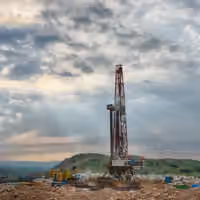
File photo: An oil rig in Iran

The sharp fall in Iran’s oil loadings is forcing it to curb production, raising costs beyond lost sales, from restarting aging wells to maintaining reservoir pressure and protecting shared fields. But could the shutdowns cause lasting damage?

Iranian officials often speak about oil as if the only question were whether crude can be sold today or tomorrow. In that telling, if exports stop, the oil simply stays underground until sanctions or a blockade ease, after which production can resume from where it left off.

Oil Minister Mohsen Paknejad said earlier this month that Iran’s oil exports did not stop “even for an hour” during the 40-day war. He had previously said there was not even a single day of production decline during that period.

Even if those claims are accurate for the war itself, they do not answer a more important question about what followed: how much production must be shut in when exports collapse and storage fills, and what will it cost to bring those wells and facilities back?

Energy intelligence firm Kpler estimated Iranian oil loadings fell from about 1.83 million barrels per day in March to around 255,000 bpd in August. It also estimated crude production dropped from about 3.24 million bpd to 1.755 million bpd, while inventories at terminals, refineries and other onshore storage sites increased.

Some Iranian crude may still be discharged in China, but much of that oil had already left Iran before the blockade intensified and remained for a time on tankers in Asian waters. Selling those cargoes is not the same as moving fresh crude out of Iranian wells and export terminals.

When exports fall, producers can initially divert crude into onshore storage, refineries and tankers. But storage is finite. Once it fills, the pressure moves upstream, forcing the National Iranian Oil Company to reduce production from some wells or shut them altogether.

An oil field is not an underground warehouse

An oil reservoir is sometimes imagined as an underground lake that can simply be tapped, closed and reopened months later.

In reality, oil sits within porous rock and networks of natural fractures. Its movement toward a producing well depends on reservoir pressure, rock properties, fluid composition and the way the field is managed.

That means shutdowns do not affect every well in the same way.

Some conventional Middle Eastern reservoirs can tolerate short shutdowns without serious damage. In certain fractured reservoirs, temporarily reducing output may even allow pressure to recover and oil to migrate from the rock matrix into fractures.

Robin Mills, a researcher at Columbia University’s Center on Global Energy Policy, has argued that production shutdowns are unlikely to cause catastrophic or permanent damage across most of Iran’s oil industry.

He has pointed to Iran’s relatively rapid production recovery after previous declines caused by sanctions and the Covid-19 pandemic.

That distinction matters. There is little basis for claiming that shutting production will inevitably destroy Iran’s oil wells.

But recoverable does not mean free, immediate or risk-free.

Iran has many mature fields and aging wells. Ahvaz, Marun, Gachsaran and Aghajari, among the country’s most important producing areas, have been in operation for decades.

Low-pressure wells, or wells producing large volumes of water alongside crude, may fail to flow naturally after a prolonged shutdown. Restarting them can require pumping, nitrogen injection, chemical treatment or other well-servicing operations.

During a shutdown, mineral scale, asphaltenes and other heavy compounds can accumulate around the wellbore, in production tubing or in flow lines.

Corrosion, sand and solids deposition, pump failures and unwanted flows between zones with different pressures are also recognized risks.

An analysis by the Society of Petroleum Engineers’ Reservoir Advisory Committee on prolonged shut-ins warned that corrosion, deposits, pump damage and plugging can leave some wells requiring repairs, stimulation or recompletion before they return to production.

For weak-performing wells, remediation can also become expensive enough to call their economics into question.

None of those costs appears in a simple calculation of barrels that were not sold.

Rotating shutdowns also cost money

NIOC has experience managing production cuts during earlier rounds of sanctions.

One option is to rotate shutdowns among wells rather than take an entire field offline, reducing the amount of time any single well remains idle.

That can limit the risks, but it requires continuous monitoring of reservoir pressure, fluid composition, gas injection, corrosion, pumps and surface facilities.

Repeated shutdowns and restarts, changes in chemical injection and the recalibration of processing equipment also add to operating costs.

In other words, not producing oil still costs money.

If falling oil revenues squeeze maintenance budgets, what begins as a manageable shutdown can develop into a far more expensive repair problem.

The question is therefore not whether every shut well will be lost. It is how many will return without additional work, how long the others will take to restart and how much that process will cost.

Gas injection links the oil problem to Iran's gas crisis

Many of Iran’s mature oil fields rely on gas injection to maintain reservoir pressure and improve recovery.

Kpler has estimated historical gas injection into Iranian oil fields at about 4.8 billion cubic feet per day. Even before the current crisis, Iran was injecting less gas than its reservoirs required.

That problem could become more acute.

Gas production from South Pars also produces condensate. If Iran becomes unable to export, store or consume enough of that condensate, it may eventually have to reduce gas output.

The government would then face harder choices over how to allocate gas among households, power plants, industry, exports and injection into oil reservoirs.

Lower gas injection does not destroy a well overnight. But over time, it can reduce reservoir pressure and potentially lower ultimate oil recovery.

A crisis that begins with crude exports can therefore feed back into oil production through constraints on condensate and natural gas.

This part of the cost rarely features in official statements.

Iranian officials emphasize continued exports and efforts to circumvent restrictions, but disclose little about how much gas, equipment and investment is needed to maintain reservoirs while production is being curtailed.

Shared fields create another risk

Not all Iranian fields can be treated in the same way.

Azadegan and Yadavaran are shared with Iraq, Forouzan with Saudi Arabia and Salman with the United Arab Emirates, with production taking place from different parts of connected geological structures.

A reduction in Iranian output does not mean crude immediately flows across a border toward a neighboring country’s wells. Reservoir behavior is more complicated and depends on geology.

But if Iran reduces production and development for an extended period while the other side continues drilling and extracting oil, Iran’s economic position in those shared resources can weaken.

Oil left underground in such fields is not necessarily being preserved exclusively for Iran to produce later.

Continued extraction across the border can, in some reservoirs, reduce Iran’s future recoverable share or economic opportunity.

The real cost of shutting production

The impact of a forced production cut cannot be measured by lost sales alone.

It also includes the cost of storing crude, maintaining idle wells, carrying out repairs and restarts, any loss in future productive capacity or reservoir recovery, and missed opportunities in shared fields.

There can be broader consequences as well.

Lower gas production would put more pressure on power generation, petrochemical feedstock and industrial consumption, forcing the government to make increasingly difficult choices over scarce energy supplies.

A prolonged blockade and collapse in exports therefore affects more than the Islamic Republic’s immediate oil revenue.

If wells and facilities are not adequately maintained, part of the cost can persist long after exports recover.

Paknejad can point to uninterrupted exports or production during a limited period, but more important questions remain unanswered.

How many Iranian wells are now producing at full capacity? How many have been throttled back or shut? How has gas injection changed? How much is being spent to manage shut-ins, maintain equipment and eventually restore production?

Without those figures, claims of continued production offer only a partial picture of the state of Iran’s oil industry.

Most Iranian wells may eventually be recoverable. But shutting them is neither cost-free nor necessarily quick to reverse.

The longer production remains constrained, the more maintenance, reservoir management and restart costs may accumulate — costs whose full scale cannot be known without far greater transparency about the condition of Iran’s wells and fields.

Iran sets seven terms for renewed US talks, says ready for escalation

Sep 19, 2026, 19:30 GMT+1
100%
File photo: Mohsen Rezaei attends a farewell ceremony for Iran's late Supreme Leader Ayatollah Ali Khamenei, who was killed on February 28 during Israeli and U.S. airstrikes on Iran, for international delegates at the Imam Khomeini Grand Mosalla in Tehran, Iran, July 3, 2026.

Iran has conveyed seven conditions to Washington for the start of any negotiations, Supreme National Security Council Secretary Mohsen Rezaei said Saturday, as President Donald Trump weighs whether to resume major attacks on Iran.

“The United States, if it wants to extricate itself from the predicament it has created, must accept Iran’s rights and conditions,” Rezaei wrote on X, saying the seven demands had been communicated to Washington.

He did not spell out all seven in the post. Earlier Saturday, however, Rezaei told Al Jazeera that Tehran was demanding an end to the war “on all fronts,” the release of frozen Iranian assets and an end to the US naval blockade as conditions for a settlement.

He said a Qatari mediator had conveyed Iran’s terms to Washington and that Tehran was awaiting Trump’s response.

Iran and the United States have remained engaged in indirect diplomacy throughout months of fighting and since the collapse of the Islamabad memorandum of understanding.

The memorandum, signed in June after Pakistan-hosted talks, was intended to halt the fighting and pave the way for a broader agreement. Both sides later accused the other of violations, and it expired in August without producing a lasting settlement.

Trump told Axios on Thursday that he had a “big decision” coming over whether to resume large-scale attacks on Iran, while saying Tehran remained in direct contact with Washington and wanted a deal. He is due to discuss the war with leaders of six Persian Gulf states in New York next week.

Pakistan, another key intermediary, is sending Interior Minister Mohsin Naqvi to Tehran on Sunday. Iranian Foreign Ministry spokesperson Esmaeil Baghaei said the visit was focused on bilateral ties and previous agreements between the two countries and that he was not aware of any specific US message or proposal due to be conveyed.

Baghaei acknowledged Pakistan’s continuing mediation role, saying it was natural for Islamabad to pursue diplomatic efforts, but said he had no information about any particular initiative attached to the visit.

Rezaei meanwhile struck a harder military tone, saying Iran had changed its strategy toward Washington after the United States withdrew from the memorandum. He said Tehran had recently tested an anti-ship missile near a US aircraft carrier and claimed Iran was better prepared to confront American air attacks after identifying weaknesses in the US military.

Nuclear pressure

On nuclear policy, Rezaei said Tehran remained committed to the late supreme leader’s fatwa against nuclear weapons and had not changed its nuclear doctrine, though he added that “we do not know what will happen in the future.”

He said Israeli and US actions already provided grounds for Iran to withdraw from the Nuclear Non-Proliferation Treaty (NPT), but Tehran had not made such a decision and any move would depend on Washington’s conduct.

Last month, Rezaei suggested Tehran could reconsider its longstanding rejection of nuclear weapons, arguing that US attacks on Iran have strengthened the case for acquiring an atomic bomb as a deterrent.

Rezaei told the state TV Washington had demonstrated that adherence to the global nuclear non-proliferation system offered countries little protection from military attack.

Saudi-Yemen escalation

In his Saturday interview, Rezaei also said Iran wanted the fighting between Saudi Arabia and Yemen to end and believed the Yemeni side also sought an agreement with Riyadh.

Hours earlier, an air attack struck a jet-fuel storage facility at Riyadh’s King Khalid International Airport, marking the first direct assault on the Saudi capital in months, The Wall Street Journal reported.

The Houthis later claimed two operations using missiles and drones, saying they struck “sensitive and important” targets in Riyadh and Saudi Aramco facilities in Yanbu. Military spokesman Yahya Saree did not explicitly identify the airport as a target.

Iran executes man it accused of spying for Israel on missile sites

Sep 19, 2026, 07:31 GMT+1
100%
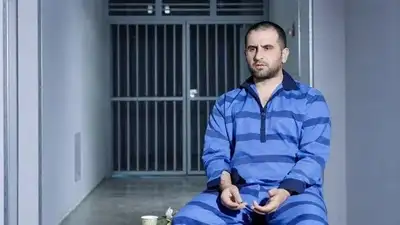
Hossein Pedaran during televised confession

Iran has executed a man it accused of passing information about missile sites in Isfahan to Israel's Mossad, the judiciary said on Saturday, the latest in a series of espionage executions that rights groups say rest on confessions extracted in detention.

The judiciary's news agency, Mizan, identified him as Hossein Pedaran and said he had been convicted of espionage and intelligence cooperation with Israel and sentenced to death, with the sentence upheld by the Supreme Court. He had been arrested in Isfahan on charges related to the war.

Mizan published a long account of what it described as Pedaran's confessions. According to that account, he first messaged the CIA offering to cooperate and received no reply, then contacted Mossad and was answered days later by an officer who introduced himself as "Ben" using a Dutch WhatsApp number.

The agency said he sent encrypted reports on military facilities and on staff who worked at them, including personal details and their spouses' phone numbers, used numerous SIM cards registered to others, and was given a remote-control device capable of taking hidden photographs.

It said he was paid in euros collected from a magnetic box behind a guardrail near a Tehran bridge and, on another occasion, from a coffee shop bathroom, and that a notebook on missile subjects marked "highly confidential" was found at his home.

Mizan said Pedaran had cut contact before the war and tried to reach Mossad again by Telegram once it began, and was arrested. It said he had a lawyer, that a forensic examination found no impairment of his judgment, and that the court held his information had contributed to strikes in which personnel were killed or wounded.

None of these claims can be independently verified, and Mizan did not provide any evidence for the allegations.

  • Iran executes student on charges of spying for Israel

    Iran executes student on charges of spying for Israel

  • Iran family says executed nuclear scientist confessed after threats to mother

    Iran family says executed nuclear scientist confessed after threats to mother

Iran's espionage cases are heard by Revolutionary Courts, which operate without public scrutiny of the evidence, and the state routinely broadcasts and publishes confessions that defendants and their families have later said were obtained through torture, prolonged solitary confinement and threats against relatives.

Rights organizations have documented the pattern for years, and have recorded cases in which people detained during protests were subsequently charged with working for Israel.

  • Iran sentences two more protesters to death as executions surge

    Iran sentences two more protesters to death as executions surge

Iran has executed at least a dozen people on espionage or Mossad-collaboration charges since the June 2025 war with Israel, according to human rights groups, and the pace has increased since the recent war began in February.

Those executed this year include Ali Ardestani in January, Mehdi Farid, a former employee of the atomic energy organization, in April, and Omid Behzad and Pouria Safvat in August. Iran Human Rights recorded at least 1,639 executions in the country in 2025, the highest annual total since 1989.

Death-row Iran protester denied hospital treatment, family says

Sep 19, 2026, 03:40 GMT+1
•
Negar Mojtahedi
100%
Twin sisters: one sentenced to death, the other to decades in prison in Iran.

An Iranian woman sentenced to death over January’s anti-government protests is struggling to walk but has been denied hospital treatment despite a prison doctor saying she urgently needs an MRI, her family told Iran International.

Taraneh Rahimi, 20, is being held alongside her twin sister Romina at Dowlatabad Prison in Isfahan. Their cousin, Masoud Nourmohammadi, told Iran International’s Eye for Iran that Taraneh’s condition has deteriorated as her lawyers race to appeal her death sentence.

“Taraneh could not walk,” Nourmohammadi said. “The (hospital) doctor says you have to go to the hospital and be hospitalized and get an MRI to see what’s going on with your leg because it is in bad shape,” he said.

Nourmohammadi said the doctor considered the treatment urgent, but prison authorities refused to allow Taraneh to leave for hospital.

Her family also purchased medical equipment and medication for her and brought the supplies to the prison, he said, but authorities did not allow them to reach her.

The allegations come days after Nourmohammadi told Iran International that prison authorities had stopped providing Taraneh with food, forcing her to rely on leftovers shared by other prisoners.

“They stopped giving Taraneh food a few days back,” he said. “They ask her to use other people’s leftovers and eat those. Who does that?”

‘If you don’t confess, we’re going to rape your sister’

The new allegations come as lawyers for the twins have finally been given access to their case file after months of waiting, according to Nourmohammadi.

He said the lawyers found no substantive evidence tying Taraneh or Romina to violence during the January protests and are now preparing an appeal.

“Their consensus is that there’s no evidence against those two girls in the case,” he said. “The only thing that is left … is basically their confession.”

The family says those confessions were obtained through torture and threats of sexual violence.

“They told Taraneh, ‘If you don’t confess, we’re going to rape your sister in front of you,’” Nourmohammadi said.

He said lawyers are also filing a complaint over the alleged torture and sexual abuse of the sisters while in custody.

Human Rights Watch and the Abdorrahman Boroumand Center for Human Rights in Iran have documented allegations of torture, coerced confessions and serious due-process violations involving defendants in the Shohada Square case.

Taraneh and Romina were among 16 defendants prosecuted over events surrounding protests in Isfahan in January. Ten of the defendants, including Taraneh, received death sentences, while Romina was sentenced to decades in prison.

The defendants faced charges including moharebeh, or “waging war against God,” destruction of public property, assembly and collusion against national security and propaganda against the state.

Rights groups have said none of the 16 defendants was charged with murder, despite prosecutors linking the case to incidents in which two people died.

100%

‘A few days left’ to appeal

Nourmohammadi said the family believes only days remain in the formal window for lawyers to appeal Taraneh’s death sentence, adding that the family remains deeply concerned that authorities could move more quickly.

“You never know with that regime,” he said. “Anything can happen. It’s unpredictable.”

The sisters were 19 when security forces arrested them separately on January 24, weeks after they joined demonstrations around Isfahan’s Shohada Square. They have since turned 20 in prison.

Before her arrest, Taraneh was an equestrian and horse trainer. She had previously undergone surgery on her leg following a riding injury, according to her family.

Nourmohammadi alleges interrogators knew about the injury and deliberately targeted the same leg during torture.

When the twins’ mother was eventually permitted to see her daughters after roughly three months without knowing where they were being held, Nourmohammadi said Taraneh was already limping.

He said she also had broken fingers and knuckles and alleged that both sisters had lost much of their hair after being dragged between cells by their hair.

‘She wanted a life for her kids’

The twins’ mother raised Taraneh and Romina as a single parent.

For roughly three months after their arrests, she did not know where her daughters were being held. Family members searched hospitals, courthouses and prisons, at times waiting outside detention facilities seeking information.

When their mother was eventually allowed to see them, Nourmohammadi said the twins had swollen faces, bruises and significant hair loss.

After Taraneh was sentenced to death, he said his aunt was so devastated that she has barely been able to speak.

Instead, she wrote a message about raising her daughters and working to give them a future.

“She was a single mom. She worked really hard for her kids,” Nourmohammadi said. “She wanted a life for her kids. She didn’t want a prison or execution and a rope around their neck.”

Tehran sees ‌Beijing as potential bridge to Washington

Sep 19, 2026, 00:00 GMT+1
•
Maryam Sinaiee
100%
Iranian Foreign Minister Abbas Araghchi meets with China's Foreign Minister Wang Yi, in Beijing, China, September 16, 2026.

Iranian officials and media are increasingly looking to China as a possible diplomatic bridge to Washington, as Foreign Minister Abbas Araghchi’s second wartime visit to Beijing coincides with preparations for President Xi Jinping’s talks with Donald Trump next week.

Chinese Foreign Minister Wang Yi told Araghchi on Wednesday that Beijing was ready to play a “constructive role” in resolving international disputes and urged Iran and the United States to rebuild their negotiating mechanism and hold substantive consultations on unresolved issues.

Araghchi appeared to attach considerable weight to the talks, writing on X afterwards that decisions made in consultation with Chinese partners would “decide future strategic balance in the region, with immeasurable knock-on effects.”

His visit came ahead of Xi’s planned meeting with Trump in Washington on September 24, where the Iran war and China’s economic ties with Tehran are expected to be among the issues discussed.

China has not publicly offered to mediate directly between Tehran and Washington. But its diplomatic weight, relations with both countries and ties across the Middle East have prompted growing speculation in Iran that Beijing could assume a larger role.

China also has experience mediating between Iran and a major regional rival. In 2023, Beijing brokered an agreement that restored diplomatic relations between Iran and Saudi Arabia after years of hostility.

Ahmad Bakhshayesh-Ardestani, a member of parliament’s National Security Committee, told Fararu that previous mediators such as Qatar and Pakistan had not been completely neutral and had been influenced by Washington. China, he argued, carried greater political weight and could provide stronger guarantees.

Beijing, he said, “can play a different role from previous mediators.”

Moderate daily Shargh made a similar argument, pointing to China’s position as a permanent member of the UN Security Council and its extensive economic relations with Arab states as well as close ties with Tehran.

“This multilayered network of relations allows Beijing to pursue the Hormuz issue on two levels: dialogue with Tehran on the one hand, and engagement with the United States and other powers influencing regional security on the other,” Shargh wrote. “This is the difference that separates Araghchi’s visit to Beijing from an ordinary diplomatic trip.”

Nour News, which is close to Iran’s Supreme National Security Council, said Tehran supported regional peace initiatives involving countries ranging from Pakistan and Qatar to China and Russia, while insisting that such diplomacy did not mean abandoning what it described as Iran’s right to defend itself.

The outlet argued that Beijing, conscious of the Strait of Hormuz’s geopolitical importance, was seeking to improve conditions for diplomacy rather than pressing Tehran to abandon its positions.

Some Iranian media and analysts have suggested China could also help bring Iran and Arab states into a broader regional arrangement rather than confining its role to US-Iran diplomacy.

Wang said Wednesday that China supported dialogue between Iran and regional countries based on respect for territorial sovereignty and national security. He also said the existing Middle East security architecture needed to be reformed and strengthened.

Farda News, which is close to parliament speaker Mohammad-Bagher Ghalibaf, interpreted Wang’s remarks as an attempt to link the immediate security crisis to a broader mechanism for dialogue between Iran and the Gulf Cooperation Council.

Jalal Sadatian, a former director general of the Foreign Ministry’s East Asia Department, told Khabar Online that Tehran should seek Beijing’s help in persuading Saudi Arabia and other Arab states to participate in a wider regional agreement involving the Strait of Hormuz.

International affairs analyst Sabah Zanganeh similarly told ILNA that China could broaden existing diplomatic efforts to include Iran, Iraq and GCC states, rather than limiting them to temporary arrangements between individual countries.

“Such an action is necessary and must certainly go beyond a temporary action between two countries,” he said.

Beijing’s diplomatic backing for Tehran was also visible at the United Nations on Thursday, when China and Russia vetoed a US-backed resolution that would have extended the mandate of a panel of experts monitoring sanctions on Iran. The resolution received 11 votes in favour, two against and two abstentions.

Iranian conservatives portrayed the veto as evidence of a changing international order. Rouydad24, however, cautioned against equating the end of the monitoring mechanism with the lifting of sanctions, noting that Washington retains extensive economic pressure tools outside the UN framework.

For now, Beijing’s public position remains more cautious than some of the expectations being voiced in Iran: China has offered to play a constructive role in diplomacy, but has stopped short of announcing itself as a mediator between Tehran and Washington.