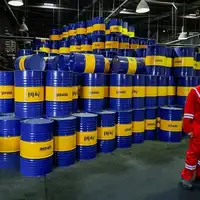
A kolbar is a worker who carries goods on his/her back across the borders of Iran, Iraq, Syria and Turkey legally or illegally.
Human rights organizations have documented an increase in deadly shootings by Iran’s security forces targeting Kurdish border couriers transporting goods into Iraq, who are trying to make money to survive.
•
In 2023, Iran shot at 507 Kurdish people carrying goods from Iraq, and 44 of them were killed, according to human rights organization United for Iran, and since the start of this year 111 Kurds have been shot at the border for that same reason.
The Kurdish border couriers, known in Kurdish and Farsi as Kolbars, have limited access to justice, said Mahmood Amiry-Moghaddam, the director of Norway-based Iran Human rights.
"When the guards see them, they shoot at them. We hear about people who have been killed, but there are also people who have lost their limbs. They get paralyzed because of spinal cord injury,” said Amiry-Moghaddam.
Many of them are boys as young as 13, but others are highly educated men and women, and some as old as 77 years of age, who rely on carrying a heavy load of goods through dangerous, mountainous terrain as a means of survival, said Shaghayegh Norouzi from United for Iran.
“You can find doctors that they are just finished their education and they came back from Tehran and they cannot work in Kurdistan,” Norouzi told Iran International.
The Kolbars typically bypass customs to earn payment based on weight and the type of good they are transporting. They often carry loads between 55 and 110 pounds through mountainous terrain for upwards of 10 kilometres, according to reports.
Items are up for resale once it makes its way through border with goods ranging from tea, electronics, textiles, beauty products, and cigarettes. Alcohol is usually avoided as it involves harsher punishment.
Ethnic pressures
Taimoor Aliassi, the Executive Director and UN Representative of the Kurdistan Human Rights-Geneva (KMMK-G) called the shootings “extrajudicial executions” that reflect a “systemic” targeting of one Iran’s most marginalized ethnic groups.
“People have a right to food, right to work, a right to health, right to life,” said Aliassi.
He told Iran International theshootings of Kolbars has been happening for two decades and poverty is the main force driving them to this work.
According to official figures around 20 million landmines have been planted in the Kurdish region of Iran since the war with Iraq in the 1980s, which has made the land unsuitable for farming and created lethal conditions to walk through, said Aliassi.
"We have a lot of people living in the area who cannot work on their land. And then, there's no invest investment, and development projects in the region” he added.
Human Rights Watch (HRW) published a report on the increase in Iran’s security forces shooting Kolbars. HRW interviewed 13 Kurdish border couriers between October 2021 and April 2024, who survived and or witnessed the shootings.
Witnesses told HRW that Iran’s FARAJA Border Guard force and the Islamic Revolutionary Guard Corps (IRGC) carried out the attacks on border couriers.
According to the Monday’s report, six people told the human rights group that Iranian security forces aimed at them and shot them, and that they had seen others shot. Two others told them that Iranian security forces shot and killed their relatives who worked as border couriers. One lost a leg after stepping on a landmine.
HRW reviewed medical records and court documents.
A security issue
HRW said in its repot that Iran’s deceased president who died May 19 in a helicopter crash, Ebrahim Raisi, suggested to Kurdish communities to consider regulating Kurdish border couriers work, yet officials in Iran often deem it a security issue.
Kurdish political prisoner, Mohiyedin Ebrahimi was a Kolbar who was executed in Iran on March 17 2023 on security charges. He was arrested in 2017 after being caught carrying alcohol through the border.
Mohiyedin Ebrahimi was executed in Urmia Central Prison on March 17, 2023
"I support twelve people in my family in Oshnavieh and have been working as a kolbar (human mules who carry goods across border) for several years,” he wrote in a letter published onIran Human Rights website.
“On 17 November 2017, I was crossing the border from the Kurdistan region in Iraq with two horses and four carts in the dark of the night. Several other people were walking a few hundred meters ahead of me when border forces started shooting at them and they started running. The border forces shot at me as well and hit me on the leg, causing great injury. Two horses and four cartons of alcoholic beer were discovered and confiscated from me and I had to be transferred to the hospital,” he wrote in the letter.
He was officially sentenced to death on charges of baghy (armed rebellion) through membership of the Kurdistan Democratic Party of Iran.
Amiry-Moghaddam of Iran human rights cited another similar case.
On June 9, 2024, Edris Ali, also a Kurdish Kolbar was sentenced to death on “trumped up” charges of “espionage for Israel” said Amiry-Moghaddam based on confessions “extracted under torture.”
He said “his only crime was to smuggle alcoholic drinks as a Kolbar.”
For 10 dollars
Amiry-Moghaddam said Tehran is also targeting people carrying goods from Baluchistan, and that the targeting of ethnic minorities like Kurds and Baloch is a means of controlling and persecuting them.
“It’s indicative of a regime that doesn't value human lives and wants to create fear,” he said.
Aliassi of KMMK-G said in addition to gender and religious apartheid, Iran is also committing ethnic apartheid.
Aliassi said between 84 to 160 thousand people do work as a Kolbar on a daily basis, citing Iranian data.
"10 dollars" is what Kurdish border couriers get for transporting a heavy load through snow and cold weather, with the possibility of getting killed, injured or jailed, said Aliassi.
The Biden administration is not ready to resume nuclear talks with Iran under the new president, the White House national security council spokesman said Monday.
In his presidential campaign, Iran's president-elect Masoud Pezeshkian advocated engagement in constructive talks with Western powers to revive the 2015 nuclear deal (JCPOA) and to lift the sanctions that he says have crippled the Iranian economy since the withdrawal of the US from the agreement in 2018.
Asked whether Pezeshkian’s election will change the US negotiating position, the White House's John Kirby offered a blunt "no".
“They’re still supporting terrorist groups like Hamas and Hezbollah. They’re still supporting the Houthis as the Houthis attack ships in the Red Sea. They’re still attacking shipping as well. And they’re still supplying drones and drone technology and drone expertise to the Russians so that the Russians can continue to kill innocent Ukrainians like they did over the weekend,” Kirby told a press conference. “So no, no.”
He said Washington does not expect any change in Iran’s behavior after the election of Pezeshkian. “We’ll see what this guy wants to get done but we are not expecting any changes in Iranian behavior."
The US State Department earlier said that the Iranian elections will not have a major impact on the Biden administration's approach to Iran.
"The elections will not have a significant impact on our approach to Iran... Our concerns about Iran’s behavior are unchanged. At the same time, we remain committed to diplomacy when it advances American interests," a State Department spokesperson told Iran International.
While the Biden administration has tried to keep Pezeshkian at arm's length, the EU has welcomed his win, offering an olive branch to the Islamic Republic's new administration despite warnings by Iranian opposition figures and dissidents against any "appeasement" with Pezeshkian.
Nabila Massrali, the spokesperson for Foreign Affairs and Security Policy of the European Union, extended congratulations to Pezeshkian, saying the EU stands ready to engage with his administration.
"We are ready to engage with the new government in line with EU policy of critical engagement," Massrali tweeted on Saturday.
Several Iranian opposition figures have called on Western powers not to engage with the new government of Iran.
With Masoud Pezeshkian announced as the winner of Iran’s snap election, which followed the sudden death of President Ebrahim Raisi, uncertainties remain about when he will assume office and form the new government.
The inauguration of new presidents in the Islamic Republic typically occurs in early August, although no specific date is set. However, since there is currently no incumbent in office, there is some debate about when the new administration will officially begin.
The only timeframe that applies in case of the death of a president is 50 days until a new one should be elected. Raisi died in a helicopter crash on May 19, and the election was held on June 28 and the runoff on July 5.
There are several steps until the president-elect can be called Iran’s President.
After the election, the Guardian Council should confirm the validity of the results, ensuring that the election process followed legal precepts. Then, it issues a certificate of appointment for the president-elect. This document should be signed by the members of the Council and then sent to the Supreme Leader, who would announce the date for Tanfiz, when he officially endorses the election results and ratifies the new president. It is followed by Tahlif, or the swearing-in ceremony, which usually happens within a few days.
During the Tanfiz, Ali Khamenei hands over a decree, known as the "decree of confirmation" or "decree of validation", to the president-elect, formally recognizing him as the legitimate president. Without the Supreme Leader's approval, the president does not have the authority to assume office. During Tahlif, the newly elected president takes an oath before the Parliament (Majlis) in the presence of the head of the judiciary and the members of the Guardian Council, promising to uphold the constitution and faithfully execute his duties as the head of state. Both ceremonies are essential in the transition of presidential power, ensuring both legal and symbolic legitimacy for the incoming president.
Mojtaba Yousefi, a member of the parliament's presiding board, said this week the inauguration ceremony for Pezeshkian is scheduled for August 4 or 5. The president will then have 15 days to present his proposed ministers to the parliament for a vote of confidence, which is reportedly set to be held on September 5.
There is controversy about why the parliament, dominated by hardliners whose candidates lost to Pezeshkian, would not vote on the proposed cabinet sooner, given that fact that the country does not have a president and is run by interim Mohammad Mokhber, Raisi’s first vice president.
Mohammad Mokhber, the acting president, along with the members of late President Ebrahim Raisi's cabinet during a meeting with Supreme Leader Ali Khamenei, July 7, 2024
According to Abbas-Ali Kadkhodaei, the former spokesman of the Guardian Council, until the new government assumes office, members of the former cabinet can make decisions or appointments that could have financial implications for the next government.
This comes despite Mokhber’s directive in June that called on all executive bodies to “refrain from any changes to organizational structures, personnel reassignments, transfer of government property, implementation of new regulations, changes in tariffs and fees, and any actions outside the rules and regulations until the establishment of the fourteenth government.”
However, Kadkhodaei noted that unless there is a specific legal provision that states otherwise, the incumbent officials can make such decisions, implying that Mokhber’s directive may not be binding. “These are customary practices and have never been subject to legal debate,” he said.
Hossein Mirmohammad Sadeghi, a former lawmaker, said that there is no regulation for setting a date for the vote of confidence on the new cabinet, explaining that such dates are primarily based on considerations of different factors. These include the parliament's summer recess ending on July 21st and upcoming calendar events, like the observance of the Shiite mourning period, Ashura, on July 14th in Iran.
Hamid Aboutalebi, a former deputy chief of staff for political affairs of the office of Iran’s president under Hassan Rouhani, wrote a commentary on his X account on Monday, stressing the legal necessity of holding the endorsement ceremony as soon as possible. He said the president-elect should assume office by the 50th day after the death of the incumbent. He argued that according to the constitution, until the new government is formed, the parliament cannot impeach ministers or pass a vote of no confidence, leaving the body with no oversight capability in case of negligence or errors by the ministers.
Aboutalebi said this would present a serious constitutional challenge if the country would be without an incumbent president at the end of the 50-day period and would be governed by an unelected first vice president, with ministers who are not subject to parliamentary oversight.
Russian President Vladimir Putin congratulated Masoud Pezeshkian on his election as the president-elect of Iran during a phone call on Monday.
According to ISNA, President Putin expressed his best wishes for Pezeshkian's success in his “significant responsibility ahead,” as well as “for the well-being and prosperity of the Iranian people.”
Pezeshkian was elected in a runoff on Friday, after a highly stage-managed electoral process following the death of President Ebrahim Raisi in a freak helicopter crash in May.
During the phone call, Putin noted that the relations between the Islamic Republic and Russia are at the highest level and expressed hope that these relations will continue during Pezeshkian's presidency.
Russia and Iran have strengthened their alliance in the past decade during the war in Syria where they both sent forces to rescue the government of Bashar al-Assad. Moscow has also sided with Tehran in its nuclear dispute with the West, condemning sanctions and continuing trade and financial relations. Iran in return has supplied Russia with hundreds of suicide drones that have been used against Ukrainian infrastructure and civilian targets.
Russia, which is also under Western sanctions, can offer Iran more military technology, but trade between the two allies has remained limited to less than $5 billion per year. In fact, both economies are heavily dependent on oil exports and they both compete for illicit shipments to China.
Putin also highlighted the expanding cooperation between Iran and Russia, particularly in the energy and transportation sectors. He invited Pezeshkian to attend the upcoming BRICS summit in Kazan and emphasized Russia's readiness to sign a comprehensive cooperation agreement between the two countries on the sidelines of the summit. The agreement is a new version of a previous accord signed in 2001.
According to ISNA, Pezeshkian expressed his gratitude for Putin's warm and friendly congratulations, stating, "We place great importance on our relations with the friendly and neighboring country of Russia, and we will undoubtedly strengthen these relations."
The president-elect emphasized the new government's commitment to pursuing and implementing the agreements made during the late President Raisi's administration.
Pezeshkian also highlighted the importance of cooperation between the two countries in international and regional organizations and alliances such as the Shanghai Cooperation Organization, BRICS, and Eurasia. He noted that the comprehensive cooperation agreement between Iran and Russia has been finalized and is ready to be signed on the sidelines of the BRICS summit in Russia.
Iran’s president-elect Massoud Pezeshkian has responded to a congratulatory message from Hezbollah leader Hassan Nasrallah, pledging continued support to “resistance force” aligned with Tehran in the region.
“The Islamic Republic of Iran has always supported the resistance of the people in the region against the illegitimate Zionist regime. Supporting the resistance is rooted in the fundamental policies of the Islamic Republic of Iran, the ideals of the late Imam Khomeini, and the guidance of the Supreme Leader, and will continue with strength,” Pezeshkian wrote.
Pezeshkian won the election last Friday, campaigning as a "reformist," despite previously characterizing himself as a "principlist," a term in the Islamic Republic jargon meaning someone dedicated to the principles of the Islamic revolution.
From its inception in 1979, the Islamic government in Iran has been a staunch enemy of Israel and the United States. It established the Lebanese Hezbollah in the early 1980s as a proxy force to confront Israel. In the past two decades it has created other proxy forces in Iraq, Syria, Yemen and Palestinian territories. It also has networks in other Middle Eastern, African and Western countries.
Iranian have protested against the government's financial and military assistance to these groups as a waste of national resources. The slogan, "Neither Gaza nor Lebanon, my life for Iran" has been a familiar chant during anti-government protests in recent years. As Tehran has committed more resources, its own economic situation has worsened, driving million of people into poverty.
Pezeshkian went on to tell Nasrallah, “I am confident that the resistance movements in the region will not allow this regime [Israel] to continue its warmongering and criminal policies against the oppressed people of Palestine and other nations in the region.”
Immediately following Masoud Pezeshkian's victory over Saeed Jalili in Iran’s heavily manipulated presidential election, most Western media outlets and news agencies labeled him as a “reformist” and “moderate.”
The media also described Jalili as a “hardliner,” “conservative,” or “ultraconservative.”
But do these labels, often used to dramatize politics and create a "devil and angel" narrative, accurately describe these two individuals and their supporters? Many Iran observers would say no.
Like Jalili, Pezeshkian announced during the campaigns that he fully adheres to the Supreme Leader, Ali Khamenei’s, policies and has "melted into Khamenei’s leadership."
To most, there is no doubt that both of them are staunch Islamists.
On certain issues, it would appear challenging to portray Pezeshkian as a libertarian and individualist politician who respects individual rights.
First, considering the “reformist” label: Pezeshkian has neither claimed to be a reformist nor been a member of reformist parties or groups in the last three decades.
During the debates, he referred to himself as a "principlist reformist," which was seen by many as merely spin.
Pezeshkian was a minister in former President Mohammad Khatami's cabinet two decades ago, but that was a multi-party and multi-sectarian government, including participants from across the political spectrum.
Pezeshkian’s membership in Khatami's administration, can therefore not be seen as evidence that he is a reformist.
Additionally, during the campaigns, he did not mention any of the reformist programs and policies from the Khatami era, such as media freedom, increasing the power of elected institutions compared to appointed ones, empowering civil society institutions, and canceling the Guardian Council’s power to disqualify candidates.
And, when it comes to being a “moderate”, Pezeshkian’s track record has shown that he is no different from Jalili and the other candidates.
He has been a strong advocate of compulsory hijab and cancel culture, even stating that he enforced these policies in a hospital and university under his management right after the 1979 Islamic takeover, before they were mandated. His complaints about officials being harsh on women are inconsistent with his voting record for laws restricting women's rights during his tenure in the parliament (Majles).
Saeed Jalili meeting Fidel Castro in 2005
Another issue discussed in the 2024 election was internet filtering. During the debates, Pezeshkian repeatedly defended shutting down the internet, as was done for a week during the repressions of November 2019, and filtering social networks in the context of public protests. Security forces killed at least 1,500 civilians during that week, as the government shut off the Internet to prevent news of the atrocities reaching the outside world.
In the case of the murder of Iranian-Canadian journalist Zahra Kazemi in 2003 while she was in custody in Evin prison, Pezeshkian, as an investigating physician, did not describe her death as unusual. This was despite the fact that her body was buried without her family's knowledge, and her grave was completely cemented to prevent an autopsy and subsequent investigations.
To many, Pezeshkian is as conservative as Jalili and cannot be portrayed as a liberal or libertarian.
In the Iranian context, being conservative or ultra-conservative typically means believing in Sharia law and implementing its verdicts in society using the government’s coercive power.
During the Khatami and Hassan Rouhani administrations, Western media also described these two leaders, who were Islamists committed to implementing Sharia law like Khomeini, as liberal and moderate, thereby misleading their readers.
Khatami and Rouhani sought de-escalation with the West to preserve the Islamic system and implement Sharia laws within it; for this reason, they can be considered non-anti-Western. However, in their stance on erasing Israel off the map, anti-Semitism, anti-Bahá'íism, negating the rights of the LGBT community, limiting women's rights, and denying social and cultural freedoms, they believed and acted like the founder of the Islamic Republic.
For this reason, using the term "liberal" to describe them or their administrations could be considered a form of deception of Western public opinion.
Given the context and political background of Muslim-majority societies, particularly those with Islamists in power like Iran and Afghanistan, using labels such as left and right, conservative and liberal, and moderate and radical can be misleading and problematic.
Labeling high-ranking officials, whose government engages in torturing opponents, imprisoning writers and journalists, violating the basic rights of Jews and Christians, and supporting the killing of street protesters, as "liberal" or "moderate" misrepresents their actions and undermines the experiences of victims of totalitarian regimes.
Pezeshkian's political, social, and cultural positions are closely aligned with those of Hassan Nasrallah, the leader of Lebanon's Hezbollah; otherwise, he would be rejected by the Guardian Council.
The new president aligns himself closely with Hezbollahi principles – some might even call him a Hezbollahi personified.
If one considers Hassan Nasrallah and Hezbollah to be moderate and reformist, the same descriptors could be applied to Pezeshkian.
This alignment is further evidenced by Nasrallah's congratulatory message to Pezeshkian: "We are by your side and, God willing, we will continue this way until we reach the final victory, the axis of which is the mighty, dear, and powerful Iran."