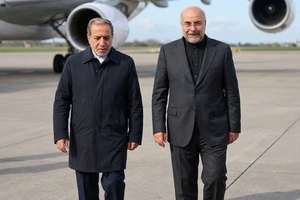
President Masoud Pezeshkian said Friday that it would be better to end the war now, while Iran remains in what he called a position of “power and dignity.” Parliament Speaker Mohammad Baqer Ghalibaf was more blunt about the stakes of a deteriorating economy.
“No matter how much military power we have, we won't survive if people are hungry and we don't have financial turnover, economic growth and national production,” Ghalibaf said, according to Iran’s official news agency IRNA.
Raz Zimmt, director of the Iran and Shiite Axis Research Program at Israel’s Institute for National Security Studies, believes the statements reflect growing recognition in Tehran that the current situation is unsustainable.
But he says there is a potentially dangerous gap between recognizing that reality and deciding to compromise.
“If they have to make a choice between taking the risk for a new round of war with the United States or making concessions which they consider to be full capitulation to the United States... I think it’s very clear that they are not going to give up,” Zimmt told Iran International’s Eye for Iran podcast.
The dilemma comes as Washington prepares to intensify the pressure. US Treasury Secretary Scott Bessent has promised the “toughest sanctions in history,” alongside a naval blockade already squeezing Iranian trade.
Iran entered the war with high inflation and a weakened currency. By July, annual inflation had reached 66 percent and food prices were 128 percent higher than a year earlier, according to official data.
‘Reasons to resist’
Zimmt says Iran’s ability to use Hormuz as leverage could also erode as the United States makes military gains in opening a corridor through the strait. But he sees no evidence yet of a consensus in Tehran for a change of course.
Iran’s calculation, he argues, is shaped by what happens after any agreement as much as by what happens now. Its leaders do not appear convinced that concessions would guarantee a permanent end to the war.
Instead, they may fear reopening Hormuz and surrendering leverage in exchange for a ceasefire that Washington could abandon after the US midterm elections in November.
Washington’s own messaging may be reinforcing that distrust.
Bessent said Thursday that the combination of the blockade and new sanctions could “collapse this regime,” even as he argued that successful economic pressure could reduce the likelihood of another large-scale military campaign.
From Tehran’s perspective, Zimmt argues, such statements can strengthen those who ask why Iran should make concessions to an administration that is simultaneously talking about its collapse.
The war itself may have given Tehran another reason to resist concessions.
“The conclusion in Iran is that the United States and Israel don’t have the capability to force Iran into major concessions,” Zimmt said.
‘Escalation before negotiations’
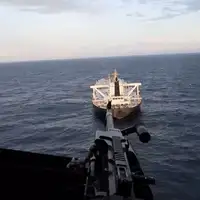
Hormuz provides Tehran with another source of leverage. After decades of threatening to close the strategic waterway, Iran has demonstrated its ability to severely disrupt it. Only seven commodity vessels passed through on Thursday, compared with more than 130 a day before the war, according to Kpler data.
Zimmt believes Iran’s leadership may therefore calculate that it can inflict enough economic pain on its Persian Gulf neighbors and the global economy to improve its position before negotiating.
He points to Iran’s behavior after Trump withdrew from the nuclear deal during his first presidency. Tehran initially responded to maximum pressure with what it called “strategic patience” but escalated as the economic damage mounted, including through attacks on Persian Gulf shipping and the downing of a US drone.
He sees the possibility of the same logic asserting itself again.
“If the Iranians reach the conclusion that they can’t resist or they can’t handle the growing economic pressure,” Zimmt said, “their decision would actually be to escalate things even further before returning to negotiations.”
The pressure may be working. The unanswered question is what Tehran chooses to do because of it.
You can watch Eye for Iran on YouTube or listen on any podcast platform.