• العربية
  • فارسی
Brand
  • Iran Insight
  • Politics
  • Economy
  • Analysis
  • Special Report
  • Opinion
  • Podcast
  • Iran Insight
  • Politics
  • Economy
  • Analysis
  • Special Report
  • Opinion
  • Podcast
  • Theme
  • Language
    • العربية
    • فارسی
  • Iran Insight
  • Politics
  • Economy
  • Analysis
  • Special Report
  • Opinion
  • Podcast
All rights reserved for Volant Media UK Limited
volant media logo

IRGC says six-member armed team killed in northwest Iran

Jun 30, 2026, 09:57 GMT+1Updated: 13:02 GMT+1

The IRGC Ground Forces said on Tuesday that a six-member armed team had been killed in a clash in the mountains between Mahabad and Piranshahr in northwest Iran.

In a statement, the IRGC’s Hamzeh Seyed al-Shohada base said the team had entered Iran’s northwestern border area for what it described as "sabotage and terrorist operations."

The IRGC said four bodies, along with weapons and equipment, were recovered after the clash, which it said involved fire support.

The statement warned that any attempt to destabilize Iran’s northwestern borders would face a “decisive” response.

Most Viewed

Iran's top clerical body turns on itself over US deal
1

Iran's top clerical body turns on itself over US deal

2
VOICES FROM IRAN

Citizens tell Iran football team it lost the public long ago

3
INSIGHT

Past funeral disasters cast a shadow over Khamenei's burial

4
INSIGHT

Return of Iran-US thaw advocate ignites hardline debate

5
ANALYSIS

Why falling oil prices don't mean Hormuz crisis is over

Banner
Banner
Banner

Spotlight

  • Every flare-up narrows space for diplomacy in Tehran
    INSIGHT

    Every flare-up narrows space for diplomacy in Tehran

  • Iran bows out of World Cup amid flags, Pride and protest

    Iran bows out of World Cup amid flags, Pride and protest

  • Past funeral disasters cast a shadow over Khamenei's burial
    INSIGHT

    Past funeral disasters cast a shadow over Khamenei's burial

  • Why falling oil prices don't mean Hormuz crisis is over
    ANALYSIS

    Why falling oil prices don't mean Hormuz crisis is over

  • Return of Iran-US thaw advocate ignites hardline debate
    INSIGHT

    Return of Iran-US thaw advocate ignites hardline debate

•
•
•

More Stories

Babak Zanjani-linked firm says 13 kg of gold returned to Dubai

Jun 30, 2026, 09:28 GMT+1

A representative of a gold company linked to Iranian tycoon Babak Zanjani said on Tuesday that 13 kilograms of gold belonging to him had been returned to Dubai, ILNA reported.

The representative said the gold was sent back to the United Arab Emirates, its country of origin, and did not re-enter Iran or return to the production chain for gold products.

The representative said the company had decided to procure gold domestically from now on and carry out production and minting inside Iran.

Pezeshkian says Khamenei backed US MoU amid attacks on negotiators

Jun 30, 2026, 09:10 GMT+1
Pezeshkian says Khamenei backed US MoU amid attacks on negotiators
100%
Iranian President Masoud Pezeshkian meets Ayatollah Hashem Hosseini Bushehri, chairman of the Society of Seminary Teachers of Qom, in Qom, Iran, June 30, 2026.

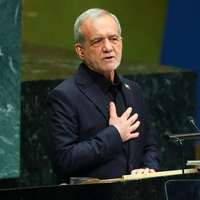
Iranian President Masoud Pezeshkian defended the country’s negotiating team on Tuesday, saying the memorandum of understanding (MoU) with the United States was reached in full coordination with Supreme Leader Mojtaba Khamenei.

“Unfortunately, some groups, in line with the psychological operations of hostile media, are trying to weaken this achievement by attacking the negotiating team and questioning national decisions,” he said.

He added that the memorandum of understanding was reached within the framework of the Islamic Republic’s broader policies and with the support of the Supreme National Security Council.

Pezeshkian made the comments during a meeting with members of the Society of Seminary Teachers of Qom, an influential body of senior Shi'ite clerics.

The remarks came as Pezeshkian’s government faced mounting pressure from ultraconservative factions over the memorandum of understanding with the United States.

In recent weeks, some hardline figures have accused the president and the negotiating team of making concessions and questioned whether key security decisions had the backing of the Supreme Leader.

The attacks have exposed divisions within Iran’s conservative camp, with some establishment-aligned conservatives pushing back against the most radical critics.

  • Far-right overreach against Pezeshkian exposes cracks in the hardline camp

    Far-right overreach against Pezeshkian exposes cracks in the hardline camp

At Tuesday’s meeting, Society of Seminary Teachers of Qom Chairman Ayatollah Hashem Hosseini Bushehri voiced support for the negotiating team and said running the country under current conditions was difficult.

Other members of the group reportedly raised concerns including alleged violations of parts of the Iran-US memorandum of understanding, the need to explain the talks more clearly to the public.

100%

The president insisted that Iran would not retreat from its national rights or core principles, adding that the dominant view in the Supreme National Security Council had been to use diplomacy to consolidate gains made on the battlefield and protect national interests.

Pezeshkian said his government had pursued negotiations from a position of “dignity, power and national interest” and would not give in to imposed demands.

He said the final text of the agreement with the US had been reviewed by expert and security bodies before receiving what he called firm backing from the Supreme National Security Council.

Pezeshkian also said much of his government’s capacity over the past two years had been spent managing crises.

“Over the past two years, a large part of the government’s management capacity has been spent on managing crises, reducing the effects of foreign pressure and preventing the consequences of these challenges from being transferred to people’s daily lives,” he said.

Nearly half of Iranians live in land subsidence zones, report warns

Jun 30, 2026, 08:11 GMT+1
Nearly half of Iranians live in land subsidence zones, report warns
100%
A large sinkhole caused by land subsidence opens beneath a street in Iran.

Land subsidence has expanded into a nationwide crisis affecting nearly half of Iran’s population, with parliamentary researchers warning the damage could become irreversible if current trends continue, Shargh newspaper reported on Monday.

Around 39 million people, or about 49% of Iran’s population, live in areas affected by land subsidence or at risk of its expansion, according to the latest report by the Iranian parliament’s research center cited by Shargh. The report said the phenomenon now covers about 185,000 square kilometers, nearly 11% of the country’s land area.

“Land subsidence is no longer confined to a handful of plains or isolated regions and has become a national crisis that threatens Iran’s territorial security and development outlook,” Shargh wrote, citing the parliamentary findings.

More than 380 cities and 9,200 villages are located in affected areas or in zones where subsidence is expected to spread, underscoring the scale of the challenge.

Groundwater depletion drives crisis

The parliamentary research center identified excessive groundwater extraction as the primary cause of land subsidence, with declining rainfall and prolonged drought accelerating the process.

As underground aquifers are depleted, soil layers compact and the ground sinks, a process that is often irreversible and permanently reduces the aquifers' capacity to store water, the report said.

Ground fissures caused by land subsidence cut across dry terrain in Iran. (undtaed)
100%
Ground fissures caused by land subsidence cut across dry terrain in Iran.

The findings warned that subsidence poses a growing threat to roads, railways, water, gas, electricity and telecommunications networks, as well as residential buildings and historical monuments.

The report also said the phenomenon carries broad economic, social and public health consequences by increasing infrastructure maintenance costs, reducing property values, disrupting economic activity, degrading water quality and encouraging migration.

Recent reports have highlighted land subsidence as an increasing risk to some of Iran’s historical sites.

In September 2025, earthquake expert Mehdi Zare warned Iran was heading toward an “urban catastrophe” because of worsening land subsidence. Three months later, National Cartographic Center chief Eskandar Seydaiee said every part of the country except the Caspian Sea coastal provinces was experiencing subsidence to varying degrees.

Tehran faces the highest risk

Tehran is Iran’s most severely affected province, with about 1,630 square kilometers – roughly 12.5% of its area – already experiencing land subsidence, Shargh said.

The main hotspots are the Varamin plain and southwestern parts of the province, including Tehran municipal districts 17, 18, 19 and 21, along with the cities of Eslamshahr, Shahriar and Malard.

The report attributed the capital’s worsening conditions largely to concentrated overuse of groundwater resources.

Groundwater, it said, supplied about 26% of Tehran’s water at the beginning of the 2010s but now accounts for around 45%. Other estimates suggest dependence is even higher, with 62% of the capital’s water drawn from underground aquifers and only 38% from surface sources.

The findings come after Iranian officials warned this month that six consecutive years of drought, falling rainfall and dwindling renewable water resources have left Tehran facing a deepening water supply crisis, adding to concerns that continued overexploitation of groundwater will intensify land subsidence across the country.

Iran president slams attacks on negotiators, says US MoU has Khamenei backing

Jun 30, 2026, 07:58 GMT+1
Iran president slams attacks on negotiators, says US MoU has Khamenei backing
100%

Iranian President Masoud Pezeshkian criticized attacks on the country’s negotiating team on Tuesday, saying the MoU with the US was reached in full coordination with Supreme Leader Mojtaba Khamenei.

“Unfortunately, some groups, in line with the psychological operations of hostile media, are trying to weaken this achievement by attacking the negotiating team and questioning national decisions,” he said.

Pezeshkian added that the memorandum of understanding was reached in line with the system’s broad policies and with the support of the Supreme National Security Council.

Continue reading

Is Tehran preparing to reinvent the IRGC?

Jun 30, 2026, 07:44 GMT+1
•
Negar Mojtahedi
Is Tehran preparing to reinvent the IRGC?
100%
IRGC commanders Ahmad Vahidi (right) and Reza Sahaban stand before portraits of slain commanders in an event in Tehran, January 25, 2026

Comments by an establishment pundit suggesting the Islamic Revolutionary Guard Corps (IRGC) could be dismantled from within have raised an extraordinary question: is Tehran preparing to reinvent one of the pillars of the Islamic Republic?

The idea would have sounded almost unthinkable just months ago.

But the remarks by Mehdi Khorratian, who has close ties to Iran's hardline establishment, have fueled speculation that at least some in Tehran may be considering a major overhaul of the Islamic Republic's power structure.

Experts interviewed by Iran International say the more revealing question is not whether the IRGC disappears—it is what, if anything, replaces it.

Some believe any restructuring would amount to little more than a rebranding designed to preserve the Guard's power while shedding some of its political and economic baggage. Others see the debate as evidence that Iran's leadership understands the country cannot emerge from the recent war unchanged.

Constitutional obstacle

Historian Shahram Kholdi argues dismantling the IRGC is far more complicated than simply abolishing a military organization.

"The IRGC is not called the Revolutionary Guard Corps of Iran. It is called the Islamic Revolutionary Guard Corps. That is very important," he said.

The obstacle, he argues, lies in the constitution. Article 150 of the Islamic Republic's constitution establishes the Guard not as a conventional military force but as the institution responsible for "guarding the revolution and its achievements."

That ideological mandate makes outright dissolution highly unlikely.

Instead, Kholdi believes the leadership would preserve the system while adapting its structure.

"They will not allow any disruption in the continuity of the Islamic Republic, but they will turn it into what it has been over the past 30 years: a fully military oligarchy disguised as a theocracy," he said.

Kholdi argues restructuring could also serve a practical purpose. As Western governments continue to designate the IRGC as a terrorist organization, folding it into a broader military structure could make it easier for Iranian officials to participate in future international security arrangements linked to any agreement with Washington while complicating efforts to isolate the organization itself.

"It would actually make things much more flexible for them," he said.

A toxic brand

Political analyst Omid Memarian says the IRGC itself has become a liability.

"The IRGC has become a huge liability, both domestically and internationally," he said.

Domestically, he argues, the Guard has become associated with economic mismanagement, political repression and deep involvement across nearly every sector of Iranian life. Internationally, sanctions and terrorism designations have made the organization increasingly costly for Tehran to defend.

"The brand name has become a liability for Iran more and more over the past few years," Memarian said.

That does not necessarily mean the institution itself is disappearing. Rather, he says, it could signal an effort to package the same power structure differently.

"The same people who created this system are doing the rebranding," he said.

Memarian nevertheless believes the debate reflects something larger than institutional reform.

"There is an unwritten consensus that Iran needs a massive departure from the pre-war era," he said.

The debate is unfolding alongside unusually sharp criticism from ultrahardline figures aligned with Saeed Jalili, who have portrayed the post-war political direction as an internal "coup" against Supreme Leader Mojtaba Khamenei. They accuse figures linked to Parliament Speaker Mohammad Bagher Ghalibaf and President Masoud Pezeshkian of steering the Islamic Republic away from its revolutionary course.

Name change or real change?

For Behnam Ben Taleblu, senior director of the Iran Program at the Foundation for Defense of Democracies, the debate begins with a literary question.

"All of this reminds me of the Shakespeare quote from Romeo and Juliet: 'What's in a name?' What is in the name of the Islamic Revolutionary Guard Corps? Its mission is in the name: to preserve, protect and defend the Islamic Revolution."

He does not believe the IRGC is likely to disappear. Instead, he cautions Western governments against confusing cosmetic changes with genuine reform.

"Real transformation comes with behavior. It comes with substance—not style," Ben Taleblu said.

"The West has to distinguish fake transformation from real transformation."

Whether the organization is renamed or folded into another military structure matters less, he argues, than whether it continues sponsoring militant groups abroad, dominating Iran's economy and serving as the central pillar of the Islamic Republic's security apparatus.

"Substance is whether the entity—whatever it's called—continues to act like the IRGC," he said.

A post-war identity crisis

Ultimately, the debate over the IRGC reflects the broader question confronting the Islamic Republic after the recent war: can the system reinvent itself without changing its fundamentals?

Kholdi believes any restructuring would further entrench military rule beneath a religious façade. Memarian argues the leadership recognizes that the pre-war model is no longer sustainable but doubts the same political elite can fundamentally transform the system they built. Ben Taleblu, meanwhile, warns against mistaking pragmatism for moderation.

"People mistake Ghalibaf's opportunism for moderation," he said.

For now, the discussion reveals less about the imminent disappearance of the IRGC than about the Islamic Republic's search for a model capable of surviving its deepest crisis in decades.

Whether that future involves genuine reform or simply a new name for an old institution remains an open question.