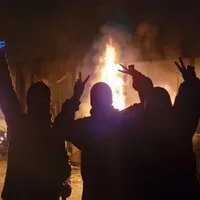
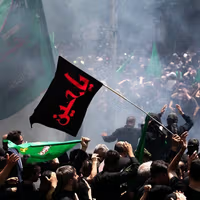
Muharram is the holiest month in the Shiite Muslim calendar. Its ninth and tenth days, Tasu'a and Ashura, commemorate the seventh-century killing of Imam Hussein, the grandson of the Prophet Muhammad, whose death at the Battle of Karbala symbolizes resistance against oppression and is marked each year with public mourning processions.
Messages received by Iran International suggest this year's ceremonies have drawn smaller crowds than in previous years, with many Iranians saying the nights of January 8 and 9 massacres have become their own Tasu'a and Ashura, when they mourn tens of thousands of those killed.
Social media posts also show many users replacing traditional Muharram images with photographs and names of people killed during recent protest crackdowns.
Many shared similar sentiments, writing: "We have had our own Ashura. We have seen the real oppressed."
Quieter ceremonies, different mourning
Videos sent to Iran International show some mourning processions incorporating tributes to those killed in the protests.
One resident said a banner bearing the names and photographs of protest victims was raised during Ashura ceremonies in Homayounshahr, near Isfahan, on June 25. According to the account, it was displayed openly during the religious gathering.
The mother of 25-year-old Mohammad Jafarpour, who was killed by security forces in Khomeinishahr, Isfahan province, on January 9, posted a video from his graveside on Wednesday.
"My mourning procession this year, my Ashura and Tasu'a, is your grave, my son," she wrote.
Several residents described this year's Muharram ceremonies as noticeably subdued.
A Tehran resident said that while passing Enghelab Square in central Tehran on June 24, coinciding with Tasu'a, they saw only a single woman waving the Islamic Republic's flag.
Another said chest-beating processions in their town, once dominated by young people, were this year attended mainly by older participants.
"The young people of our city were buried in January with all their dreams," the resident said.
For decades, Muharram rituals have been strongly promoted by the Islamic Republic and, in many state-supported ceremonies, religious observances have also served as platforms for political messaging and expressions of support for the government's ideological positions.
Karbala remembered through recent protests
Many said they now wear black during Muharram to mourn those killed in the January protests.
Some residents also said that mourning ceremonies in places including Kangavar in Kermanshah province included elegies for those killed during the protests.
Video received by Iran International showed the mother of a victim called Mohammad Radmannia addressing mourners during a Tasu'a ceremony in Tehran, urging them: "Do not let my son's path be extinguished."
Radmannia, 29, was killed by security forces during protests in Tehran's Nezamabad neighborhood on January 9.
Another video shared by the sister of 25-year-old Amirhossein Javadzadeh showed their mother searching through Muharram mourners while calling her son's name aloud.
Elsewhere, mourners in Lafmejan village in Gilan province gathered at the grave of 18-year-old Mani Safarpour during a Muharram procession. His photograph was mounted on ceremonial drums used in the procession. Safarpour was killed during protests in Tehran on January 8.
The use of Muharram commemorations to remember those killed in anti-government protests has continued since the Woman, Life, Freedom movement.
During Muharram in 2023, mourners in several cities sang protest songs, held symbolic performances honoring those killed, distributed memorial food offerings in their names and gathered at gravesides.