Araghchi claims oil waivers, asset releases secured in US-Iran talks


Iranian Foreign Minister Abbas Araghchi says Tehran has already secured significant economic benefits through the diplomatic process with Washington, highlighting sanctions-related relief measures and investment plans following talks in Switzerland.
According to Reuters, Araghchi said oil and petrochemical exports had been granted waivers, the blockade on Iran had been lifted, some frozen assets had been released and a major reconstruction and development plan had been launched for the country.
Araghchi's comments came shortly after mediators Qatar and Pakistan announced that talks had produced "encouraging progress" and established a roadmap toward a final agreement within 60 days.



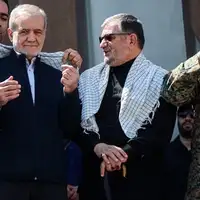

Iranian Foreign Minister Abbas Araghchi says the first real test of progress made in Switzerland will be a newly established mechanism designed to prevent renewed fighting in Lebanon.
In a post on X, Araghchi praised Pakistani and Qatari mediation efforts, saying they had delivered "major progress" toward ending the Lebanon war and implementing the Iran-US memorandum of understanding.
"Tireless Pakistani and Qatari mediation has delivered major progress to end Lebanon War," he wrote, pointing to sanctions waivers for oil and petrochemical exports, the lifting of the blockade, the release of some frozen assets and a major reconstruction and development plan for Iran.
"The first real test: Lebanon deconfliction cell."
The comment appeared to refer to a provision in the joint statement issued by mediators Qatar and Pakistan following nearly 18 hours of talks in Switzerland.
According to the statement, the United States and Iran agreed to create a deconfliction cell involving the two countries and the Lebanese government, with Qatar and Pakistan facilitating the process.
The mechanism is intended to "ensure adherence to the termination of military operations in Lebanon" under the memorandum of understanding.
Mediators Qatar and Pakistan said talks between the United States and Iran in Switzerland concluded in a "positive and constructive atmosphere," offering the strongest indication yet that negotiators were able to make progress despite a tense start.
In a joint statement issued after the talks, the two countries said "encouraging progress" had been achieved and announced the creation of a mechanism for further technical discussions.
The statement follows nearly 18 hours of negotiations in Buergenstock aimed at implementing the memorandum of understanding signed by Tehran and Washington last week.
Iran's Foreign Ministry says negotiations in Switzerland have gone beyond immediate implementation disputes and included discussions on launching talks toward a final agreement between Tehran and Washington.
Foreign Ministry spokesman Esmail Baghaei said the groundwork for future negotiations was discussed during nearly 18 hours of talks involving Iran, the United States and mediators from Qatar and Pakistan.
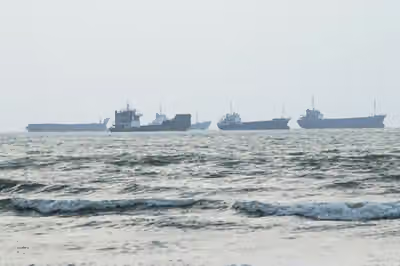
Baghaei also announced that negotiators had agreed on a mechanism to ensure the safe passage of ships through the Strait of Hormuz, one of the most contentious issues surrounding the recent memorandum of understanding.
He said Qatar and Pakistan will issue a text outlining the general points agreed by the parties.
Baghaei also said the work of the negotiating delegations had concluded for now, but that technical teams would remain engaged to continue discussions on implementation and outstanding issues.
Iran has exported approximately 36 million barrels of crude oil since June 15, according to maritime intelligence firm TankerTrackers, underscoring the rapid return of oil shipments following the partial easing of restrictions on Iranian exports.
The firm said in a social media post that roughly another 36 million barrels remain afloat in Iranian waters, suggesting Tehran retains a substantial volume of crude ready to enter international markets if current diplomatic efforts continue moving forward.
The figures mark a dramatic turnaround from just weeks ago, when Iran's oil exports had fallen to their lowest level in at least six years amid a US naval blockade and disruptions in the Strait of Hormuz.
In May, exports were estimated at only 209,000-260,000 barrels per day, down sharply from pre-war levels.
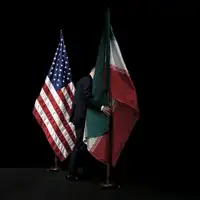
The Memorandum of Understanding between Iran and the United States may strengthen the Revolutionary Guards, weaken Persian Gulf security and deepen China's access to Iranian energy. Above all, however, it leaves Iranians to face the Islamic Republic on their own.
Paragraph 2 of the MOU effectively enshrines the abandonment of the Iranian people by committing both sides to "refrain from interfering in each other's internal affairs."
This clause stands in direct contrast to many of President Trump's previous statements regarding the Iranian people and his repeated condemnations of the regime's brutality.
In 2017, Trump described Iranians as "a proud people" forced to submit to extremist rule. In 2018, he tweeted: "Such respect for the people of Iran as they try to take back their corrupt government. You will see great support from the United States at the appropriate time!"
Following the June 2025 strikes on Iranian nuclear facilities, he posted: "If the current Iranian Regime is unable to MAKE IRAN GREAT AGAIN, why wouldn't there be a Regime change? MIGA."
In January 2026, he urged Iranians to continue protesting and "take over your institutions," adding that "help is on its way." The following month, during major opposition demonstrations, he again appealed directly to Iranians: "When we are finished, take over your government. It will be yours to take."
Today, however, the MOU represents a dramatic reversal of those positions. The agreement abandons a population Trump repeatedly encouraged to reclaim its country and signals that the United States is no longer willing to support internal pressure against the regime.
The contrast is particularly striking because it comes after a period in which Iran was arguably more vulnerable than at any point in decades.
Following military setbacks, economic pressure and growing domestic dissatisfaction, the regime faced mounting challenges both externally and internally. Yet rather than using that leverage to pursue broader political change, Washington appears to have chosen accommodation.
Trump now speaks of Iran's leaders as "very smart" and "strong," describing them as pragmatic negotiating partners. According to PBS NewsHour, a US official said Iran would be rewarded for "acting like a normal country."
That raises a fundamental question: after 47 years of repression, terrorism, hostage-taking, regional destabilization and the deaths of many Americans linked to Iran and its proxy network, is Tehran now being offered normalization without accountability?
The agreement appears poised to provide sanctions relief, access to frozen assets and expanded oil sales. Much of that oil is likely to flow to China. Additional revenue could strengthen the IRGC, reinforce domestic repression and increase support for armed allies such as Hezbollah and Hamas.
Supporters of the agreement argue that diplomacy is preferable to conflict and that negotiated limits are better than perpetual confrontation. Yet history suggests that agreements with the Islamic Republic are only as effective as the enforcement mechanisms behind them and the willingness to use them.
If substantial benefits are delivered before key obligations are fully verified, leverage disappears while risks increase.
This concern is not new. When President Obama declined to support Iran's Green Movement following the disputed 2009 election, many critics viewed the decision as both a betrayal of democratic values and a missed strategic opportunity to weaken the regime from within.
The current debate echoes many of the same arguments. But what Trump has done may prove even more consequential.
After authorizing actions that significantly degraded Iran's nuclear infrastructure, ballistic missile capabilities and military assets, he achieved what many previous administrations were unwilling or unable to attempt.
Yet by rapidly transitioning from maximum pressure to accommodation, he risks transforming a major tactical victory into a strategic mistake.
At the moment Iran appeared most vulnerable and many Iranians seemed most willing to challenge the regime, the United States chose not to prioritize support for opposition movements or increase pressure on the IRGC from within.
Whether such efforts would have succeeded is unknowable, but abandoning them entirely removed a source of leverage that would have, at the very least, strengthened America's negotiating position.
A different strategy would have required a sustained effort to explain to the American people why supporting the aspirations of ordinary Iranians serves both value-based American principles and long-term US security interests.
Genuine stability in the Middle East is unlikely to emerge solely from agreements with authoritarian rulers. Lasting stability comes when governments enjoy legitimacy among their own populations, especially populations that are likely to be among the most pro-American in the Muslim world.
Instead, the administration chose strategic impatience. In doing so, it not only disheartened many Iranians who hoped for greater international support, but also created uncertainty among Gulf allies and Israel.
Several regional and foreign-policy experts argue that Persian Gulf states may now reassess the reliability of American security guarantees and adapt accordingly.
The art of diplomacy is not surrendering hard-won leverage before a final agreement is fully negotiated and enforceable.
A 60-day ceasefire could easily become months of inconclusive negotiations while Iran replenishes its finances, strengthens the IRGC, suppresses domestic dissent and supports regional proxies.
But one thing is already clear: the agreement's most overlooked consequence is not what it says about centrifuges, missiles or sanctions. It is what it says about the people of Iran and American assurances.
For years, American leaders, including President Trump, spoke of supporting Iranians seeking freedom from Islamist authoritarian rule. The MOU signals a different set of priorities.
By pledging noninterference in Iran's internal affairs while offering the regime a pathway toward normalization and economic relief, Washington appears to have chosen engagement with Tehran over support for political change.
Whether that choice ultimately produces peace or merely postpones a larger confrontation remains to be seen. But for millions of Iranians who believed the United States stood with them against their oppressors, the message of this agreement is unmistakable: they are now largely on their own.