• العربية
  • فارسی
Brand
  • Iran Insight
  • Politics
  • Economy
  • Analysis
  • Special Report
  • Opinion
  • Podcast
  • Iran Insight
  • Politics
  • Economy
  • Analysis
  • Special Report
  • Opinion
  • Podcast
  • Theme
  • Language
    • العربية
    • فارسی
  • Iran Insight
  • Politics
  • Economy
  • Analysis
  • Special Report
  • Opinion
  • Podcast
All rights reserved for Volant Media UK Limited
volant media logo

Iran to get access to $6bn in frozen funds under interim deal - FT

Jun 19, 2026, 02:50 GMT+1

Iran is set to receive access to $6 billion in oil revenues frozen in Qatar under the interim agreement with the United States, according to a report by the Financial Times.

The newspaper said the funds would be released in phases during the 60-day negotiation period and could only be used to purchase humanitarian and other non-sanctioned goods from the United States.

According to the report, the arrangement is intended to provide Tehran with limited economic relief while keeping strict restrictions on how the money can be spent.

The funds are the same $6 billion transferred from South Korea to Qatar in 2023 as part of a prisoner exchange agreement between Washington and Tehran before access was effectively suspended following the October 7 attacks.

Most Viewed

Text of US-Iran memorandum released
1

Text of US-Iran memorandum released

2

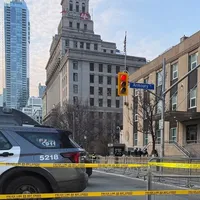
Toronto shooting probe uncovers trail leading to Tehran

3

US says Iran won't get funds upfront under MoU

4
INSIGHT

Can Iranians cheer Team Melli without cheering the state?

5

US says Iran deal will end enrichment, destroy uranium stocks, cap missiles

Banner
Banner
Banner

Spotlight

  • Who in Tehran is opposing a deal with Washington?
    INSIGHT

    Who in Tehran is opposing a deal with Washington?

  • A fragile compact: ambiguities that could undermine US-Iran MoU
    ANALYSIS

    A fragile compact: ambiguities that could undermine US-Iran MoU

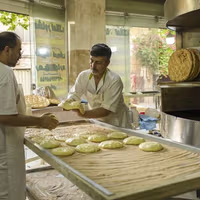
  • A thaw with the US won't fill Iranian tables overnight
    INSIGHT

    A thaw with the US won't fill Iranian tables overnight

  • Why some think a weakened Iran could emerge stronger
    ANALYSIS

    Why some think a weakened Iran could emerge stronger

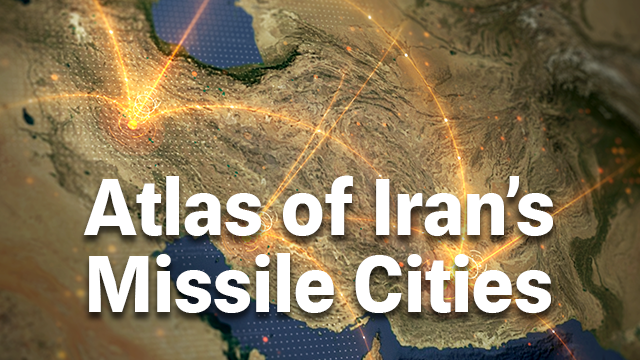
  • Atlas of Iran missile cities: The hidden network behind Tehran’s missile power
    SPECIAL REPORT

    Atlas of Iran missile cities: The hidden network behind Tehran’s missile power

  • Toronto shooting probe uncovers trail leading to Tehran

    Toronto shooting probe uncovers trail leading to Tehran

•
•
•

More Stories

Vance cancels Switzerland trip as talks logistics remain unresolved

Jun 19, 2026, 02:15 GMT+1

US Vice President JD Vance has canceled his planned trip to Switzerland, raising fresh questions about the timing of the next phase of negotiations with Iran under the newly signed memorandum of understanding.

CNN anchor and correspondent Kaitlan Collins quoted a spokesperson as saying the talks remain under preparation and that logistical arrangements have yet to be finalized.

“As the Vice President said at his press conference, the plans for the upcoming technical talks have not been finalized, and the U.S. delegation has been prepared to depart at the first available opportunity,” the spokesperson said.

The spokesperson added that the logistics of the negotiations had “never been simple or predictable.”

Tehran's familiar battle lines return over deal with US

Jun 19, 2026, 01:58 GMT+1
Tehran's familiar battle lines return over deal with US
100%

Hardline opposition in Iran to the Islamabad MoU increasingly resembles the reaction of ultraconservatives to the 2015 nuclear deal.

The parallels now extend beyond the critics themselves: a message attributed to Supreme Leader Mojtaba Khamenei on Thursday offered cautious backing for the agreement while signaling reservations about its terms, recalling the balancing act performed by his father during the JCPOA debate.

When then–Foreign Minister Javad Zarif returned to Tehran after the JCPOA was announced in Vienna in July 2015, vigilante groups gathered at the airport, threatening to lynch him on arrival.

Eleven years later, similar militant factions in Tehran and Mashhad have been heard chanting death threats against chief negotiator Mohammad Bagher Ghalibaf and Foreign Minister Abbas Araghchi, denouncing them as “traitors” and “mercenaries of the United States.”

Read the full article here.

Trump defends Iran war, says there are ‘no limits’ to presidential power

Jun 19, 2026, 01:21 GMT+1

US President Donald Trump defended his handling of the Iran war and told The Axios Show there are “no limits” to his presidential power following the conflict and subsequent memorandum of understanding with Tehran.

Asked whether the war had taught him any limits on executive authority, Trump said it had not, arguing that his approach had ultimately delivered results.

Trump added that the Strait of Hormuz would have remained closed as long as the bombing continued.

Top GOP senator warns Iran deal could undermine US military gains

Jun 19, 2026, 00:56 GMT+1

Roger Wicker, the Republican chairman of the Senate Armed Services Committee, warned that the Iran-US memorandum of understanding risks “negotiating away” recent US military successes.

Wicker said it would be a mistake to force Israel to stand down against Hezbollah in Lebanon and opposed lifting sanctions on Iran or unfreezing Iranian funds in exchange for what he described as Tehran's mere agreement to negotiate for another 60 days.

The remarks underscore continuing skepticism among some Republican lawmakers and pro-Israel voices who fear the agreement could provide Tehran with economic and political benefits before a broader settlement on nuclear and regional issues is reached.

Tehran's familiar battle lines return over deal with US

Jun 19, 2026, 00:44 GMT+1
•
Behrouz Turani
Tehran's familiar battle lines return over deal with US
100%
Worshippers attend a Muharram mourning ceremony in Tehran, commemorating the martyrdom of Imam Hussein, a central figure in Shia Islam, June 17, 2026

Hardline opposition in Iran to the Islamabad MoU increasingly resembles the reaction of ultraconservatives to the 2015 nuclear deal.

The parallels now extend beyond the critics themselves: a message attributed to Supreme Leader Mojtaba Khamenei on Thursday offered cautious backing for the agreement while signaling reservations about its terms, recalling the balancing act performed by his father during the JCPOA debate.

When then–Foreign Minister Javad Zarif returned to Tehran after the JCPOA was announced in Vienna in July 2015, vigilante groups gathered at the airport, threatening to lynch him on arrival.

Eleven years later, similar militant factions in Tehran and Mashhad have been heard chanting death threats against chief negotiator Mohammad Bagher Ghalibaf and Foreign Minister Abbas Araghchi, denouncing them as “traitors” and “mercenaries of the United States.”

The comparison is striking despite the very different nature of the two agreements.

The JCPOA was a comprehensive, multilateral non-proliferation accord negotiated in peacetime. The June 2026 MoU, by contrast, is a rapid bilateral framework designed to halt a destructive war, reopen the Strait of Hormuz and create a 60-day window for broader negotiations on Iran’s nuclear program.

In 2015, Supreme Leader Ali Khamenei ultimately shielded Zarif and his team, praising their “services to the nation and Islam” despite earlier criticism. A decade later, Mojtaba Khamenei appears to be performing a more cautious version of the same role.

In doing so, he echoed a familiar formula: approving diplomacy while distancing himself from its potential costs. He said he had authorized the agreement despite reservations in principle, after receiving assurances that Iran’s rights and the interests of the “Resistance Front” would be protected.

Hardline outlets and figures have recycled much of the same language deployed against the JCPOA, warning of “capitulation,” “retreat” and repeated “betrayals,” while more pragmatic and reformist-leaning voices defend the MoU as a system-approved effort to secure economic relief and end the war.

Notably, some of the loudest opponents of the Islamabad MoU, including ultraconservative MP Mahmoud Nabavian and Kayhan editor Hossein Shariatmadari, played a similar role in 2015.

Ultraconservative factions continue to accuse negotiators of falling into a Western trap. Elements within the Islamic Revolutionary Guard Corps (IRGC) view provisions requiring a freeze on enrichment levels and the return of IAEA inspectors to damaged facilities as an unacceptable concession.

The parallels are not exact, but the political script has proved remarkably durable. In both periods, opponents of diplomacy have framed engagement with Washington as a threat to national sovereignty and security.

The JCPOA sought to resolve a long-running nuclear dispute through a detailed and legally complex framework. The Islamabad MoU is a temporary political arrangement intended to stop active hostilities and create space for further negotiations.

Yet some critics on both sides have approached it through the same lens that shaped the debate over the JCPOA.

Similar concerns surfaced at the ongoing G7 summit in France, where several European leaders urged President Trump to adopt a tougher stance toward Tehran and ensure that any future agreement contains sufficient safeguards against the potential weaponization of Iran’s nuclear activities.

Trump may feel free to dismiss such concerns, believing European governments have offered limited support for his campaign against Tehran. Ghalibaf, by contrast, is clearly attempting to persuade domestic hardliners to accept the agreement.

Addressing the Chamber of Commerce on Wednesday, he declared: “All of us must take over the trench that was held by the battlefield warriors, stand firm, lift the people out from under economic pressures, and build the country with power.”

Mojtaba Khamenei’s statement appeared designed to contain opposition from within the conservative camp. While emphasizing that he had approved the agreement only after receiving specific assurances from Iranian officials, he portrayed the decision as a conditional endorsement rather than a strategic shift, signaling to critics that support for the memorandum should not be mistaken for acceptance of broader concessions to Washington.

By invoking the language of wartime sacrifice while defending a diplomatic agreement, Ghalibaf appeared to be making a familiar argument: that negotiation, however unpopular among hardliners, may sometimes be necessary to preserve the very system they seek to defend.