Iran deal came from US ‘position of strength,’ Hegseth says
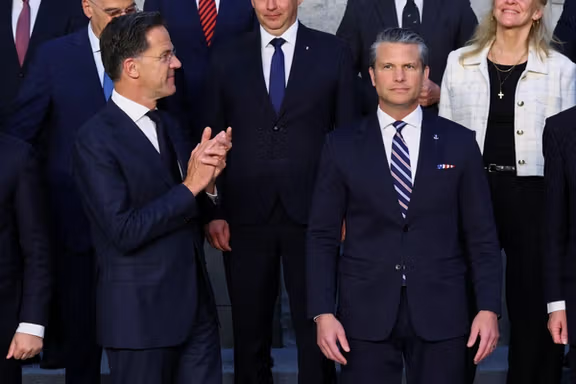
US War Secretary Pete Hegseth said on Thursday that Washington reached its agreement with Iran from a “position of strength,” warning that the United States could reimpose an “ironclad blockade” if Tehran fails to comply.
Hegseth said during a meeting of NATO Defense Ministers at the alliance's headquarters in Brussels, Belgium that the US would be prepared to resume its campaign if Iran does not fulfill its commitments, adding that Washington would remain the “big stick” behind the negotiations.
He said any changes to the US troop presence in the Middle East would be conditions-based, and insisted there were “no giveaways” in the agreement.
Hegseth also said European countries were prepared to step up on the Strait of Hormuz.


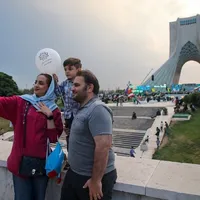

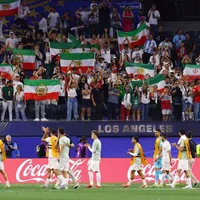
The messages, sent to Iran International on Thursday, reflect grief, suspicion and political anger after details emerged of the memorandum between Tehran and Washington.
The agreement outlines a halt to the war, a 60-day negotiation period, steps toward reopening the Strait of Hormuz, possible oil waivers and discussions over frozen assets and sanctions relief.
But for many Iranians who responded, the central question was not what the Islamic Republic might receive, or whether Washington would enforce the terms. It was why ordinary Iranians appeared absent from the agreement.
“We gave our fallen, we endured more hunger and poverty, there was war, we moved further away from our dreams, we were hurt, we were killed unjustly, but uranium was the main issue,” one message said. “In these several clauses of the agreement, there was no word about the people of Iran.”
Another message described the memorandum as an agreement signed “over the bodies of Iran’s children,” referring to what the sender said were 42,000 lives lost.
The message reflected a broader anger among several respondents who saw the deal as a bargain made after months of bloodshed and repression.
Some directed their anger at US President Donald Trump, saying they had hoped Washington would side more clearly with the Iranian people. “Trump is a businessman who first sees his own profit and his country’s interests, and it does not matter to him what has happened or what will happen,” one message said.
Another sender wrote: “Tell Trump that your betrayal has remained so deeply in our hearts and minds that if one day America and Europe need the help of the people of Iran, not a single person will come toward you.”
Others focused on Mohammad Bagher Ghalibaf, the lead Iranian negotiator expected to sign the memorandum in Switzerland on Friday. Ghalibaf has defended the document and urged officials to focus on improving the economy, but one message accused him of speaking more about Lebanon than about Iranians.
“Mr. Ghalibaf, in the same speech where you said we should fix people’s economy, you spoke several times more about Lebanon than about the people of Iran, and said the first clause of the agreement is also Lebanon,” the message said.
The 14-point memorandum includes a provision on ending military operations on all fronts, including Lebanon, and ensuring Lebanon’s sovereignty and territorial integrity. It also includes provisions on the Strait of Hormuz, oil exports, frozen assets, sanctions and Iran’s nuclear program.
US officials have since sought to limit expectations, saying the memorandum does not provide Tehran with automatic access to frozen assets, immediate sanctions relief or direct US funding.
They said any economic benefit would depend on Iranian compliance and progress toward a final deal, particularly on nuclear issues.
Inside Iran, however, the messages show that many are judging the agreement less by its financial mechanisms than by what it signals politically.
Some saw it as proof that the Islamic Republic’s long confrontation with the United States had ended in failure. “We are not fooled by the regime’s propaganda,” one message said. “The current memorandum between Iran and America was a definite defeat for the Islamic Republic’s 47-year policy.”
Another urged patience and unity, framing the deal as part of a longer process of weakening the system. “Be patient, regime change is happening, although at a gentle speed,” the message said. “Just stay united and give each other hope.”
But several messages were more despairing than hopeful. One sender compared the moment to a scene in a war film where a soldier, after fighting through chaos, suddenly stands still in shock and cries.
“That is how we, the people of Iran, feel with the news of the negotiations,” the message said.
Another asked why no country had insisted that Iranians themselves had rights that should be part of any settlement. “Why was there no one anywhere in the world to say that we, the people of Iran, had the right to live?” the message said. “Why should the human rights of all people in the world be respected except those of Iranians?”
The reaction reflects a familiar hope in Iran: that lower tensions with Washington will strengthen the rial, cool inflation and ease living costs after years of sanctions, isolation and war. But economists are warning that the market rally may be pricing in more than the agreement can deliver.
Former Central Bank deputy governor Heydar Mostakhdemin-Hosseini put it succinctly. “An agreement is a necessary condition for economic improvement, but it is not a sufficient condition,” he told Jahan-e Sanat.
That warning has become more relevant since the 14-point “Islamabad Memorandum of Understanding” emerged on Wednesday. The document outlines an immediate halt to military operations, a 60-day negotiation period, steps toward reopening the Strait of Hormuz, US Treasury waivers for Iranian oil exports and talks over frozen assets and sanctions termination.
But the most sensitive economic promises are conditional. Senior US officials said after the text emerged that Washington is not committing to immediate sanctions relief, upfront access to frozen assets or direct funding for Iran. They said economic incentives would depend on Iranian compliance and progress toward a final deal, particularly on nuclear issues.
The $300 billion reconstruction and economic development plan mentioned in the memorandum has already become one of the most disputed parts of the deal. US officials said it does not mean Washington will provide money to Tehran. Instead, they described it as a possible future framework for third countries and private investors if sanctions are eased and Iran meets its commitments.
President Donald Trump and Vice President JD Vance have also rejected the idea that the United States would provide direct financial aid or war reparations to Iran.
The issue of frozen assets is similarly uncertain. Iranian officials have presented the memorandum as a route to usable funds, while US officials said no assets would be released automatically upon signing. Some funds could become available during the negotiation period, they said, but only if Iran takes concrete steps demanded by Washington.
Central Bank Governor Abdolnasser Hemmati said Wednesday that the memorandum had been drafted in a way that clearly defines US obligations over asset releases and makes them enforceable.
But he added a note of caution: “As with any international agreement, a final assessment will depend on observing implementation and conducting the necessary verification in practice.”
For economists, that is the core problem: even if some relief arrives, Iran’s economic problems are not only external.
Economic analyst Nasser Zakeri told Fararu that the long-term effect of any diplomatic opening will depend on domestic policymaking. He said Iran would need to reassess its internal and regional realities and reorient its economic strategy around whatever opportunities the agreement creates.
Ali Ghanbari, an economics professor, made a similar point. “We should not become excessively excited or optimistic,” he said. “We should not assume that simply signing an initial understanding can solve all of Iran’s economic problems. Sustainable growth requires structural reforms, and such reforms are impossible without careful planning.”
Iran’s inflation problem shows the scale of the challenge. The latest official point-to-point inflation rate stands at 83.9%, according to the Statistical Center of Iran, and 77.2% according to the Central Bank.
Inflation briefly fell to single digits in the two years after the 2015 nuclear deal took effect, but surged again after Washington withdrew from the accord in 2018 and reimposed secondary sanctions.
A new deal could ease some of those pressures if it restores oil exports, reduces shipping restrictions and gives Tehran access to some blocked revenues. Under the memorandum, the US Treasury would issue waivers for Iranian crude oil, petroleum products and related services, including banking, insurance and transportation, pending a final agreement.
But Mostakhdemin-Hosseini warned that even higher oil revenue and reduced sanctions would not resolve budget deficits, rapid money-supply growth, banking imbalances and weak productivity. Without political stability, better governance and restored public trust, he said, chronic inflation could return quickly.
Hossein Selahvarzi, the former head of the Tehran Chamber of Commerce, also warned against reading peace as prosperity.
“A peace agreement does not, by itself, revive the economy, and the end of military conflict does not automatically mean the beginning of economic prosperity,” he wrote in Etemad.
He pointed to energy shortages, lack of working capital, aging equipment, limited access to technology, unstable regulations, weak investment and low productivity across industry and mining.
“The war only deepened and exposed these problems,” Selahvarzi wrote. “If we are now speaking of a post-war era, we should not expect miracles.”


