• العربية
  • فارسی
Brand
  • Iran Insight
  • Politics
  • Economy
  • Analysis
  • Special Report
  • Opinion
  • Podcast
  • Iran Insight
  • Politics
  • Economy
  • Analysis
  • Special Report
  • Opinion
  • Podcast
  • Theme
  • Language
    • العربية
    • فارسی
  • Iran Insight
  • Politics
  • Economy
  • Analysis
  • Special Report
  • Opinion
  • Podcast
All rights reserved for Volant Media UK Limited
volant media logo

Iran says cyberattack caused disruption at four banks

Jun 14, 2026, 08:04 GMT+1Updated: 11:22 GMT+1

A limited cyberattack on shared communications infrastructure caused disruptions at four Iranian banks, the country's coordination council of banks said on Sunday.

The council said the disruption affected Bank Melli Iran, Bank Tejarat, Bank Saderat Iran and the Export Development Bank of Iran.

It said technical teams took protective measures after detecting unusual signs, adding that there had been no unauthorized access to customer data and no deletion of information.

Most Viewed

US, Pakistan say Iran deal set for Sunday as Tehran split clouds signing
1

US, Pakistan say Iran deal set for Sunday as Tehran split clouds signing

2

Iran says US MoU may be signed in days as hardliners warn of retreat

3
ANALYSIS

The uneasy mix of diplomacy and pressure in Canada’s Iran policy

4
PODCAST

Lebanon may become first test of emerging Iran-US deal, experts say

5

Trump's Iran strategy underrates regime's resilience, ex-US diplomat says

Banner
Banner

Spotlight

  • The uneasy mix of diplomacy and pressure in Canada’s Iran policy
    ANALYSIS

    The uneasy mix of diplomacy and pressure in Canada’s Iran policy

  • How Nourabad Mamasani became an early flashpoint of Iran’s January bloodshed

    How Nourabad Mamasani became an early flashpoint of Iran’s January bloodshed

  • As prices soar, Iranian diets shrink to survival level
    VOICES FROM IRAN

    As prices soar, Iranian diets shrink to survival level

  • Iranian teens say rising costs turn simple wishes into distant dreams
    VOICES FROM IRAN

    Iranian teens say rising costs turn simple wishes into distant dreams

•
•
•

More Stories

Pakistan, Turkey welcome progress toward US-Iran understanding

Jun 14, 2026, 07:45 GMT+1

Pakistan’s Foreign Minister Ishaq Dar and Turkish Foreign Minister Hakan Fidan welcomed encouraging progress toward an understanding between the United States and Iran in a phone call on Thursday, Pakistan’s foreign ministry said.

The ministry said the two discussed the evolving regional situation and expressed hope that positive developments in the US-Iran track would help pave the way for lasting peace and stability in the region.

Dar and Fidan agreed to remain in close contact on further developments, the ministry said.

Kayhan editor questions Hormuz Strait reopening, compensation plans

Jun 14, 2026, 05:57 GMT+1
Kayhan editor questions Hormuz Strait reopening, compensation plans
100%

Hossein Shariatmadari, the editor of Iran's hardline Kayhan newspaper, questioned why senior officials had agreed to reopen the Strait of Hormuz, arguing Tehran was relinquishing one of its strongest levers against its adversaries without securing meaningful compensation.

Writing in Kayhan, Shariatmadari asked Parliament Speaker Mohammad Bagher Ghalibaf and Foreign Minister Abbas Araghchi why they would abandon a "decisive" tool that had brought enemies close to economic suffocation.

He dismissed proposals to charge passing vessels service fees, arguing they paled in comparison to the loss of senior military commanders, nuclear scientists and civilians, as well as the extensive damage inflicted on Iran.

"Are we now supposed to reopen the Strait of Hormuz and settle for collecting service fees from passing ships?" he wrote, warning that doing so would ease pressure on Iran's adversaries and pave the way for future attacks.

Trump's Iran strategy underrates regime's resilience, ex-US diplomat says

Jun 14, 2026, 03:52 GMT+1
•
Kambiz Tavana
Trump's Iran strategy underrates regime's resilience, ex-US diplomat says
100%
Charles W. Dunne

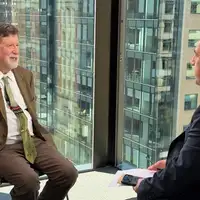
A former US diplomat warned that President Donald Trump may be underestimating the Islamic Republic's resilience, arguing that Tehran's leadership has repeatedly demonstrated its ability to withstand military and economic pressure.

In an interview with Iran International, Charles W. Dunne, a non‑resident fellow at the Arab Center Washington DC and an adjunct lecturer at George Washington University’s Elliott School of International Affairs, said many in the West misread what sanctions, military strikes, and diplomatic isolation can achieve against Tehran.

“From a Western or an American point of view, this pressure that’s been exerted on the regime should have resulted in its collapse already,” he said. “But that’s not how this system works.”

The United States and Israel launched large‑scale attacks on Iran earlier this year, prompting Iranian missile and drone strikes against Israel, US positions, and Persian Gulf Arab states.

While President Donald Trump and Israeli Prime Minister Benjamin Netanyahu raised the possibility of regime change as a result of the airstrikes, the Islamic Republic has remained in place and has grown even more hardline, according to observers.

Dunne said the Trump administration’s shifting narrative points to a lack of strategic clarity at the top of the US government. “We’ve heard at least a dozen different explanations for why this war started in the first place,” he said. “Being completely honest with you, I’m not sure the administration knows to what end it is fighting.”

Dunne said talk of regime collapse and Venezuela‑style oil pressure ignores the Islamic Republic’s record of absorbing far greater punishment. Trump has suggested the US could one day seize Iran’s strategic oil hub of Kharg Island and “run” its energy sector “like we did in Venezuela”, but Dunne said the analogy is fundamentally flawed.

“In Venezuela the United States moved against a much smaller country, removed one leader and worked with a pliant figure inside an old regime that essentially survived,” he said. “That is not at all the scenario we face in Iran.”

Despite Trump’s saying that “regime change” already occurred, Dunne said Iran’s power structure has not collapsed and those now in charge “seem to be even more hardline and determined to prevail” than their predecessors.

Dunne added that the Islamic Republic has already shown far greater resilience, pointing to the 1980–88 Iran‑Iraq war, when the new revolutionary state suffered enormous casualties and damage yet fought Saddam Hussein’s Iraq to a standstill. “That war showed how much pain the regime is willing to accept in order to maintain its grip,” Dunne said. “Sanctions, oil export bans, a collapsing rial – none of that has brought the system to its breaking point yet.”

Dunne said repeated strikes on senior officials have not dismantled the state, but instead produced “more hardline, more aggressive personalities rising to the fore.” Iran’s regular army is backed by the Islamic Revolutionary Guard Corps (IRGC) and Basij paramilitaries, a layered security system designed to withstand both external attack and internal unrest.

“From their point of view, they are still in power, they still control the streets, and that is the main goal,” he said. “They believe they can inflict more political and even military pain than the United States is willing to bear over the next few months.”

Iran may be using MoU to reduce US leverage in future nuclear talks - Think Tank

Jun 14, 2026, 03:23 GMT+1

The Institute for the Study of War (ISW) said on Saturday Foreign Minister Abbas Araghchi’s account of a proposed memorandum of understanding largely matches reporting by IRGC-affiliated media, indicating growing consensus among Iranian leaders on negotiating red lines.

The think tank added that Tehran appears to be structuring the MoU as a way to reduce US leverage in later nuclear talks, while portraying the agreement domestically as a tactical pause in the war rather than a final settlement.

Israeli Embassy shares Lebanon video, says future should be decided in Beirut, not Tehran

Jun 14, 2026, 01:45 GMT+1

The Embassy of Israel in the United States on Saturday shared a video on X addressed to the people of Lebanon, saying they deserve a future defined by opportunity, stability, and sovereignty rather than what it described as the ambitions of a foreign regime.

It said Hezbollah had dragged Lebanon into conflicts serving Iran’s agenda and argued that Lebanon’s future should be determined in Beirut, not Tehran.