• العربية
  • فارسی
Brand
  • Iran Insight
  • Politics
  • Economy
  • Analysis
  • Special Report
  • Opinion
  • Podcast
  • Iran Insight
  • Politics
  • Economy
  • Analysis
  • Special Report
  • Opinion
  • Podcast
  • Theme
  • Language
    • العربية
    • فارسی
  • Iran Insight
  • Politics
  • Economy
  • Analysis
  • Special Report
  • Opinion
  • Podcast
All rights reserved for Volant Media UK Limited
volant media logo

Maritime advisory says Iran port blockade threat level remains critical

May 30, 2026, 11:33 GMT+1Updated: 12:39 GMT+1

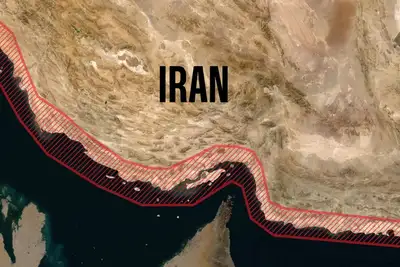
The Joint Maritime Information Center said the US blockade of Iranian ports remains in effect and warned ships operating near the Strait of Hormuz and surrounding waters to comply with directions from blockading forces.

In an advisory dated May 29, JMIC said the maritime security threat level in the Strait of Hormuz remains “critical” because of blockade operations.

The advisory said a restricted area is in place due to military blockade operations in the Persian Gulf, the Gulf of Oman, the North Arabian Sea and the Strait of Hormuz.

It said the blockade restricts all traffic entering or leaving Iranian ports, and that ships helping vessels violate the blockade through ship-to-ship transfers are also considered in breach of the blockade.

JMIC warned that enforcement could include “disabling and destructive fires” against vessels that do not immediately comply with blockading forces.

The advisory urged ships to monitor VHF Channel 16, keep AIS transmissions in line with company policy, clearly show their transit intentions and report unusual activity to recognized reporting centers.

It said the warning zone was not intended to block neutral or merchant shipping, but warned that the US Navy could not guarantee the safety of vessels in areas where military operations are underway.

Ships and aircraft crossing the area were advised to avoid the zone if possible, maintain a 30-nautical-mile distance from US units and be ready to respond to US military hails or queries.

Most Viewed

Qatar rejects Iran’s demand for unrestricted release of $12 billion in funds
1
EXCLUSIVE

Qatar rejects Iran’s demand for unrestricted release of $12 billion in funds

2
INSIGHT

Iran factions clash over interim US deal as Trump weighs final call

3

Greek man charged in Britain over alleged targeting of Iran International journalist

4

Hardline rallies turn Iran’s streets into pressure front against US talks

5
PODCAST

Was the Iran war leverage or a lifeline for Tehran?

Banner
Banner

Spotlight

  • Was the Iran war leverage or a lifeline for Tehran?
    PODCAST

    Was the Iran war leverage or a lifeline for Tehran?

  • Hardline rallies turn Iran’s streets into pressure front against US talks

    Hardline rallies turn Iran’s streets into pressure front against US talks

  • Names of some Iran protest victims vanish from Tehran cemetery database

    Names of some Iran protest victims vanish from Tehran cemetery database

  • How four Khamenei family names map the Islamic Republic’s inner circle
    INSIGHT

    How four Khamenei family names map the Islamic Republic’s inner circle

  • Witnesses describe gunfire, blocked exits and deadly market fire in Rasht
    SPECIAL REPORT

    Witnesses describe gunfire, blocked exits and deadly market fire in Rasht

  • Iran’s lion-and-sun flag at center of FIFA row before 2026 World Cup

    Iran’s lion-and-sun flag at center of FIFA row before 2026 World Cup

•
•
•

More Stories

US warnings to ships continue after Trump says blockade will lift – IRGC media

May 30, 2026, 11:29 GMT+1

IRGC-affiliated Tasnim News Agency said US military warnings to vessels were continuing despite President Donald Trump’s remarks that the naval blockade affecting ships in the Strait of Hormuz “will now be lifted.”

Tasnim wrote that mariners had said CENTCOM warnings related to stopping Iranian ships were still continuing, even after Trump said vessels caught in the strait because of the US blockade could begin the process of “heading home.”

In a post on Truth Social, Trump said Iran must agree never to obtain a nuclear weapon, the Strait of Hormuz must be opened immediately without tolls and with unrestricted shipping in both directions, and remaining mines must be removed or destroyed.

Trump also said Iran’s enriched nuclear material would be recovered by the United States, in coordination with the Islamic Republic and the International Atomic Energy Agency, and destroyed.

He made the remarks before heading to the Situation Room to make a final determination on the possible agreement but left the meeting without any decision.

Khamenei adviser says Trump’s blockade shows he does not want talks

May 30, 2026, 10:04 GMT+1

Mohsen Rezaei, an adviser to Iran’s Supreme Leader Mojtaba Khamenei, accused President Donald Trump of “betraying diplomacy” by continuing the US naval blockade and making what he called excessive demands in negotiations.

“The US president is betraying diplomacy for the third time,” Rezaei wrote on X.

He said Trump’s continuation of the naval blockade and his demands at the negotiating table showed he was not serious about diplomacy and was pursuing other objectives.

Was the Iran war leverage or a lifeline for Tehran?

May 30, 2026, 09:42 GMT+1
•
Negar Mojtahedi
Was the Iran war leverage or a lifeline for Tehran?
100%
An Iranian woman walks next to an anti-Israeli mural on a street in Tehran, Iran, May 30, 2026.

The Iran war left the Islamic Republic weaker than it had been in years. The question now is whether Washington will turn that weakness into leverage – or give Tehran room to recover through a new deal.

That debate is becoming increasingly urgent as Washington and Tehran move closer to a potential agreement that could extend the current ceasefire and launch a new phase of negotiations over Iran’s nuclear program.

President Donald Trump has suggested a deal may be within reach, while officials on both sides have signaled progress despite major unresolved disputes.

For supporters of the military campaign, the logic is straightforward: Iran entered the talks weaker than it has been in years. For critics, the concern is that diplomacy could give Tehran breathing room just as years of economic pressure, domestic unrest and military setbacks had left it vulnerable.

Speaking to Eye for Iran, former US Treasury official Miad Maleki and national security expert Thomas Juneau offered different answers to the same question: what exactly did the war achieve?

A Regime under pressure

While the two experts differ on what should happen next, both agree that the Islamic Republic emerged from the conflict significantly weakened.

"They've never been so weak. They've never been so vulnerable that they are today, militarily, politically, economically," Maleki said.

The Islamic Republic, he argued, faces mounting economic pressure at home while struggling to maintain the image of strength it has projected for decades. Tehran’s military infrastructure has suffered significant damage, senior figures have been killed, and the economy was already under strain before the conflict began.

Juneau reached a similar conclusion, though from a different angle.

"The regime was clobbered," he said.

Beyond the military and economic damage, Juneau argued that one of Tehran’s core strategic assumptions collapsed during the conflict.

For decades, Iran invested heavily in Hezbollah, Hamas and other regional allies as part of what officials often described as a forward defense strategy. The idea was that any direct attack on Iran would trigger retaliation across the region, deterring adversaries from striking the country itself.

"That failed," Juneau said.

Maleki argues that the regime's losses go beyond military hardware.

The conflict exposed weaknesses in Iran’s air defenses, damaged key infrastructure and further strained a system already struggling with economic collapse, inflation and public discontent. In his view, Tehran entered negotiations not from a position of strength, but because it had few alternatives.

Victory, leverage or lifeline?

Where the two experts diverge is over what happens next.

For Maleki, the central question is why negotiations are taking place now, at a moment when many observers believe the Islamic Republic is under greater pressure than at any point in recent years.

He pointed to growing frustration among some Iranians who believe the conflict exposed vulnerabilities that could have accelerated political change.

"There's some level of disappointment that the fact that the US is negotiating with this regime is bad for the future of a free Iran," he said.

The concern is not that Iran emerged stronger from the war. Rather, it is that Tehran survived a period of extraordinary pressure and may now receive economic or diplomatic relief before those pressures fully take effect.

Juneau sees a different risk.

While acknowledging that the regime has been weakened, he argues that ordinary Iranians may ultimately bear the greatest cost.

"The Iranian people have been thrown under the bus," he said.

The economy, already battered by sanctions, corruption and years of mismanagement, now faces the additional burden of reconstruction. At the same time, Juneau warns that a weakened regime does not necessarily become a more moderate one.

In fact, he believes future protests could face even harsher repression than previous waves of unrest.

"This is a regime now that will have even less tolerance for any kind of popular protests in the future," he said.

The disagreement reflects a broader uncertainty surrounding the talks themselves.

If the objective of the war was to weaken the Islamic Republic’s military capabilities, there is broad agreement that it succeeded. Iran’s regional posture has been damaged, key infrastructure has been hit and some of its most senior figures are gone.

But if the objective was to fundamentally alter Tehran’s behavior, improve conditions for ordinary Iranians or create a pathway toward meaningful political change, the answer remains far less clear.

Maleki believes the conflict became unavoidable as Iran expanded its missile, drone and regional capabilities.

"The conflict was unavoidable. It was coming sooner or later," he said.

Juneau is more cautious.

Asked whether the war was ultimately worth it, he declined to offer a simple yes-or-no answer.

"The negative implications of the war outweigh the positive implications," he said.

That may ultimately be the central dilemma facing policymakers in Washington and the region.

The war weakened the Islamic Republic. Few dispute that.

The unanswered question is whether the diplomacy now taking shape will build on that weakness or alleviate it.

Former IRGC commander says Khamenei advisor dismissed threat to his life before war

May 30, 2026, 09:25 GMT+1

Hossein Alaei, a former commander of the Islamic Revolutionary Guards Corps Navy, said he warned former Supreme Leader's advisor Ali Shamkhani three days before the war that the United States and Israel would begin the conflict by assassinating Iran’s leadership.

Alaei said Ali Shamkhani replied that they could not kill Ali Khamenei because they would not be able to find him.

A large shelter had been built beneath Khamenei’s compound, stretching about five kilometers at a depth of roughly 40 meters underground.

Alaei said he had assessed that the US and Israel’s plan A had been the 12-day war, their plan B was the January protests, and that he had predicted their plan C would begin with killing Khamenei.

Supporters of the Islamic Republic have insisted that Khamenei did not use the shelter. But Amir-Hossein Sabeti, a member of parliament, said in a street speech that one reason for Khamenei’s assassination was that Iran had been caught off guard by the atmosphere of negotiations and had failed to take the necessary measures to protect his life.

Ships turn off trackers to slip through Strait of Hormuz - WSJ

May 30, 2026, 08:42 GMT+1

Ships are turning off tracking systems and moving through the Strait of Hormuz in small groups, sometimes with guidance from the US military, as the waterway remains dangerous but not fully closed, the Wall Street Journal reported.

The report said some vessels, including large oil and liquefied natural gas tankers, have been sailing “dark” by switching off lights and Automatic Identification System, or AIS, beacons that help ships track one another and avoid collisions.

According to the Wall Street Journal, going dark makes vessels harder to detect electronically and less vulnerable to Iranian attacks, but also increases the risk of accidents in one of the world’s most important energy chokepoints.

Some shipowners told the newspaper they had stayed in contact with US military officials while transiting the strait. The report said US forces use radar, drones and other tools to monitor traffic and advise ships on when to go dark and how to respond to Iranian threats.

The Wall Street Journal said a small number of ships have used a route near Oman that US forces had earlier cleared of mines as part of the short-lived “Project Freedom,” while most recent crossings have followed routes specified by Iran or passed without visible tracking.

The report said US forces cleared a relatively safer path with underwater robots before Project Freedom was halted after Iranian attacks on vessels and Saudi restrictions on US access to bases and airspace.

The Wall Street Journal also cited US Central Command as saying the IRGC had attempted to lay sea mines and fired one-way attack drones in the past week. CENTCOM said the US responded by sinking IRGC mine-laying boats and striking missile and drone sites, describing the actions as defensive.

The report added that ships trying to leave the Persian Gulf face heavy financial pressure, with large crude carriers costing thousands of dollars a day to keep idle, insurance premiums rising sharply and crews receiving war-zone pay.

Before the war, more than 100 ships a day passed through the Strait of Hormuz, the newspaper said. Current traffic remains far below that level, with shipowners waiting for brief windows to move vessels out.