• العربية
  • فارسی
Brand
  • Iran Insight
  • Politics
  • Economy
  • Analysis
  • Special Report
  • Opinion
  • Podcast
  • Iran Insight
  • Politics
  • Economy
  • Analysis
  • Special Report
  • Opinion
  • Podcast
  • Theme
  • Language
    • العربية
    • فارسی
  • Iran Insight
  • Politics
  • Economy
  • Analysis
  • Special Report
  • Opinion
  • Podcast
All rights reserved for Volant Media UK Limited
volant media logo

Iran hangs protester on accusations of armed action

May 25, 2026, 05:14 GMT+1Updated: 10:27 GMT+1

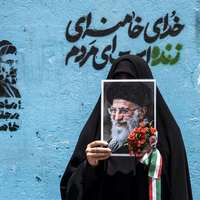
Iran executed a protester who took part in a nationwide uprising in January, over accusations of armed action in the central province of Isfahan, the judiciary’s Mizan News reported on Monday.

Abbas Akbari Feyzabadi had been convicted on charges including “enmity against God” (moharebeh) and collusion to commit crimes against internal security, according to the report.

The report accused him of being an armed leader during protests on January 8 and 9 and added that his sentence had been upheld by the Supreme Court before being carried out.

The report alleged that he took part in an attack on the governor’s office in the city of Naein and fired a handgun toward security forces.

Continue reading

Most Viewed

Iran demands access to $12B in Qatar funds as precondition for US MoU
1
EXCLUSIVE

Iran demands access to $12B in Qatar funds as precondition for US MoU

2

Iran executes another political prisoner, bringing tally to 37 since March

3

Iran, US edge toward deal to end war and reopen Hormuz

4
VOICES FROM IRAN

Citizens voice anger, distrust over possible US-Iran deal

5

Iran’s digital market buckles after war disrupts imports

Banner
Banner

Spotlight

  • Trump vs Tehran: how not signing became the deal
    OPINION

    Trump vs Tehran: how not signing became the deal

  • Iran is turning the internet into a privilege
    ANALYSIS

    Iran is turning the internet into a privilege

  • Trump’s strongest leverage over Tehran may run through Beijing
    PODCAST

    Trump’s strongest leverage over Tehran may run through Beijing

  • Pakistan continues quiet push to stop another Iran war
    ANALYSIS

    Pakistan continues quiet push to stop another Iran war

  • Iran scrambles for Omani back channel around the Hormuz blockade
    INSIGHT

    Iran scrambles for Omani back channel around the Hormuz blockade

•
•
•

More Stories

Rubio says framework for deal with Iran has regional, global backing

May 25, 2026, 04:52 GMT+1

US Secretary of State Marco Rubio said Washington has presented what he called a “pretty solid” proposal to Iran involving the reopening of the Strait of Hormuz and negotiations over Tehran’s nuclear program.

Speaking to reporters during a visit to India, Rubio said the proposed framework would allow Iran to reopen the strategic waterway and enter “a very real, significant, time-limited negotiation on the nuclear matters.”

Rubio said the proposal had strong backing from Persian Gulf states and broad international support.

“Every country that we’ve walked through it, understands it’s not just very reasonable but it’s the right thing for the world to get done,” he said.

At the same time, Rubio emphasized that President Donald Trump was not rushing toward an agreement and insisted Washington would reject any arrangement it viewed as weak.

“The president is not going to make a bad deal,” Rubio said.

Asked what was delaying a breakthrough, Rubio said the holdup was Iran’s response and suggested Tehran’s internal decision-making process was slowing communications.

“You’ve got to hear back, and it takes the Iranian system a little while longer to get back,” he said.

Rubio added that the administration would continue pursuing diplomacy before considering alternative options.

He also said that Washington would either reach a good agreement with Iran or deal with the country “another way,” adding that the United States would give diplomacy every chance before considering “alternatives.”

Iran reports sharp rise in dam water levels after wetter year

May 25, 2026, 04:22 GMT+1

Iran’s water authorities say reservoir levels across the country have risen significantly compared to last year following a major increase in rainfall and inflows during the current water year.

According to figures released by Iran Water Resources Management Company, inflows into reservoirs since the beginning of the water year in late September reached 38.71 billion cubic meters, up 72% from the same period a year earlier.

The volume of water currently stored in dams has climbed to 34.74 billion cubic meters, an increase of 29% compared to last year, the data showed.

Authorities also said water releases from dams rose 13% year-on-year.

Trump vs Tehran: how not signing became the deal

May 25, 2026, 04:10 GMT+1
•
Kambiz Hosseini

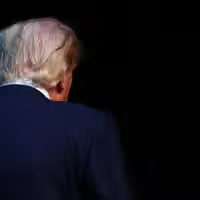
US President Trump’s approach toward Iran may better be explained by the political timing of the World Cup and the culture of New York real estate dealmaking: performance, delay, leverage and spectacle.

The cadence of Trump’s remarks about Iran belongs less to the world of foreign policy than to the culture that shaped him long before politics did: New York real estate, tabloid combat, and public brinkmanship treated as performance art.

The comparison that comes closest may not come from diplomacy at all, but from David Mamet’s Glengarry Glen Ross, that ruthless portrait of American real-estate sales culture, where power belongs not to the wisest man in the room, but to the most psychologically relentless.

In the film’s most famous scene appears Blake, the sleek corporate predator whose confidence and aggression are treated as forms of intelligence. He does not simply sell real estate. He sells power, status, and the fantasy of invulnerability itself.

Trump comes from that exact culture, though he did not invent it. He emerged from it.

It is difficult to understand Trump’s approach to Iran through the traditional frameworks of Republican foreign policy because Trump does not instinctively speak that language. He speaks the language of the deal, more specifically, the language of the New York deal.

To diplomats, consistency creates stability and ambiguity introduces risk. For Trump, unpredictability is leverage. Negotiation is a psychological contest in which pressure, timing, perception, and dominance become instruments of power.

One week, a deal appears close. The next, Tehran faces catastrophic consequences if it refuses American demands. To conventional policymakers, the reversals can appear chaotic. But those familiar with the culture of aggressive American salesmanship recognize the game: create urgency, destabilize expectations, project strength, keep the other side uncertain.

But Trump’s instincts are tied not only to commerce, but to performance.

The United States is approaching the 2026 FIFA World Cup, one of the largest international spectacles ever hosted on American soil. Beginning next June, the tournament will unfold across multiple cities before a global audience measured not in millions, but billions.

That context may help explain the curious patience embedded in some of his recent remarks on Iran.

In a Truth Social post on Sunday, Trump insisted negotiators should “not rush into a deal” because “time is on our side.” Pressure on Iran, he wrote, would remain in place until an agreement was “reached, certified, and signed.”

In other words: “get them to sign on the line which is dotted.”

The negotiations with Iran may therefore be less about immediate resolution than about the management of instability until after the World Cup final, a spectacle Trump instinctively understands.

A regional escalation or collapsing diplomatic process in the weeks leading up to the tournament would threaten precisely the atmosphere Trump values most: the image of American strength, prosperity, and control.

This does not mean the negotiations are insincere or a deal is impossible. But it does suggest observers should be cautious about interpreting every public signal as evidence of imminent breakthrough or collapse.

He is not fundamentally opposed to negotiation with Iran. On the contrary, he appears deeply attracted to the possibility of a grand bargain. What he seeks, however, is not simply a workable agreement, but a visible triumph dramatic enough to dominate headlines and simple enough to market politically.

This may be the most distinctly American dimension of Trump’s foreign policy: the belief that geopolitical success must also function as branding. Trump wants ownership of the moment as much as he wants a deal. He wants the image of resolution itself: Iran returning to the table, concessions publicly framed as victories, history compressed into a photograph.

But history rarely cooperates with theatrical instincts. Foreign policy does not bend as easily as commercial real-estate negotiation because nations are not distressed assets waiting to be restructured.

The Islamic Republic measures survival differently: absorbing pressure can itself become a form of victory.

Salesmanship can generate headlines, pressure, and even temporary breakthroughs. But there are crises in which personality eventually collides with structure. That may be the clearest lesson of Trump’s long and unfinished confrontation with Tehran.

The art of the deal becomes far more complicated when the other side sees the conflict as a question of historical survival, when the only thing both sides have in common is a profound sense of mistrust.

Whether there will be a hostile takeover after the World Cup remains unclear. But one does not need to be a geopolitical genius to recognize the underlying logic of pressure if one understands the culture from which Trump emerged.

As Blake says in Glengarry Glen Ross, “The only thing that counts in this life is to get them to sign on the line which is dotted.”

Prospect of US-Iran deal fuels attacks on Ghalibaf

May 25, 2026, 03:43 GMT+1

Talk of a possible agreement between Tehran and Washington has intensified political attacks on parliament speaker Mohammad Bagher Ghalibaf, a central figure in Iran’s diplomatic push and a politician widely seen as backing a more pragmatic approach to negotiations.

The pressure comes as parliament prepares to elect its new presidium on Monday.

An unusually blunt report published Sunday by the semi-official Iran Labour News Agency (ILNA) described what it called “organized destruction,” media pressure campaigns and coordinated text-message attacks targeting Ghalibaf ahead of the vote.

He said opponents were portraying support for negotiations as a form of surrender or deviation from revolutionary principles, even though decisions regarding diplomacy ultimately rest with Iran’s top leadership.

Read the full story here.

‘No dust? No dollars’: CNN reports on proposed US-Iran framework

May 25, 2026, 03:19 GMT+1

A senior Trump administration official described the proposed US-Iran framework agreement in blunt transactional terms, saying Tehran would receive sanctions relief only if it gives up its stockpile of highly enriched uranium.

“No dust? No dollars,” the official told CNN, referring to uranium enrichment and economic concessions.

The report said the proposed arrangement is intended to ensure Iran can never obtain a nuclear weapon and would require Tehran to surrender its highly enriched uranium stockpile, although details of how that material would be disposed of remain unresolved.

“The important part of how this is structured is, if Iran doesn’t perform, they don’t get anything,” the official said, describing the arrangement as “trust but verify on steroids.”