Trump says US military 'decimated Iran,' adding 'to be continued'
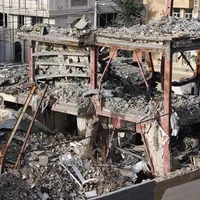
US President Donald Trump said on Thursday the United States has “militarily decimated Iran,” in a post on Truth Social, adding with "(to be continued!)"
US President Donald Trump said on Thursday the United States has “militarily decimated Iran,” in a post on Truth Social, adding with "(to be continued!)"





US stocks closed higher on Thursday, with the Dow Jones Industrial Average finishing above the 50,000 level for the first time since the start of the war with Iran, rising 370.26 points, or 0.7%, to 50,063.46, The Associated Press reported.
The S&P 500 gained 0.8% to set a record high for a second consecutive session, while the Nasdaq composite rose 0.9% to another all-time high.
Cisco Systems led gains after reporting stronger-than-expected quarterly earnings, with its shares jumping 13.4% for their best performance in nearly 15 years.
US Secretary of State Marco Rubio said on Thursday Iran must not be allowed to use US domestic political or financial concerns as leverage in negotiations, adding that Washington will not be pressured into accepting a bad deal.
“The Iranians can’t use that as leverage. He’s making clear we won’t let Iran use Americans’ financial situations as leverage… if they think they are going to use our domestic politics to pressure him into a bad deal, that’s not going to happen,” Rubio said.
The Pentagon canceled plans to temporarily deploy 4,000 US-based troops to Poland, two US officials told Reuters on Thursday, in a move that raises fresh questions over President Donald Trump’s expected force posture changes in Europe.
A Pentagon spokesperson declined to comment, while a lawmaker said Congress not yet been notified of the decision and no formal announcement had been made.
The report said the decision follows earlier plans to withdraw 5,000 troops from Germany, amid tensions between Washington and European allies over policy on Iran.
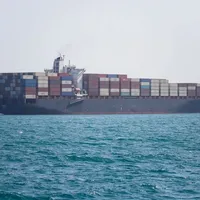
US Secretary of State Marco Rubio on Thursday said in an interview with NBC News while in China that Washington and Beijing are aligned in opposing the militarization of the Strait of Hormuz and the introduction of a tolling system for passage through the strategic waterway.
"The Chinese side said they are not in favor of militarizing the Straits of Hormuz and they're not in favor of a tolling system, and that's our position... It's good that we have alliance, or at least agreement, on that point," Rubio said.
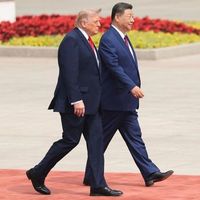
President Trump’s visit to Beijing appears to have confirmed two things about China’s approach to the Iran crisis: it is willing to help prevent further escalation, but not at Tehran’s expense.
Reports during and after the summit, including comments highlighted by Fox News, suggested China had signaled readiness to play a more active role in stabilizing the situation around Iran and the Strait of Hormuz. But any Chinese cooperation is likely to remain limited, transactional and tied to Beijing’s broader strategic priorities.
Before Trump’s departure from Washington, Treasury Secretary Scott Bessent accused China of “funding the largest state sponsor of terrorism,” while Trump himself said he was going to have “a long talk” with Xi. Earlier, the Treasury Department sanctioned five of the so-called “teapot” refineries that process Iranian oil in China.
These moves were not surprising. The war involving the United States, Israel and Iran has shaken the Middle East, threatened global energy flows and become increasingly unpopular among American voters and consumers. Iran has become a priority issue for the White House.
China has reasons to listen. Beijing has already shown some willingness to restrain Tehran, including by nudging Iran toward the Islamabad talks. It does not want the fragile ceasefire to collapse. It does not want the Strait of Hormuz closed. Nor does it want a global downturn that would damage Chinese exports.
China’s investments in electrification and renewable energy have increased its resilience, but they have not made it immune to a major shock in the Middle East. Yet Xi’s help, if it comes, will not be free.
In his recent conversation with Secretary of State Marco Rubio, Foreign Minister Wang Yi made clear that Taiwan remains the core issue for China and the greatest risk in US-China relations. Chinese readouts of the Trump-Xi meeting also placed Taiwan at the center of discussions, with the “situation in the Middle East” appearing much lower on the agenda.
The implication is difficult to miss: if Washington wants Chinese cooperation, Beijing will expect a more accommodating US position on Taiwan. Several current and former American officials have expressed concern that Trump, who said he intended to have “that discussion” with Xi, could delay or reduce the $14 billion weapons package for Taiwan approved by Congress in January.
In other words, China has strong reasons to support de-escalation over Iran, but Beijing also appears to view the crisis through the lens of a much larger strategic bargain with Washington.
Xi’s help is also likely to remain limited. Beijing and Tehran still share a fundamental objective. Both want the Iranian regime to survive. Both want Iran to avoid emerging from the conflict as a defeated and humiliated loser. Both oppose a regional order shaped by the United States and Israel.
For Tehran, defeat would be a regime-threatening disaster. For Beijing, it would be another demonstration that American coercive power can still break an anti-US partner.
China may therefore encourage Tehran to negotiate, support language about regional stability or help Trump claim diplomatic progress. It may even make quiet tactical adjustments to its economic dealings with Iran. But any such move will be carefully calibrated to serve China’s own interests.
China may help stabilize the situation; it will not help Washington defeat Tehran.
The fact that the Chinese embassy in Washington has not denied reports that Wang Yi and Rubio agreed in April that the Strait of Hormuz must remain toll-free is a good example of this dynamic. So too is the American readout stating that China opposes Iran developing nuclear weapons. Both signal goodwill, but neither represents a meaningful shift in Beijing’s position or a compromise of its interests.
This means Trump may have secured Chinese support for de-escalation. He may even have persuaded Xi that a prolonged conflict is too costly for China and that Beijing has an interest in pushing Tehran toward compromise. But he cannot force China to choose Washington over Tehran. Pressure alone is unlikely to work, especially if it requires Xi to appear publicly subordinate to American demands.
There is another problem: it remains unclear what Washington actually wants. It is not enough to accuse China of enabling Iran. The United States still lacks a clearly defined objective. Does it want a ceasefire, renewed nuclear talks, limits on Iranian regional activity, security guarantees for regional partners or some combination of these?
Without a coherent strategy, China will continue using the crisis to extract concessions elsewhere while offering only limited help.
The summit may not have determined the future of the Middle East. But it did reveal something important about the emerging great-power rivalry. The United States remains militarily dominant but strategically erratic. China is economically central but cautious as a security actor.
Trump arrived in Beijing seeking Chinese help on Iran. Xi may offer some. But the price will be high, and the help will not come at Tehran’s expense.