Iran lawmaker says parliament panel finalized Strait of Hormuz oversight plan
The head of the Iranian parliament's national security and foreign policy committee said on Wednesday a plan for managing the Strait of Hormuz had been finalized and submitted to parliament for review.
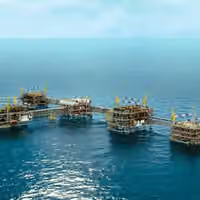
"A plan for managing the Strait of Hormuz has reached a final conclusion in the commission and has been uploaded to parliament's system for review and approval," committee chairman Ebrahim Azizi said, according to state media.
Azizi did not provide details of the proposal but said Iran aimed to use the strategic waterway "as a power-building lever."
"The Islamic Republic of Iran wants to use this geographic capacity as a source of leverage," he said.
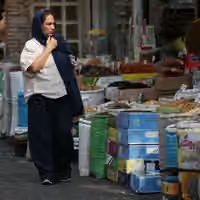
Iranian President Masoud Pezeshkian said the government would not allow people to exploit wartime conditions to put pressure on livelihoods, state media reported on Wednesday.
"We will not allow some people to exploit wartime conditions to target people's livelihoods, create economic disruption and seek illegitimate gains through illegal actions," Pezeshkian said at a meeting on market conditions and supply chains, according to IRNA.
He said one of the main aims of Iran's enemies was to disrupt the economy and increase pressure on living conditions, adding that authorities needed to ensure supplies while protecting both producers and consumers.
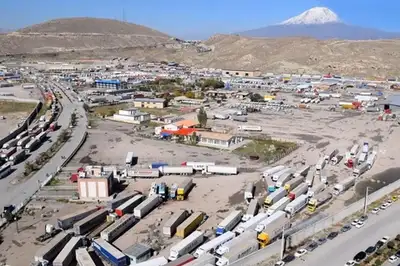
Pezeshkian also called for tighter oversight of supply and distribution chains to prevent hoarding and uncontrolled price increases and said boosting exports and trade with neighboring countries was key to strengthening economic resilience.
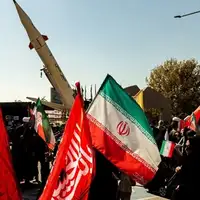
A commander of Iran's Revolutionary Guards in Tehran said on Wednesday forces were ready to carry out operations "in the shortest possible time" following military drills involving the Basij militia and Guard units.
"We are ready to carry out any operation, at any point and in any time frame, in the shortest possible time," Hassan Hassanzadeh, commander of the Mohammad Rasoulollah Corps of Greater Tehran, was quoted as saying by state media.
Hassanzadeh said a five-day Basij exercise had met all objectives and included previously rehearsed scenarios, tactics and techniques aimed at confronting enemies "in any territory."
Mossad chief David Barnea secretly visited the United Arab Emirates at least twice during the Iran war to coordinate on the conflict, the Wall Street Journal reported on Wednesday, citing Arab officials and a person familiar with the matter.
Barnea visited the UAE in March and April, the report said.
Israel and the UAE had showed close security coordination during the war, with Israel sending Iron Dome batteries and military personnel to the UAE to defend against Iran’s projectiles, according to the report.
The UAE had also carried out strikes in Iran, including an attack on a refinery on Iran’s Lavan Island in the Persian Gulf, it added.
Italy is moving two minesweepers closer to the Persian Gulf but will only deploy them as part of an international mission if a stable truce takes hold in the region, Defense Minister Guido Crosetto said on Wednesday.
Speaking to parliament, Crosetto said the vessels would be “pre-positioned” first in the eastern Mediterranean and then the Red Sea as a precaution, adding that any deployment to the Strait of Hormuz would require parliamentary approval.
He said Italy would act only in the event of a “real, credible and stable truce,” as talks led by Britain and France continue on a possible naval mission to protect shipping in the region.
A British-Iranian man said a suspected Iran-linked agent offered him £40,000 ($53,000) to kill a London-based journalist critical of Tehran, the Jewish Chronicle reported.
The man, identified by the pseudonym “Nima,” told the newspaper he reported the incident to British police after returning to the UK and warned the journalist, who works for a Persian-language broadcaster.
Nima, who has lived in Britain for about a decade and works as a bartender, said the encounter began during a holiday in southern Europe, where he visited an Iranian restaurant and met two men, including one he recognized from Iran.
The man initially discussed plans to open a bar in London and asked for Nima’s contact details, presenting the approach as a business proposal, according to the report.
Alleged murder proposal
Nima said a second meeting took a darker turn when the man arrived with two others and began referring to personal details about his life in Britain and relatives in Iran.
“He told me: ‘You are a decent man. You have family in Iran who need your support. I would like to offer you a job, with an initial payment of £40,000,’” Nima told the Jewish Chronicle.
According to the report, the man referred to an Iranian journalist in London with whom Nima had argued online and said he wanted to “punish” him, asking whether Nima could carry out the act or find someone else to do so.
Nima said he was offered 20,000 pounds in cash immediately and the remaining amount after identifying the journalist’s location. He said the men appeared to believe the journalist lived in a safe house.
The suspected operative did not directly identify himself as an IRGC member, Nima said, but an acquaintance suggested he held influence in Iran and referred to “Sepah” - the Persian name for the IRGC –while discussing possible help for Nima’s family.
The alleged approach comes amid heightened concern in Britain over Iranian-linked threats targeting dissidents, journalists and Jewish institutions.
Iran-aligned group Harakat Ashab al-Yamin al-Islamia has said it carried out attacks on Jewish sites in Britain and Europe, including incidents involving two north London synagogues last month.
MI5 Director General Ken McCallum has warned repeatedly that Iran, acting through the IRGC, poses what he described as a “potentially lethal” threat in Britain. British authorities have disrupted multiple alleged Iran-linked plots since 2022 targeting dissidents, journalists and Jewish or Israeli-linked individuals, according to British officials.