• العربية
  • فارسی
Brand
  • Iran Insight
  • Politics
  • Economy
  • Analysis
  • Special Report
  • Opinion
  • Podcast
  • Iran Insight
  • Politics
  • Economy
  • Analysis
  • Special Report
  • Opinion
  • Podcast
  • Theme
  • Language
    • العربية
    • فارسی
  • Iran Insight
  • Politics
  • Economy
  • Analysis
  • Special Report
  • Opinion
  • Podcast
All rights reserved for Volant Media UK Limited
volant media logo

US says Iran nuclear issue must be resolved 'once and for all' - Fox News

May 10, 2026, 04:33 GMT+1

The US State Department said Iran’s nuclear program poses a global threat and urged Tehran to enter serious negotiations with Washington to resolve the dispute.

“Iran’s nuclear program poses a threat to the United States and the entire world,” a State Department spokesperson told Fox News Digital.

“Iran today stands in breach of its Nuclear Non-Proliferation Treaty obligations by failing to provide full cooperation with the IAEA,” the spokesperson said, adding that Iran’s leadership “must engage in serious diplomatic negotiations with the United States to resolve the nuclear issue once and for all.”

Most Viewed

Iran-UAE breakdown leaves Iranian expats in limbo
1
INSIGHT

Iran-UAE breakdown leaves Iranian expats in limbo

2
ANALYSIS

Iran runs dry as Islamic Republic funds ideology and foreign proxies

3
INSIGHT

Ghalibaf pushes for the role many thought he already had

4

IRGC-linked media calls for fees on Hormuz undersea internet cables

5
PODCAST

Can Tehran weaponize the Strait of Hormuz for years to come?

Banner
Banner

Spotlight

  •  Tehran’s youth emerge from war more cynical, not more hopeful
    TEHRAN INSIDER

    Tehran’s youth emerge from war more cynical, not more hopeful

  • Iran-UAE breakdown leaves Iranian expats in limbo
    INSIGHT

    Iran-UAE breakdown leaves Iranian expats in limbo

  • Canada’s Middle East role: From Pearson’s legacy to passive diplomacy
    ANALYSIS

    Canada’s Middle East role: From Pearson’s legacy to passive diplomacy

  • Iran runs dry as Islamic Republic funds ideology and foreign proxies
    ANALYSIS

    Iran runs dry as Islamic Republic funds ideology and foreign proxies

  • Ghalibaf pushes for the role many thought he already had
    INSIGHT

    Ghalibaf pushes for the role many thought he already had

  • Internet shutdown pushes Iranians onto distrusted domestic apps
    VOICES FROM IRAN

    Internet shutdown pushes Iranians onto distrusted domestic apps

•
•
•

More Stories

Iran uses diplomacy to cover its nuclear program, US lawmaker says

May 10, 2026, 02:51 GMT+1

"For 47 years, we tried the 'nice' way — endless diplomacy — while Iran chanted 'Death to America' and took numerous American lives. My Democrat colleagues have loved every second of it. No more," Republican lawmaker Randy Fine said.

"Now we have a strong President in the Oval Office. We are choosing PEACE THROUGH STRENGTH to crush the Iranian Regime," he added in a post on X.

Tehran’s youth emerge from war more cynical, not more hopeful

May 10, 2026, 02:40 GMT+1
•
Tehran Insider

On Sanaei Street in central Tehran, young people spill onto pavements and crowd around tiny tables late into the evening, smoking and laughing as if the war never happened.

The street has become a kind of world within a world, a haven where people briefly lose sight of what is happening outside.

At times it almost feels normal—with one tiny but crucial difference: fewer phones are out. There is no internet to warrant the persistent scrolling.

The music is low. The coffees are overpriced. Couples flirt. Groups of teenagers debate politics and migration plans over cheesecake and iced americanos as if the country around them were not still carrying the shock of war.

But the conversations are different now.

“We thought it would be over in a few days,” says Mani, 17, referring to the January protests that were brutally crushed. “It wasn’t.”

He says he was on the streets with many of his school friends but would think twice if there were another call to action.

“If the US and Israel couldn’t get rid of them, no one can,” Mani says. “I don’t think I’d go out again. I’ll leave Iran as soon as I can.”

That appeared to be the dominant mood among the Gen Zs I met in one cafe this week. One was my best friend’s daughter. The others were her friends.

Their worldview is hard to grasp and harder to explain. The best phrase I can find for it is “suspended expectation”: a belief that the Islamic Republic may eventually fall, paired with almost no confidence that they themselves can bring it down.

The January massacre and the war that followed appear to have fundamentally altered how many young opponents of the system think about change.

“I still like the Prince,” says Saba, another 17-year-old, referring to Iran’s most prominent opposition figure, Reza Pahlavi. “I think he’s a decent man. But I don’t think he can beat this seven-headed dragon.”

The contempt for Iran’s ruling elite is unmistakable. It may be the closest thing to a shared political feeling in the cafe.

Saba and her friends describe moments of fear during the bombings, but also flashes of exhilaration after reports that senior officials had been killed.

“We partied hard when Khamenei was killed,” says Tannaz, 19. “We danced through the night wearing headphones so no music could be heard from outside the apartment.”

File photo by ISNA shows a woman leaving a cafe in Tehran
100%
File photo by ISNA shows a woman leaving a cafe in Tehran

Tannaz says she protested too and saw a friend badly injured with pellets. The crackdown, she says, “shattered” her emotionally.

“After January 10, I couldn’t get out of bed for days,” she says. “Then there was a ray of hope when Khamenei was killed. But not anymore. I really don’t know what’s going to happen to Iran. I’m trying to take it day by day until I can leave.”

That last sentiment may be the most common political position among parts of Tehran’s urban youth today: not revolution, not reform, but exit.

The war does not appear to have softened hostility toward the ruling system among these circles. If anything, it deepened it. But it also reinforced a conclusion many seem to have reached after January: that the state is far harsher and more durable than they once believed.

So they “chill,” as Mani puts it with a laugh. “What else can one do?”

They are still hanging out when I leave—no doubt drifting from politics to names and trends non-Gen Zs would struggle to decipher.

Tehran has regained its noise after the war. But beneath it sits a generation that no longer seems to believe history belongs to them.

Senator Sanders accuses Trump admin of lying about Iran war cost

May 10, 2026, 01:25 GMT+1

Senator Bernie Sanders on Saturday accused the Trump administration of lying about the cost of the Iran war, saying the conflict could exceed $1 trillion rather than the $25 billion figure cited by the administration.

IRGC-linked media calls for fees on Hormuz undersea internet cables

May 9, 2026, 21:14 GMT+1

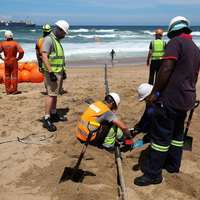
IRGC-linked media called for Iran to generate revenue from undersea internet cables passing through the Strait of Hormuz, framing the waterway not only as an energy and shipping chokepoint but also as a digital pressure point.

Tasnim, in an article titled “Three practical steps for generating revenue from Strait of Hormuz internet cables,” wrote that submarine fiber-optic cables passing through the strait carry more than $10 trillion in financial transactions each day, but said Iran has been deprived of the economic and sovereign benefits of this critical communications infrastructure because of what it called a traditional view of the strait.

The outlet said the Islamic Republic should take three steps: charge foreign companies initial licensing and annual renewal fees; require major technology companies such as Meta, Amazon and Microsoft to operate under Iranian law; and give Iranian companies exclusive control over maintenance and repair of the cables.

Tasnim said the measures would turn the Strait of Hormuz into a “strategic center for legitimate wealth creation.”

Fars, another IRGC-linked outlet, published a similar thread on X, describing Iran as the ruler of a “hidden highway” in Hormuz.

It said more than 99% of international internet communications are carried through undersea cables, describing them as the backbone of global technology giants including Google, Meta and Microsoft.

  • IRGC-linked media hints at threat to Persian Gulf undersea internet cables

    IRGC-linked media hints at threat to Persian Gulf undersea internet cables

Fars said disruption to the cables for only a few days could cause tens to hundreds of millions of dollars in damage to the regional and global economy.

It said an important part of this communications route passes through the Strait of Hormuz and claimed the cables are legally within an area where Iran can exercise sovereignty, adding that the right of transit passage does not remove that authority.

Under its proposed model for governing the strait, Fars said the passage of undersea cables should require permits and toll payments, while foreign companies should operate under Iranian rules. It also said management, repair and maintenance of the cables could be assigned exclusively to Iranian companies, turning Hormuz into one of Iran’s “digital power” levers.

The comments follow an earlier Tasnim report in April that mapped undersea internet cables and cloud infrastructure around the Persian Gulf, including routes serving the UAE, Qatar, Bahrain, Kuwait and Saudi Arabia.

That report argued that countries on the southern side of the Persian Gulf depend more heavily than Iran on maritime internet routes, and highlighted landing stations, data hubs and cloud infrastructure as strategic pressure points in the conflict.

Iran International wins four WAN-IFRA Middle East digital media awards

May 9, 2026, 20:49 GMT+1

Iran International won four top prizes at the 2026 WAN-IFRA Digital Media Awards Middle East, with projects recognized for innovation, audience engagement, data visualization and participatory storytelling under repression.

The network’s winning projects included its Telegram bot, the interactive map of Israeli targets in the 12-Day War, and the Woman, Life, Freedom campaign. The Telegram bot also advanced to the global stage of the WAN-IFRA awards.

The Telegram bot, entered by Volant Media in the United Kingdom, won Best in Audience Engagement and Most Innovative Digital Product. WAN-IFRA described it as a secure, AI-assisted channel that allowed users to submit footage and reports from inside Iran, with all material verified by Iran International journalists.

Launched during mass protests, the bot became a major news-gathering tool, receiving thousands of messages a day from inside Iran.

After a nationwide internet shutdown, it also became a communication bridge, allowing Iranians abroad to send messages to relatives cut off from the internet. The messages were broadcast on satellite TV, with one message displayed every 20 seconds during live programming.

The WAN-IFRA jury said the project showed “exceptionally innovative” editorial use of a familiar technology, adding that its transformation during internet shutdowns into a bridge between diaspora families and people inside Iran showed “significant real-world user impact beyond news gathering.”

The jury said the bot’s verification workflows, security protections and cross-platform integration made it “a strong reference model for participatory journalism in restricted environments.”

Iran International’s interactive map of Israeli targets in the 12-Day War, a project by Amirhadi Anvari, won Best Data Visualization in the Middle East.

The project mapped strike locations across Iran during the 12-day war, combining citizen-reported information with verified data from multiple sources, including international reporting.

WAN-IFRA said the map provided a comprehensive and accessible view of the conflict at a time when location-specific information was scarce and fragmented.

The project’s main editorial challenge was verifying, locating and explaining events across competing information environments. It drew on citizen videos, domestic reporting and open-source geospatial data, with each location cross-checked and mapped with coordinates, classification and explanatory context.

Designed for clarity and usability, the map uses custom markers, layered views and filters to help audiences navigate complex information. Most locations link to visual evidence or related reporting, while additional layers provide context, including the proximity of military and sensitive sites to civilian infrastructure.

The jury called it a “thorough geolocation of categorized information” and praised its link to Google Maps, adding: “The simple and brief narrative allows the user to freely explore the content.”

Iran International also won Best Marketing Campaign for a News Brand for its Woman, Life, Freedom campaign, marking the third anniversary of Mahsa Amini’s death in police custody in 2022.

The campaign centered on an installation of 1,000 hand-folded origami birds, each carrying the name of a victim and arranged to form “Woman, Life, Freedom” in Persian. The installation was filmed and amplified across broadcast and digital platforms, inviting audiences to fold and share their own origami birds using the hashtag #MahsaBird.

WAN-IFRA said the campaign turned remembrance into collective action in a context where open dissent carries major risks. It offered audiences inside Iran and across the diaspora a simple and safe act of remembrance, using paper, light and human hands to turn individual grief into visible solidarity.

The jury called it “a powerful uplift,” saying it translated Iran International’s mission into “a safe, participatory act of remembrance under repression.”

“Deeply inspiring,” the jury said.

The Iran International Telegram bot has also advanced to the global stage of the WAN-IFRA awards. The global winners are due to be announced in June during the WAN-IFRA World News Media Congress in Marseille, France.

WAN-IFRA, the World Association of News Publishers, is one of the largest international organizations in media and journalism, representing thousands of publishers and news organizations worldwide. Its Digital Media Awards honor leading work in digital journalism, data visualization, media products, marketing and audience engagement.