US sanctions Iraq deputy oil minister over Iran ties


The United States imposed sanctions on Iraq’s Deputy Minister of Oil Ali Maarij Al-Bahadly and others accused of exploiting Iraq’s oil sector for the benefit of Iran and its proxy militias, the Treasury Department said on Thursday.
The Treasury said Al-Bahadly was “instrumental in facilitating the diversion of Iraqi oil products to benefit known Iran-affiliated oil smuggler Salim Ahmed Said as well as Iran-backed terrorist militia Asa’ib Ahl Al-Haq (AAH).”
“Like a rogue gang, the Iranian regime is pillaging resources that rightfully belong to the Iraqi people,” Treasury Secretary Scott Bessent said.
“Treasury will not stand idly by as Iran's military exploits Iraqi oil to fund terrorism against the United States and our partners,” he added.
Treasury also designated three senior leaders of Iran-aligned militias Kata’ib Sayyid Al-Shuhada and Asa’ib Ahl Al-Haq.



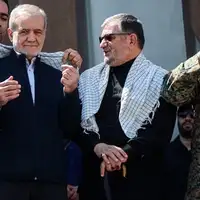
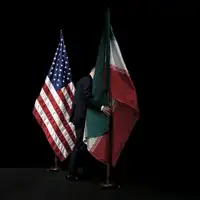

Renewed deal talk between Washington and Tehran has angered many Iranians, who questioned in messages to Iran International whether another agreement would reward the Islamic Republic while ordinary people bear the cost.
Trump said there was “never a deadline” for negotiations and suggested an agreement could still emerge before his planned trip to China next week, while also keeping open the possibility of renewed strikes.
His remarks followed an Axios report saying the White House believes a one-page memorandum to end the war may be within reach and could create a framework for broader nuclear talks within 30 days.
The reaction from Iranians inside and outside the country exposed deep divisions over diplomacy, military pressure and expectations surrounding Trump’s approach toward the Islamic Republic.
Comments show fatigue and distrust
Many people writing or speaking to Iran International described emotional exhaustion after months of war, economic pressure and shifting rhetoric from Washington.
“Mr. Trump, either fight like a man or leave us alone. You’ve exhausted us,” one person from Arak wrote.
Another questioned why discussions that could shape Iran’s future appeared to be taking place privately.
“If the fate of the Iranian people is being decided through this agreement, why is it happening behind closed doors?” the sender wrote. “People have the right to know what concessions are being exchanged.”
A citizen from Shiraz described the current moment as existential for many Iranians.
“The nation has endured years of sanctions and pressure and paid the price in blood like a war,” the comment read. “Every single day of delay is a matter of life and death.”
Others focused on the humanitarian and psychological toll of the conflict.
“Trump said help was on the way, but not only did no help come, the attacks led to two months of internet shutdowns,” one person wrote. “People suffered, people were killed and we became poorer.”
Another from Mashhad urged Iranians to rely on each other rather than foreign powers or the government.
“In this situation, neither the government nor America is thinking about the people,” the message said. “We Iranians should look after each other.”
Some appealed directly to opposition figures abroad.
One from Tehran called on exiled Prince Reza Pahlavi to speak with Trump and Israeli Prime Minister Benjamin Netanyahu “so people do not lose hope.”
Others argued the confrontation remained unresolved regardless of diplomacy or ceasefire efforts.
“This battle is not over and it continues,” one person wrote. “Whether there is war, ceasefire or negotiations, the conflict still continues.”
‘Iranians lack representation in talks’
Asieh Amini, a Norway-based social affairs analyst speaking to Iran International, said assessing public opinion inside Iran has become increasingly difficult because internet restrictions and censorship have narrowed the available space for measuring sentiment.
“When we talk about the reaction of the Iranian people, naturally we should rely on polling or evidence,” Amini said. “Unfortunately because of internet shutdowns, even the virtual space that could provide a relative statistical picture no longer exists.”
Amini argued that Iran is simultaneously experiencing two separate conflicts: one between the Islamic Republic and foreign powers, and another between the Iranian state and its own citizens.
“One side has a loud voice in international media – those opposing war and criticizing Trump and Netanyahu,” Amini said. “But the second conflict, which many believe is the main war inside Iran, has no representative in these negotiations.”
Amini described that internal struggle as a long-running confrontation marked by executions, repression, internet shutdowns and economic pressure.
“The main victims are defenseless Iranian people,” Amini said, adding that many Iranians now feel excluded from decisions that could shape their future.
Discussing the possible domestic impact of any agreement, Amini said economic hardship has overtaken nearly every other public concern inside Iran.
“The issue is no longer simply poverty,” she said. “Many people’s incomes have reached zero or below zero. People are surviving off savings if they have any left.”
Amini said many Iranians who once hoped for stronger international intervention have become increasingly disillusioned.
“Despair is the first thing reflected back from society,” she said. “People feel abandoned.”
Users accuse Trump of inconsistency
Posts circulating on X reflected a broader and often harsher backlash, with many accusing Trump of worsening conditions inside Iran without producing meaningful political change.
One widely shared post listed what the writer described as the results of Trump’s “half-finished war”: internet blackouts, inflation, unemployment, declining incomes, poverty, intensified repression, executions and worsening mental health conditions.
Another user wrote that hearing phrases such as “agreement,” “negotiations” and “we’ll see what happens” now caused disgust after months of uncertainty.
Some posts argued Trump had weakened US credibility by alternating between military threats and diplomacy.
“Trump destroyed the reputation and military credibility of America as a superpower,” one user wrote.
Another accused Washington of trapping “90 million people between sanctions and clerics” after withdrawing from the 2015 nuclear deal only to pursue negotiations again years later.
Several users dismissed the latest reports of possible diplomacy as unrealistic given the scale of disagreements between Washington and Tehran.
One post summarized what it described as Washington’s demands – ending enrichment, dismantling nuclear facilities and transferring enriched uranium abroad – before concluding that the Islamic Republic would never accept such terms.
“If you think these two sides will reach an agreement, then maybe I’m the one who thinks differently,” the post read.
Others suggested the latest reports were intended mainly to stabilize markets and calm fears of renewed conflict.
“The whole Axios story looks like a game to control the markets,” one wrote.
‘Washington balancing pressure, diplomacy’
Amir Hamidi, a national security specialist speaking to Iran International, said Trump’s latest comments appeared aimed at maintaining pressure on Tehran while leaving room for diplomacy.
“Recent remarks by President Trump about giving the Islamic Republic a final opportunity reflect a calculated strategy by the United States,” Hamidi said. “A strategy that preserves maximum pressure while keeping the final diplomatic path open.”
Hamidi said Washington was attempting to present itself as avoiding war while pressuring Tehran politically, economically and diplomatically.
“The message from Washington is clear,” Hamidi said. “There is still a path for negotiations and preventing crisis, but this opportunity cannot be unlimited.”
According to Hamidi, Trump is also seeking to frame the United States as responding to regional instability rather than initiating conflict.
“The United States wants to show that it is not the side starting wars,” he said, adding that Washington’s stated objective remains changing what it sees as destabilizing regional behavior by Tehran.
Netanyahu praised
A large number of posts contrasted Trump with Israeli Prime Minister Benjamin Netanyahu, who was often portrayed as more committed to confronting the Islamic Republic militarily.
“Finish the job, Bibi,” several users wrote in English and Persian.
One argued Trump “can never match Bibi,” while another said Israel appeared more determined than Washington to maintain pressure on Tehran.
“The goal of Israel is the destruction of the Islamic Republic,” one post read. “That’s why they stay calm despite America’s mixed signals.”
Some argued any agreement that preserves the current political system in Iran would ultimately fail and damage US deterrence globally.
“If America gives concessions to the Islamic Republic and leaves, then Washington must say goodbye to its deterrence,” one person wrote.
Another argued Tehran would eventually resume efforts toward nuclear weapons capability if it survives the current confrontation intact.
“Immediately after surviving this war, the regime will go toward the atomic bomb,” the user wrote.
Calls for restraint compete with despair
Not all reactions condemned Trump outright. Some users argued Washington’s softer rhetoric may reflect tactical calculations rather than retreat.
“One should not panic or insult Trump for now,” one post said, arguing the administration’s priority appeared to be securing Iran’s stockpile of enriched uranium.
Another urged people to avoid emotional swings driven by daily headlines.
“We should not judge too quickly or expect too much,” the user wrote.
The US Justice Department is investigating a series of oil market trades placed shortly before major announcements related to the Iran war by President Donald Trump and Iranian officials, ABC News reported on Thursday, citing sources.
ABC said federal investigators and the Commodity Futures Trading Commission were examining at least four trades worth more than $2.6 billion that bet oil prices would fall shortly before key public statements that later pushed prices lower.
The report said the trades took place ahead of announcements including delays to possible US strikes on Iran, ceasefire extensions and statements about the Strait of Hormuz remaining open.
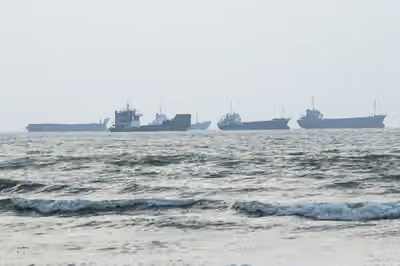
The United Arab Emirates has moved several crude oil tankers through the Strait of Hormuz with tracking systems switched off in an effort to continue exports during the conflict involving Iran, the US and Israel, Reuters reported on Thursday, citing industry sources and shipping data.
Reuters said at least four tankers carrying about 6 million barrels of Upper Zakum and Das crude left terminals in April despite heightened risks in the waterway.
The report said the vessels sailed with automatic identification system transponders turned off to reduce the chance of detection by Iranian forces.
Some cargoes were transferred to other ships outside the strait before heading to refineries in Malaysia and South Korea, while others were unloaded into storage facilities in Oman, Reuters reported.
The UAE’s ADNOC declined to comment, according to Reuters.
The report said the shipments represented only a fraction of the UAE’s normal exports before the war, but highlighted efforts by Persian Gulf producers and buyers to keep oil flowing despite tensions.
The European Union does not believe the impact of the war involving Iran warrants emergency support measures for the tourism sector at this stage, according to draft European Commission guidelines seen by Reuters.
“The current situation does not point to the need for dedicated measures for the tourism sector, unlike during the COVID-19 crisis,” the draft guidelines said.
The guidance, due to be published on Friday, is expected to be shared with airlines and tourism operators.
China has ordered companies to disregard US sanctions targeting Iranian oil purchases, Fox News reported on Thursday, citing a directive issued through China’s Commerce Ministry.
The report said the order invoked a 2021 “blocking statute” that bars Chinese firms from complying with foreign sanctions considered illegitimate by Beijing.
According to Fox News, the directive applies to several Chinese refiners accused by Washington of buying Iranian crude, including independent “teapot” refineries.
The report described the move as a more explicit form of resistance to US pressure on Iran’s oil exports, which Washington has sought to curb as part of its sanctions campaign against Tehran.
Treasury Secretary Scott Bessent accused China of helping finance Iran through oil purchases, Fox News said.
“This is unprecedented. It’s a major escalation in terms of China’s response to US economic statecraft,” Fox News quoted analyst Max Meizlish as saying.
China is the main buyer of Iranian crude, much of which is shipped through opaque maritime networks designed to avoid sanctions enforcement, the report said.