US says Iran attacks below threshold for wider war in Persian Gulf


The United States said Iranian attacks on shipping and forces in the Persian Gulf have so far remained below the level that would trigger a broader conflict, a senior US military official said.
“They’ve attacked US forces more than 10 times, all below the threshold of restarting major combat operations at this point,” said Dan Caine, chairman of the Joint Chiefs of Staff.
He said Iran had also fired at commercial vessels nine times and seized two container ships since a ceasefire was announced, adding the actions were part of efforts to disrupt global trade.
Caine said around 22,500 mariners aboard more than 1,550 commercial vessels remain stranded in the Persian Gulf due to the disruption.
He added that Iran’s actions were affecting a key maritime route that handles roughly one-fifth of global oil consumption, with US forces working to secure shipping and maintain freedom of navigation.



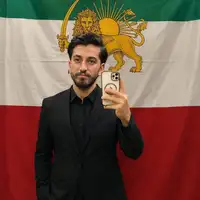

Iranians need access to weapons to challenge their rulers, President Donald Trump said on Monday, arguing that protesters would fight effectively if armed but are currently outmatched by government forces.
“They have to have guns. And I think they’re getting some guns. As soon as they have guns, they’ll fight like, as good as anybody there is,” Trump said in an interview with The Hugh Hewitt Show.
Trump also suggested that US military pressure had already significantly weakened Iran and that further action could be completed within a short timeframe.
“We’ve taken out much of what we’d have to do, probably another two weeks, two weeks, maybe three weeks,” he said.
Trump said large numbers of Iranians would struggle to confront armed forces without access to weapons.
“You can’t have an unarmed population against people with AK-47s,” he said, adding that even hundreds of thousands of protesters would struggle against a smaller armed force.
He said previous protests had been met with heavy force, citing the deaths of tens of thousands of demonstrators, and suggested this had made him cautious about encouraging renewed unrest.
“I’m very torn on it, because they lost 42,000 people in the first two weeks. I don’t really want to see that,” Trump said.
Past weapons transfers
Trump said during a phone interview with Fox Sunday in early April that his administration had previously attempted to send firearms to Iranian protesters but that the effort did not reach its intended recipients.
“We sent guns to the protesters, a lot of them. We sent them through the Kurds. And I think the Kurds took the guns,” he said.
He repeated similar complaints, saying he was “very upset with a certain group of people” and warning they would “pay a big price.”
Several Kurdish groups have denied receiving such shipments.
Calls in Washington to arm Iranians
Republican Senator Lindsey Graham has also urged the administration to pursue a policy of directly arming Iranian civilians.
“If I were President Trump and I were Israel, I would load the Iranian people up with weapons so they can go to the streets armed and turn the tide of battle inside Iran,” Graham said in an interview with Fox News on Monday.
“We don’t need American boots on the ground. We’ve got millions of boots on the ground in Iran. They just don’t have any weapons,” he added.
Graham described the idea as “a Second Amendment solution,” suggesting that arming civilians could help bring down the government without direct foreign military involvement.
He also called for alternative channels to deliver weapons, urging the administration not to rely on Kurdish intermediaries.
Military pressure and internal divisions
Trump framed his comments within a broader assessment that Iran’s military and economic capacity had been significantly weakened.
“They have no navy. They have no air force. They have no anti-aircraft,” he told The Hugh Hewitt Show.
Trump added that financial pressure may have affected the government’s ability to pay its forces.
“We don’t think they’re paying their soldiers and their Guard anymore,” he said.
He also suggested divisions within Iran’s security structure, drawing a distinction between the regular army and other forces.
“We purposefully have not gone after them too much, because we think that they’re much more moderate,” Trump said.
At the same time, he said the United States was not seeking to dismantle the country’s military institutions entirely.
“We’re not looking to decimate the army,” he said, referring to past regional experiences.
“You know, when they did Iraq... and the worst thing was they got rid of the all the leaders, so nobody knew who the leader was. And then all of a sudden, you had ISIS. We don’t want to do that.”
Nuclear focus remains central
Despite discussing internal unrest, Trump said that preventing Iran from acquiring nuclear weapons remains the central objective of US policy.
“The one thing I will say is they will never have a nuclear weapon,” he said.
Trump said any potential agreement would require the return of highly enriched uranium and limits on missile development, though he stressed that nuclear restrictions remain the priority.
US War Secretary Pete Hegseth said Washington is not seeking conflict with Iran despite rising tensions in the Strait of Hormuz.
“We’re not looking for a fight,” Hegseth said at a Pentagon briefing, adding the United States aims to protect shipping from Iranian aggression.
He said Iran “has been harassing ships for too long” and called it “the clear aggressor,” while stressing Tehran does not control the strategic waterway.
Hegseth said the United States would not need to enter Iranian airspace or waters to reopen the strait, adding that hundreds of ships were lining up to transit the route.
He also said a US effort to secure shipping, referred to as Operation Project Freedom, is temporary and separate from broader military operations.
Hegseth also added that the ceasefire with Iran remains in place.
Iran’s labor-focused news agency ILNA has pushed back against government efforts to downplay the economic impact of the recent conflict, citing experts who warn that actual unemployment figures far exceed official estimates.
The dispute highlights a growing rift between state reporting and the reality described by workers following the conflict that began on February 28.
While some officials have attempted to minimize the scale of the crisis, labor advocates and citizens report a significant downturn across key industrial sectors.
British Prime Minister Keir Starmer warned Iran against inciting antisemitism in Britain, saying such actions would not be tolerated.
“Our message to Iran, or to any other country that might seek to foment violence, hatred or division in society, is that it will not be tolerated,” he said.
Starmer said authorities were examining whether foreign states could be linked to recent incidents targeting Jewish communities.
A US aircraft carrier transited the Arabian Sea as part of operations linked to the Strait of Hormuz, US Central Command said on Tuesday, releasing an image of the vessel underway.
CENTCOM said the USS George H.W. Bush (CVN 77) was supporting “Project Freedom” and enforcing a naval blockade on Iran from the Gulf of Oman.
The command said the carrier has more than 60 aircraft on board.