• العربية
  • فارسی
Brand
  • Iran Insight
  • Politics
  • Economy
  • Analysis
  • Special Report
  • Opinion
  • Podcast
  • Iran Insight
  • Politics
  • Economy
  • Analysis
  • Special Report
  • Opinion
  • Podcast
  • Theme
  • Language
    • العربية
    • فارسی
  • Iran Insight
  • Politics
  • Economy
  • Analysis
  • Special Report
  • Opinion
  • Podcast
All rights reserved for Volant Media UK Limited
volant media logo
EXCLUSIVE

Pezeshkian said to clash with IRGC over UAE strikes

May 4, 2026, 23:53 GMT+1

Exclusive information obtained by Iran International suggests an unprecedented surge in tensions between Iran’s government and military leadership.

According to the information, President Masoud Pezeshkian has expressed strong anger at actions by the Islamic Revolutionary Guard Corps, describing missile and drone strikes on the United Arab Emirates as “completely irresponsible” and carried out without the government’s knowledge or coordination.

Pezeshkian is also said to have called the approach of escalating tensions with regional countries “madness,” warning of potentially irreversible consequences.

The claims, which could not be independently verified, point to growing friction at the top of Iran’s political and military establishment as the conflict intensifies.

Most Viewed

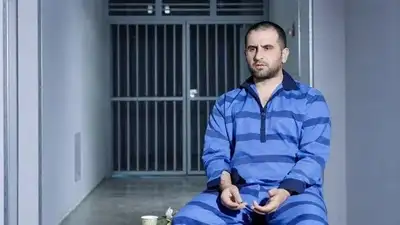
Abroad they talk, at home they hang
1
TEHRAN INSIDER

Abroad they talk, at home they hang

2

Islamic Republic puts another political prisoner to death

3
INSIGHT

War shadow lays bare divisions among Iran’s clerics

4

Iran bars jailed British couple from seeing each other

5

Internet shutdown drives Iranians to leave country for access

Banner
Banner

Spotlight

  • Iran’s warnings give way to action as US launches Hormuz 'escort' plan
    INSIGHT

    Iran’s warnings give way to action as US launches Hormuz 'escort' plan

  • Iran secretly buries executed Swedish citizen at site linked to mass graves
    EXCLUSIVE

    Iran secretly buries executed Swedish citizen at site linked to mass graves

  • Abroad they talk, at home they hang
    TEHRAN INSIDER

    Abroad they talk, at home they hang

  • War shadow lays bare divisions among Iran’s clerics
    INSIGHT

    War shadow lays bare divisions among Iran’s clerics

  • Who speaks for Iran: What the public rift means, and what it hides
    INSIGHT

    Who speaks for Iran: What the public rift means, and what it hides

  • ‘Permit for a terrorist’: Canada opposition asks who cleared ex-IRGC official’s entry
    PODCAST

    ‘Permit for a terrorist’: Canada opposition asks who cleared ex-IRGC official’s entry

•
•
•

More Stories

Iran secretly buries executed Swedish citizen at site linked to mass graves

May 4, 2026, 21:58 GMT+1

Iran's security agents secretly buried the body of Iranian-Swedish citizen Kourosh Keyvani in the Khavaran area outside Tehran after he was executed in March on charge of spying for Israel, sources familiar with the matter told Iran International.

The sources said Keyvani was executed on the morning of March 18 without his family being informed, and his body was buried on March 23 in Khavaran.

Keyvani’s family later tried to mark the unmarked gravesite by placing stones nearby, but authorities removed them to prevent the burial location from being identified, the sources told Iran International.

Khavaran, in southeast Tehran, is known as a burial site associated with executed political prisoners, including victims of Iran’s 1988 mass executions. Families of those buried there have long accused authorities of preventing them from marking graves or holding public mourning ceremonies.

Continue reading

100%

Iran secretly buries executed Swedish citizen at site linked to mass graves

May 4, 2026, 21:53 GMT+1
•
Farnoosh Faraji

Iran's security agents secretly buried the body of Iranian-Swedish citizen Kourosh Keyvani in the Khavaran area outside Tehran after he was executed in March on charge of spying for Israel, sources familiar with the matter told Iran International.

The sources said Keyvani was executed on the morning of March 18 without his family being informed, and his body was buried on March 23 in Khavaran.

Keyvani’s family later tried to mark the unmarked gravesite by placing stones nearby, but authorities removed them to prevent the burial location from being identified, the sources told Iran International.

Khavaran, in southeast Tehran, is known as a burial site associated with executed political prisoners, including victims of Iran’s 1988 mass executions. Families of those buried there have long accused authorities of preventing them from marking graves or holding public mourning ceremonies.

Kourosh Keyvani's grave site in Khavaran
100%
Kourosh Keyvani's grave site in Khavaran

Sources said Keyvani had been arrested on June 16, 2025, in Kordan, a mountainous village in Alborz province, west of Tehran and near the city of Karaj.

One source said Keyvani had a strong interest in motorcycling, especially jumping with motorcycles, and was riding in Kordan on the day of his arrest.

The source said security agents confiscated his phone during the arrest and used landscape photos he had taken in the area as evidence in the case, alleging links to Mossad and opposition groups.

Iran's judiciary-linked Mizan news agency on March 18 announced that Keyvani had been executed after his death sentence was upheld by the Supreme Court. Mizan alleged that Keyvani had passed “images and information of sensitive locations” to officers of Israel’s Mossad intelligence agency.

At the time, Swedish Foreign Minister Maria Malmer Stenergard expressed deep regret over the execution and said the Swedish government sympathized with Keyvani’s family in Sweden and Iran. She added that the legal proceedings leading up to the execution did not meet the standards of due process.

Kourosh Keyvani
100%
Kourosh Keyvani

Sources told Iran International that on the night before the execution, Keyvani was summoned via loudspeaker without prior notice and held in solitary confinement until morning.

After Keyvani's detention, his family had no information about his condition or whereabouts for around 40 days. He was held in solitary confinement for nearly eight months and was told he would be released if he accepted the charges and made a "forced confession," according to the sources.

According to forced confessions later published by Iranian state media, Keyvani said he had been forced into espionage because of financial need and residency issues.

But sources indicated to Iran International that he had lived in Sweden for around 10 years and did not face financial difficulties. The sources also described him as intelligent and fluent in six languages.

Keyvani was among the latest in a series of executions in Iran of people accused of espionage for Israel, a pattern that has intensified since the 12-day war in June 2025. The executions have continued during and after the 2026 US-led war.

Iran has one of the highest execution rates in the world and has long used the death penalty in national security cases, including allegations of spying.

Following the conflict, rights groups and international media have reported a sharp increase in arrests and executions on such charges.

Ottawa on defensive after Iran football chief linked to IRGC entered Canada

May 1, 2026, 09:21 GMT+1
•
Negar Mojtahedi

Canada’s government is under pressure to explain how Mehdi Taj, Iran’s football chief and a former intelligence officer of the Revolutionary Guards, was briefly allowed into the country after being granted a special permit despite Canada’s IRGC ban.

Speaking to reporters Thursday, Prime Minister Mark Carney declined to discuss Taj’s case, citing privacy laws, but defended the government’s position on the IRGC.

“Members of the [Iranian] Revolutionary Guard rightly have been prohibited from entering this country and they will not enter this country,” he said.

The comments followed reporting by Iran International on how Taj, president of Iran’s football federation and a former intelligence commander in the Islamic Revolutionary Guard Corps, received a Temporary Resident Permit, or TRP. The permit allows Canadian authorities to admit a person who would otherwise be barred under immigration law.

The issue moved quickly to Parliament. At Thursday’s meeting of the Standing Committee on Public Safety and National Security in Ottawa, Conservative MP Frank Caputo pressed Immigration Minister Lena Diab to explain how a person deemed inadmissible had received permission to enter Canada.

Caputo said “the rule of law demands transparency” and asked “who gave him a visa,” saying it took Iran International’s reporting to bring the case to public attention.

  • Iran football chief with IRGC ties sent back by Canada after arrival

    Iran football chief with IRGC ties sent back by Canada after arrival

Who is Mehdi Taj, and what happened?

Taj, the president of Iran’s football federation, has longstanding ties to the Islamic Republic’s security establishment. After the 1979 revolution, he served as an intelligence commander in the IRGC in Isfahan, where units were involved in monitoring internal dissent, including among Kurdish populations.

Canada listed the IRGC as a terrorist entity in 2024, a move that makes people linked to the force inadmissible. Even so, Taj was issued a TRP to attend the FIFA Congress in Vancouver.

Sources who spoke to Iran International said Taj arrived in Canada but was turned back within hours. He and two people accompanying him left at 10:05 p.m. Tuesday after being questioned by authorities.

The immigration ministry commented only after his departure. It declined to name him, citing privacy laws, and said broadly that people linked to the IRGC are not welcome in Canada.

Taj’s brief presence came just before the FIFA Congress at the Vancouver Convention Centre, where members of the Iranian diaspora had planned protests after Iran International’s report.

A protester holds demonstration placards outside the Vancouver Convention Centre during the 76th FIFA Congress on April 30, 2026.
100%
A protester holds demonstration placards outside the Vancouver Convention Centre during the 76th FIFA Congress on April 30, 2026.

Political backlash in Ottawa

The case has put the government under pressure from opposition figures who say Taj’s short stay does not answer the central question of why he was issued a permit at all.

Opposition Leader Pierre Poilievre criticized the government publicly, raising concerns about how a person deemed inadmissible was granted entry in the first place.

Conservative Deputy Leader Melissa Lantsman also pointed to Iran International’s reporting as she pressed the government for answers.

“Good riddance. He didn’t just get on a plane and come here to be sent back. Did the Liberal government issue him a permit? Yes or no?” she said.

Conservative MP Michelle Rempel Garner rejected the argument that the system had worked because Taj was ultimately refused entry.

“Come on, this guy was issued a permit. They made a conscious decision,” she told reporters Thursday in Ottawa.

She has described the case as evidence of serious immigration screening failures and called for accountability.

In the Senate, opposition leader Leo Housakos pressed the government in sharper terms.

“Your government can't seem to show the IRGC the door, but it can find a way to roll out the welcome mat… What’s the point of listing the IRGC if you're not serious about throwing him out of our country?” he said.

Foreign Affairs Minister Anita Anand suggested the permit may have been granted and later revoked.

“It’s not my personal lead, but my understanding is that there is a revocation of the permission. It was unintentional,” she said, pointing to a possible breakdown in the process.

International coverage and fallout

The case, first reported by Iran International, has since moved into wider international coverage. The New York Times, USA Today, Agence France-Presse and The Canadian Press have all covered the incident, citing the reporting that brought Taj’s entry to light.

The episode has turned a single immigration decision into a broader test of Canada’s policy toward officials tied to the Islamic Republic.

Canada has formally listed the IRGC as a terrorist entity, barring people linked to it from entering the country, yet discretionary tools like Temporary Resident Permits allow authorities to override that inadmissibility.

For critics, Taj’s case has exposed the space between the government’s public position and the way exceptions can be made in practice.

The controversy also comes amid deep anger over the Islamic Republic’s human rights record, including what has been described as one of the deadliest crackdowns in modern history earlier this year, adding to concern among Iranian-Canadians over how Western governments handle officials tied to Tehran.

Demonstration placards are seen outside the Vancouver Convention Centre during the 76th FIFA Congress
100%
Demonstration placards are seen outside the Vancouver Convention Centre during the 76th FIFA Congress

Questions still facing the government

Taj’s brief entry and rapid removal have left the government facing the same basic issue that first put the case in public view: who approved the permit, why it was granted despite Canada’s inadmissibility rules, and what safeguards are in place to prevent a similar decision.

What began with Iran International’s reporting has become a political fight in Ottawa, one that now sits at the crossing point of immigration law, national security and Canada’s approach to the Islamic Republic.

Pezeshkian, Ghalibaf seek Araghchi’s ouster over 'subservience' to Guards

Apr 30, 2026, 19:27 GMT+1

Iran's president and parliament speaker are seeking Foreign Minister Abbas Araghchi’s removal, accusing him of following the Revolutionary Guard chief’s instructions in nuclear talks without informing the president, two sources familiar with the matter told Iran International.

President Masoud Pezeshkian and Speaker Mohammad Bagher Ghalibaf believe Araghchi has in recent weeks acted less as a cabinet minister tasked with implementing government policy and more as an aide to Ahmad Vahidi, the commander of the Revolutionary Guards, the sources said.

According to the sources who are familiar with ongoing discussions between the heads of Iran's executive and legislative branches, Araghchi has acted over the past two weeks without informing Pezeshkian, in full coordination with Vahidi and based on his directives.

The situation has caused deep dissatisfaction for Pezeshkian, who has told people close to him that he will dismiss Araghchi if it continues, the sources added.

Continue reading

Pezeshkian, Ghalibaf seek Araghchi’s ouster over 'subservience' to Guards

Apr 30, 2026, 19:15 GMT+1

Iran's president and parliament speaker are seeking Foreign Minister Abbas Araghchi’s removal, accusing him of following the Revolutionary Guard chief’s instructions in nuclear talks without informing the president, two sources familiar with the matter told Iran International.

President Masoud Pezeshkian and Speaker Mohammad Bagher Ghalibaf believe Araghchi has in recent weeks acted less as a cabinet minister tasked with implementing government policy and more as an aide to Ahmad Vahidi, the commander of the Revolutionary Guards, the sources said.

According to the sources who are familiar with ongoing discussions between the heads of Iran's executive and legislative branches, Araghchi has acted over the past two weeks without informing Pezeshkian, in full coordination with Vahidi and based on his directives.

The situation has caused deep dissatisfaction for Pezeshkian, who has told people close to him that he will dismiss Araghchi if it continues, the sources said.

Reports of divisions among Islamic Republic officials had previously emerged. On March 28, reports pointed to serious disagreements between Pezeshkian and Vahidi, the Revolutionary Guards commander who is now said to be the most powerful figure in the force.

Informed sources told Iran International at the time that the dispute stemmed from “the handling of the war and its destructive consequences for people’s livelihoods and the country’s economy.”

Three days later, Iran International received reports that Pezeshkian was frustrated at being placed in a “complete political deadlock” and that he had even been stripped of the authority to appoint replacements for government officials killed during the war.

According to that report, Vahidi is said to have explicitly declared that, because of the critical wartime situation, all key and sensitive managerial posts must, until further notice, be directly selected and run by the Revolutionary Guards.

Ghalibaf-led negotiations

On April 27, a group of lawmakers aligned with hardline politician Saeed Jalili declined to sign a parliamentary statement backing Iran’s negotiating team led by Ghalibaf, despite broad support from 261 other MPs.

The statement expressed confidence in the negotiating delegation. However, several prominent hardline figures—including Mahmoud Nabavian, Mohammad Taghi Naqadali, Morteza Aghatehrani, Amirhossein Sabeti, Hamid Rasaei, Ruhollah Izadkhah and Meysam Zohourian—did not sign the statement.

Nabavian was one of the members of the Iranian delegation led by Ghalibaf who attended the first round of Islamabad talks with the United States.

Three days before the statement was published, Iran International reported, citing informed sources in Iran, that Ghalibaf had resigned as head of Iran's negotiating team after being reprimanded over efforts to include the nuclear energy issue in talks.

That report said Araghchi, ahead of his latest trip to Pakistan to deliver the Islamic Republic’s message to Pakistani officials, was seeking to take over leadership of the negotiations following Ghalibaf’s departure.

Araghchi finally visited Islamabad on April 24 alone and handed over Tehran's proposal, which was later rejected by the US president, according to media reports.