• العربية
  • فارسی
Brand
  • Iran Insight
  • Politics
  • Economy
  • Analysis
  • Special Report
  • Opinion
  • Podcast
  • Iran Insight
  • Politics
  • Economy
  • Analysis
  • Special Report
  • Opinion
  • Podcast
  • Theme
  • Language
    • العربية
    • فارسی
  • Iran Insight
  • Politics
  • Economy
  • Analysis
  • Special Report
  • Opinion
  • Podcast
All rights reserved for Volant Media UK Limited
volant media logo

Iran sends US three-stage plan to end war - Al Jazeera

May 3, 2026, 16:11 GMT+1

Iran’s latest peace proposal submitted to the United States via Pakistan aims to turn the ceasefire into an end to the war within 30 days through a three-stage plan, Al Jazeera reported, citing sources.

The proposal includes a nonaggression pledge, including from Israel, to prevent a return to war and end fighting across the Middle East, the report said.

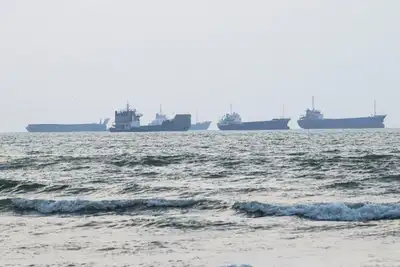
In the first phase, the Strait of Hormuz would gradually reopen and the US blockade on Iranian ports would be lifted, while Tehran would take charge of dealing with sea mines, according to Al Jazeera.

The second phase would allow Iran to resume enrichment after a time limit at 3.6% under a “zero-storage principle,” while rejecting the dismantling of nuclear infrastructure or destruction of Iranian facilities.

The plan also calls for the United States and Israel to refrain from attacking Iran and its allies in exchange for Iran refraining from launching strikes, and includes the gradual release of frozen funds as part of sanctions relief.

In the third phase, Tehran proposed strategic dialogue with Arab neighbors and a regional security system covering the Middle East, the report said.

Most Viewed

Tehran hardens stance on Hormuz as ‘non-negotiable’
1
INSIGHT

Tehran hardens stance on Hormuz as ‘non-negotiable’

2
INSIGHT

Iran faces internal instability fears as US blockade tests regime loyalists

3
INSIGHT

Who speaks for Iran: What the public rift means, and what it hides

4

Iran cuts oil output as US blockade strains storage - BBG

5
PODCAST

‘Permit for a terrorist’: Canada opposition asks who cleared ex-IRGC official’s entry

Banner
Banner

Spotlight

  • Who speaks for Iran: What the public rift means, and what it hides
    INSIGHT

    Who speaks for Iran: What the public rift means, and what it hides

  • Tehran hardens stance on Hormuz as ‘non-negotiable’
    INSIGHT

    Tehran hardens stance on Hormuz as ‘non-negotiable’

  • ‘Permit for a terrorist’: Canada opposition asks who cleared ex-IRGC official’s entry
    PODCAST

    ‘Permit for a terrorist’: Canada opposition asks who cleared ex-IRGC official’s entry

  • Iran war cannot end with Revolutionary Guards still in control
    OPINION

    Iran war cannot end with Revolutionary Guards still in control

  • Economics may decide outcome of Iran-US standoff
    INSIGHT

    Economics may decide outcome of Iran-US standoff

  • Soaring prices push medicine beyond Iranians' reach

    Soaring prices push medicine beyond Iranians' reach

  • Tehran is pricing out its daughters
    TEHRAN INSIDER

    Tehran is pricing out its daughters

•
•
•

More Stories

Bessent says US 'suffocating' Iran with blockade, financial pressure

May 3, 2026, 15:57 GMT+1

US Treasury Secretary Scott Bessent said on Sunday that the Trump administration’s Economic Fury campaign was tightening financial and naval pressure on Iran, targeting money flows to the IRGC and offshore assets.

“I can tell you that we are suffocating the regime, and they are not able to pay their soldiers,” Bessent said on Fox News.

“This is a real economic blockade, and it is in all parts of government, all hands on deck,” he added.

Bessent said the US Navy blockade meant “no ships are getting through.”

“We have upped the pressure on anyone trying to remit money into Iran to help the IRGC,” he said.

Bessent accused the IRGC of stealing from the Iranian people and said the US had tracked down offshore assets.

“We are going to preserve those assets for the Iranian people,” he said.

CENTCOM says 49 commercial vessels redirected under Iran blockade

May 3, 2026, 15:35 GMT+1

US Central Command said on Sunday that 49 commercial vessels had been redirected to comply with US blockade operations against Iran.

Adm. Brad Cooper, CENTCOM commander, visited the USS Milius on Saturday as the guided-missile destroyer patrolled regional waters in support of the blockade, CENTCOM said in a post on X.

“US forces remain fully committed to total enforcement,” CENTCOM said.

Iran's IRGC intelligence says Trump faces 'bad deal' or 'impossible operation'

May 3, 2026, 14:37 GMT+1

Iran’s Revolutionary Guards intelligence organization said on Sunday that President Donald Trump’s room for maneuver had narrowed amid pressure over the US naval blockade of Iranian ports and negotiations.

“There is only one way to read this: Trump must choose between an impossible military operation or a bad deal with the Islamic Republic of Iran,” the IRGC intelligence organization said in a post on X.

It cited what it called Iran’s deadline to the Pentagon over the blockade, a shift in tone by China, Russia and Europe against Washington, Trump’s “passive” letter to Congress and the acceptance of Iran’s negotiating conditions.

“The decision-making space for the United States has narrowed,” it added.

Khamenei adviser warns Trump against playing with ‘world lifeline’

May 3, 2026, 14:31 GMT+1

An advisor to Iran's Supreme Leader Mojtaba Khamenei warned US President Donald Trump on Sunday against threatening Iran through the Strait of Hormuz, calling the waterway a “world lifeline.”

Ali Akbar Velayati said Trump had threatened Iran with famine but did not understand the political and economic weight of the Strait of Hormuz.

He said global food security and fertilizer supply chains were tied to Iran’s position in the waterway.

“Mr. Trump, the world of politics is not the domain of movies like Jack Sparrow,” Velayati wrote on X. “Whoever plays with the world lifeline will put himself in stalemate,” he added.

Iran says 32 scientific centers hit in US-Israeli strikes

May 3, 2026, 14:09 GMT+1

Iran’s vice president for science said on Sunday that about 32 research and scientific centers were hit during US-Israeli strikes.

Hossein Afshin said physical damage to industry, excluding oil and gas, had been estimated at about $6 billion.

He said Iran’s research and university infrastructure had sustained around $300 million in damage.

He added that nearly 100 of Iran’s roughly 11,000 knowledge-based companies, or about 1%, were damaged and suffered about $25 million in losses.