• العربية
  • فارسی
Brand
  • Iran Insight
  • Politics
  • Economy
  • Analysis
  • Special Report
  • Opinion
  • Podcast
  • Iran Insight
  • Politics
  • Economy
  • Analysis
  • Special Report
  • Opinion
  • Podcast
  • Theme
  • Language
    • العربية
    • فارسی
  • Iran Insight
  • Politics
  • Economy
  • Analysis
  • Special Report
  • Opinion
  • Podcast
All rights reserved for Volant Media UK Limited
volant media logo

Video: NATO chief says Russia, China, Iran pose great danger

Apr 22, 2026, 12:13 GMT+1

Most Viewed

Disputes within Iran leadership blocked negotiators’ trip to Islamabad
1
EXCLUSIVE

Disputes within Iran leadership blocked negotiators’ trip to Islamabad

2
INSIGHT

As Tehran digs in, ordinary Iranians pay the price

3
INSIGHT

Who backs war now? Tehran flips the script

4
VOICES FROM IRAN

Inflation spikes, basic goods slip out of reach for Iranians, citizens say

5
ANALYSIS

Rapid deterioration of Iran-UAE ties threatens a critical trade lifeline

Banner
Banner

Spotlight

  • Behind Tehran’s unity show: The secret letter to the shadow king
    INSIGHT

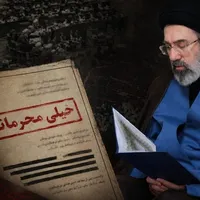
    Behind Tehran’s unity show: The secret letter to the shadow king

  • Rapid deterioration of Iran-UAE ties threatens a critical trade lifeline
    ANALYSIS

    Rapid deterioration of Iran-UAE ties threatens a critical trade lifeline

  • Tehran stocks head for reopening, but it risks triggering a new crisis
    ANALYSIS

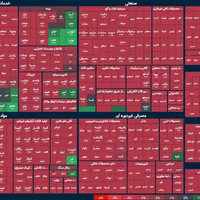
    Tehran stocks head for reopening, but it risks triggering a new crisis

  • Power vacuum in Tehran emboldens hardliners
    INSIGHT

    Power vacuum in Tehran emboldens hardliners

  • Inflation spikes, basic goods slip out of reach for Iranians, citizens say
    VOICES FROM IRAN

    Inflation spikes, basic goods slip out of reach for Iranians, citizens say

  • Iran turns to citizenship and assets as tools of pressure beyond its borders

    Iran turns to citizenship and assets as tools of pressure beyond its borders

•
•
•

More Stories

US deploys Ukrainian counter-drone system at Saudi base - Reuters

Apr 22, 2026, 11:46 GMT+1

The US military has introduced Ukrainian counter-drone technology at a key air base in Saudi Arabia in recent weeks, five sources familiar with the matter told Reuters.

The deployment involved a Ukrainian command-and-control platform known as Sky Map at Prince Sultan Air Base, the sources said.

The system is used by Ukraine’s military to identify incoming drone threats, including Iranian-developed Shahed drones, and respond by deploying interceptor drones.

Britain welcomes ceasefire extension, urges Hormuz reopening

Apr 22, 2026, 11:11 GMT+1

Britain welcomed the extension of the US-Iran ceasefire on Wednesday and called for talks to resume.

“The UK welcomes the ceasefire extension. We want to see negotiations restart, a comprehensive settlement and full reopening of the Strait without restrictions or tolls,” Home Secretary Yvette Cooper said on Wednesday.

She warned that any return to hostilities would be a major setback for the region, the global economy and the cost of living.

Iran Guards say two ships seized in Hormuz after ceasefire extension

Apr 22, 2026, 11:10 GMT+1

Iran’s Islamic Revolutionary Guard Corps Navy said it had seized two vessels in the Strait of Hormuz and directed them toward Iranian shores, hours after Donald Trump said the United States would extend a ceasefire with Iran.

In a statement, the Guards said the vessels, identified as MSC Francesca and Epaminodes, had violated maritime regulations and endangered navigation by manipulating their tracking systems.

It said the ships were detained and escorted to Iran’s coast, adding that disruption to security in the Strait of Hormuz was a “red line,” referring to the US blockade of Iranian ports.

Continue reading...

Iran Guards say two ships seized in Hormuz after ceasefire extension

Apr 22, 2026, 10:30 GMT+1

Iran’s Islamic Revolutionary Guard Corps Navy said it had seized two vessels in the Strait of Hormuz and directed them toward Iranian shores, hours after Donald Trump said the United States would extend a ceasefire with Iran.

In a statement, the Guards said the vessels, identified as MSC Francesca and Epaminodes, had violated maritime regulations and endangered navigation by manipulating their tracking systems.

It said the ships were detained and escorted to Iran’s coast, adding that disruption to security in the Strait of Hormuz was a “red line,” referring to the US blockade of Iranian ports.

Vessels under fire

The United Kingdom Maritime Trade Operations (UKMTO) said earlier on Wednesday that two cargo vessels were fired upon in separate incidents in the strait.

It said a container ship northeast of Oman reported being approached by an IRGC gunboat, which opened fire without radio contact, causing heavy damage to the vessel’s bridge. All crew were safe and no fire or environmental impact was reported.

In a separate incident west of Iran, an outbound cargo ship reported being fired upon and had stopped in the water. Its crew were safe and there was no reported damage, UKMTO said.

The IRGC-affiliated Fars News Agency said three vessels — Euphoria, MSC Francesca and Epaminodes — were targeted.

Trump said on Tuesday he would extend a fragile ceasefire with Iran indefinitely, even as plans for new talks stalled.

The incidents come amid heightened tensions in the Strait of Hormuz, a key global shipping route that previously handled about one-fifth of the world’s oil and gas flows.

IRGC-linked media hints at threat to Persian Gulf undersea internet cables

Apr 22, 2026, 10:09 GMT+1

IRGC-linked Tasnim has pointedly mapped the Persian Gulf’s undersea internet cables and cloud infrastructure in what appears to be a thinly veiled warning that the region’s digital backbone may now be in Iran’s line of fire.

The report, published on Wednesday, focused on the Strait of Hormuz not only as an energy chokepoint but as a critical corridor for submarine cables serving countries around the Persian Gulf, including the UAE, Qatar, Bahrain, Kuwait and Saudi Arabia.

It argued that several major cable systems pass through or near the waterway and said the southern side of the Persian Gulf depends far more heavily than Iran on maritime internet routes.

Rather than reading as a neutral technical explainer, the article appeared to frame those cables, landing stations and data hubs as strategic pressure points in the conflict.

Tasnim also drew attention to the concentration of cloud and data-center infrastructure in states on the southern side of the Persian Gulf, especially the UAE and Bahrain, effectively sketching a map of assets whose disruption could carry major economic and communications consequences.

That warning carries added weight because digital infrastructure has already come under attack in this war.

Recent reporting said Iranian drone strikes hit Amazon Web Services facilities in the UAE and Bahrain, underlining the physical vulnerability of commercial cloud infrastructure in the Persian Gulf.

The Tasnim article suggests Iran-linked media are signaling that undersea cables and regional data hubs now sit alongside ports, shipping lanes and energy facilities in the conflict’s widening map of pressure points.