• العربية
  • فارسی
Brand
  • Iran Insight
  • Politics
  • Economy
  • Analysis
  • Special Report
  • Opinion
  • Podcast
  • Iran Insight
  • Politics
  • Economy
  • Analysis
  • Special Report
  • Opinion
  • Podcast
  • Theme
  • Language
    • العربية
    • فارسی
  • Iran Insight
  • Politics
  • Economy
  • Analysis
  • Special Report
  • Opinion
  • Podcast
All rights reserved for Volant Media UK Limited
volant media logo

IRGC fires at Indian vessel in Hormuz

Apr 18, 2026, 12:56 GMT+1

Two vessels, including an Indian-flagged supertanker, were forced back out of the Strait of Hormuz on Saturday after being approached by Iranian Revolutionary Guards’ naval units, shipping monitor TankerTrackers said.

Two vessels, including an Indian-flagged supertanker, were forced back out of the Strait of Hormuz on Saturday after being approached by Iranian Revolutionary Guards’ naval units, shipping monitor TankerTrackers said.

The incident comes as India continues to buy Iranian crude, despite mounting tensions in the waterway. “Meanwhile, India is still importing Iranian oil. With friends like these,” TankerTrackers said.

The group said audio recordings indicated IRGC gunboats fired during the encounter as the ships were redirected westward.

One of the vessels was a very large crude carrier carrying about two million barrels of Iraqi oil, it said.

Meanwhile, Reuters reported, citing shipping sources that some merchant vessels received radio messages saying the Strait of Hormuz was shut again and that no ships were allowed to pass.

Most Viewed

State media slam Araghchi's Hormuz tweet, say it let Trump claim victory
1

State media slam Araghchi's Hormuz tweet, say it let Trump claim victory

2
OPINION

The Hormuz get out of jail card turned to a grave

3
INSIGHT

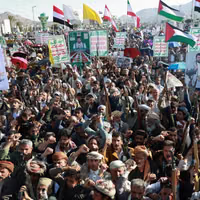
How Tehran bends its own red lines to boost state rallies

4

Iran International says it won’t be silenced after London arson attack

5

US arrests Iranian national over alleged Basij-linked visa fraud

Banner
Banner

Spotlight

  • Too early to tell who is winning Iran war, experts say
    PODCAST

    Too early to tell who is winning Iran war, experts say

  • How Tehran bends its own red lines to boost state rallies
    INSIGHT

    How Tehran bends its own red lines to boost state rallies

  • Iran blackout cripples freelancer, small business incomes
    VOICES FROM IRAN

    Iran blackout cripples freelancer, small business incomes

  • Ideology may be fading in Iran, but not in Kashmir's ‘Mini Iran'
    INSIGHT

    Ideology may be fading in Iran, but not in Kashmir's ‘Mini Iran'

  • US blockade enters murky phase as tankers spoof signals and buyers hesitate
    ANALYSIS

    US blockade enters murky phase as tankers spoof signals and buyers hesitate

  • Why the $100 billion Hormuz toll revenue is a myth
    ANALYSIS

    Why the $100 billion Hormuz toll revenue is a myth

•
•
•

More Stories

Too early to tell who is winning Iran war, experts say

Apr 17, 2026, 21:22 GMT+1
•
Negar Mojtahedi

As Washington signals that a deal with Tehran may be close, a central question remains unresolved: who, if anyone, is actually winning?

US President Donald Trump said on Friday he expects an agreement with Iran “in the next day or two,” even claiming Iran has “agreed to everything,” including halting uranium enrichment and transferring its highly-enriched uranium stockpiles to the US.

The remarks came hours after Iran announced the reopening of the Strait of Hormuz following weeks of disruption, an announcement that sparked rare public criticism from within the Islamic Republic targeting the negotiating team.

Despite Tehran's declared reopening of the strait, Trump said the US will continue blockading Iranian ports until a final deal is achieved.

Speaking at Iran International's English podcast Eye for Iran, maritime sanctions expert Charlie Brown framed the strategy behind the current US blockade as one that could either be about pressure to deal or pressure to collapse.

“I think it’s clear that the goal would be, you know, the first case is pressure to come to negotiate, but the other case would be pressure to collapse the regime system and make space for a new system,” said Brown, a senior advisor at United Against Nuclear Iran who tracks Iran’s shadow fleet and illicit tanker networks.

That dual objective, forcing negotiations while simultaneously weakening the system sits at the heart of the current moment. But whether it is working remains far less clear.

Pressure campaign vs. economic reality

At the center of that uncertainty is the Strait of Hormuz, where a US-led pressure campaign has targeted Iran’s oil exports — the Islamic Republic's economic lifeline.

Both Brown and energy expert Dr. Iman Nasseri, Managing Director for the Middle East at FGE, agreed the impact is real, but warned it is too early to measure its effectiveness.

“The effects of a blockade will definitely take time,” Brown said, cautioning against drawing quick conclusions.

Nasseri, one of the leading experts on Iran’s oil flows and regional energy markets, echoed that view, emphasizing that even under ideal conditions, economic pressure unfolds slowly.

“In normal conditions three to four weeks but in Iranian situation and sanctions evasion it could take up to three months for a cargo to land in the destination market,” he said.

That delay means Iran can continue generating revenue in the short term, even as restrictions tighten.

“Iran is still selling oil which is out there at sea today without loading anything,” Nasseri explained, underscoring how existing cargoes can sustain income flows even as new exports are disrupted.

Shipping data reinforces that point. According to TankerTrackers.com, 633 Iran-linked tankers have been tracked globally, with 397 sanctioned by US authorities. Yet dozens continue operating, including at least 72 vessels currently moving freely in the Middle East.

The system — built on ship-to-ship transfers, AIS spoofing and shadow banking remains active, even under pressure.

That raises a broader question: whether global markets can absorb the disruption long enough for pressure on Iran to fully materialize.

  • State media slam Araghchi's Hormuz tweet, say it let Trump claim victory

    State media slam Araghchi's Hormuz tweet, say it let Trump claim victory

Nuclear stakes and competing narratives

While the economic battle unfolds at sea, the nuclear file remains central to any potential deal and to competing claims of success.

Trump’s assertion that Iran has agreed to halt enrichment would represent a major concession. But nuclear experts caution that the reality is more complex.

“I’d say the probability the regime would want to build the bomb has gone up, but the probability that they can succeed has gone down,” said David Albright, founder of the Institute for Science and International Security.

Albright also warned that focusing only on Iran’s most enriched uranium stockpiles risks missing the bigger picture. Iran possesses thousands of kilograms of lower-enriched uranium that could be further processed if enrichment continues — meaning any deal that does not fully end enrichment could leave a pathway intact.

Taken together, his assessment points to a paradox: Iran may be more motivated than ever to pursue nuclear capability, even as its ability to do so has been degraded by military strikes.

That tension complicates any claim that diplomacy alone has resolved the nuclear threat.

Regional shifts and Iran’s influence

Beyond the nuclear and economic fronts, regional dynamics suggest Iran’s position may be shifting — though not collapsing.

One of the most significant developments has been direct diplomatic engagement between Lebanon and Israel, a move that signals potential decoupling from Tehran’s influence.

“This was the first time that the United States recognizes that the government of Lebanon is sovereign enough and adult enough to sit in face-to-face talks bilaterally without Saudis or Iranians or Syrians or anybody else in the room,” said Hussain Abdul Hussain, a research fellow at the Foundation for Defense of Democracies and author of the Arab Case for Israel.

A newly agreed ceasefire between Israel and Lebanon is set to last 10 days, with the possibility of being “extended by mutual agreement” if negotiations show progress

That shift challenges one of Iran’s long-standing pillars of regional power: its network of proxy forces.

For years, Lebanon has effectively been treated as an extension of Iran’s regional strategy through Hezbollah. But the current talks — taking place independently of Tehran — suggest a possible shift toward decoupling.

Abdul Hussain underscored that divide more directly, describing how Lebanon’s leadership is increasingly asserting its independence from Iran’s negotiations.

“You do you, we do Lebanon,” he said, characterizing the government’s stance as separate from Tehran’s diplomatic track.

A moment of uncertainty

Taken together, the developments across Hormuz, the nuclear file and the regional landscape point to a single conclusion: it is too early to declare a winner.

The United States has demonstrated its ability to impose pressure — militarily and economically — while Iran has shown it can still adapt, sustain revenue and shape the narrative.

For now, the outcome is not defined by victory, but by how long each side can sustain the pressure before it breaks.

You can watch Eye for Iran on YouTube or listen on any podcast platform of your choosing

Three charged over attempted arson at Iran International office in London

Apr 17, 2026, 09:24 GMT+1

British police on Friday have charged three people over an attempted arson attack near the London offices of Iran International.

Oisin McGuinness, 21, Nathan Dunn, 19, and a 16-year-old boy were all charged with arson with intent to endanger life. McGuinness faces an additional charge of dangerous driving. All three suspects are British nationals and are scheduled to appear at Westminster Magistrates’ Court.

The incident occurred on Wednesday evening when an ignited container was thrown into a car park near the network’s studios in northwest London. There were no reports of injuries or damage following the attempted attack. Officers pursued a black SUV which later crashed on Ballards Lane in Finchley.

In a statement, Iran International said the attack highlights increasing pressure on its journalists and their families, particularly following the recent war involving Iran.

The broadcaster said its staff and their relatives have faced threats and harassment, describing the situation as an effort to silence independent reporting.

US arrests Iranian national over alleged Basij-linked visa fraud

Apr 16, 2026, 20:18 GMT+1

US immigration authorities have arrested an Iranian national accused of lying about past ties to a paramilitary organization linked to Iran’s Revolutionary Guards, a Department of Homeland Security spokesperson told Iran International.

Homeland Security Investigations agents, working with the FBI, arrested Yousof Sadat Azizi on April 13 on charges related to alleged fraud and misrepresentation in his visa application, a DHS spokesperson said.

Authorities said Azizi had denied being a member of Iran’s Student Basij Organization when applying for a US visa, despite allegedly belonging to the group between 2006 and 2010. The Basij is affiliated with the Islamic Revolutionary Guard Corps, which the United States has designated as a foreign terrorist organization.

According to DHS, Azizi entered the United States in September 2013 on a student visa and studied at the University of Michigan before transferring to Virginia Polytechnic Institute. Officials said his student visa status was later terminated after he failed to re-enroll for the Fall 2025 semester.

Azizi is currently being held in immigration detention pending a hearing before an immigration judge, the statement said.

“There is no room in the United States for the rest of the world’s terrorist sympathizers, and we are under no obligation to admit them or let them stay here,” the DHS spokesperson said.

The arrest comes amid heightened scrutiny of Iranian nationals in the United States following the recent war between Iran and Israel and rising tensions between Washington and Tehran.

Several other cases involving individuals linked to prominent Iranian political figures have also drawn attention in recent weeks.

Among them was the arrest of the son of former Iranian vice president Masoumeh Ebtekar, who was detained in the United States along with his wife and child.

In a statement on Saturday the State Department said Secretary of State Marco Rubio had terminated the green card status of Seyed Eissa Hashemi, Maryam Tahmasebi and their son, who were placed in the custody of Immigration and Customs Enforcement pending removal.

Rubio had earlier terminated the lawful permanent resident status of the niece and grandniece of former IRGC commander Qasem Soleimani, leading to their arrest by federal agents earlier this month.

The State Department said Hamideh Soleimani Afshar and her daughter were now in the custody of US Immigration and Customs Enforcement, pending removal from the United States.

The department alleged that Soleimani Afshar had publicly supported Iran’s government and the Islamic Revolutionary Guard Corps while living in the United States, including through social media posts praising attacks on US forces and promoting regime messaging.

“The Trump Administration will not allow our country to become a home for foreign nationals who support anti-American terrorist regimes,” Rubio said in a statement.

The cases have circulated widely on Iranian social media and Persian-language media, where they have been cited by critics of Washington as evidence of increased pressure on Iranians abroad.

Statement by the Iran International Editorial Board on escalating threats and intimidation

Apr 16, 2026, 19:00 GMT+1
•
Iran International's Editorial Board

Iran International condemns the attempted attack near its London studios on the evening of 15 April.

At around 8:15 pm, a suspicious vehicle was denied entry at the main entrance to our site. Shortly afterwards, incendiary devices were thrown into the car park of a neighbouring building, just metres from our studios. Our security team responded immediately, and the police and fire brigade arrived shortly afterwards. We are grateful to them for their swift response.

On 16 April, the Metropolitan Police confirmed they had arrested three people after an ignited container was thrown towards the offices of a Persian-language media organisation in north-west London. The container landed in a car park without causing damage or injury. They also said the case is not currently being treated as a terrorist incident but is being investigated by Counter Terrorism Policing London.

The police investigation is ongoing. At this stage, the motives and intentions of those involved have not been established, and we will not speculate while inquiries continue. But this was a serious incident, and it comes at a time of growing threats and intimidation directed at Iran International and those connected to its journalists.

In recent months, particularly following the recent military operation in Iran, there has been a marked increase in harassment targeting the relatives of Iran International journalists inside Iran. Security agents have raided the homes of the parents and close family members of several of our journalists. Relatives have been questioned in their homes, in some cases filmed, and pressured to identify themselves as the parents of specific journalists. Phones and other electronic devices have been confiscated. Some have also been interrogated about their bank accounts, assets, and property, despite having no connection to their relatives’ journalistic work.

These actions are part of a wider effort to restrict the free flow of information and deny the Iranian people access to independent news. They have intensified at a time when the authorities have imposed sweeping internet shutdowns and the media inside Iran remains under tight state control. As of today, Iran’s near-total internet blackout has entered its 48th day, making it the longest nation-scale shutdown of its kind on record. When internet access is cut and domestic media are tightly controlled, foreign-based Persian-language broadcasters remain among the few reliable sources of news for people inside the country.

For tens of millions of Iranians, Iran International is a principal source of independent news.

This pressure has been accompanied by public threats and punitive measures. The IRGC-affiliated Fars News Agency has reported that the Tehran Prosecutor’s Office ordered the seizure of assets and the freezing of bank accounts of more than 100 people, including 63 journalists from Iran International. At the same time, threats against Iran International have continued on Iranian state television, where repeated calls have been broadcast for the channel to be targeted by missiles. Iran International has no offices or staff in Iran or elsewhere in the region.

Iran has also continued efforts to target the computers and mobile phones of individual journalists. In several European countries and in North America, authorities have notified us of sustained cyberattacks targeting our journalists. These incidents form part of the wider intimidation and harassment directed at Iran International and its journalists.

Taken together, these actions amount to a campaign of transnational intimidation aimed at silencing independent journalism. Journalists must not be threatened or attacked, and their families must not be used as a means of pressure. Such actions constitute an attack on individual safety, press freedom, and the public’s right to know.

In May 2024, UN experts stated that threats and violence against Iran International formed part of a broader pattern of repression targeting Persian-language journalists operating abroad. In February 2023, Iran International temporarily relocated its broadcasting operations from London to Washington DC following a significant escalation in state-backed threats. In January 2024, the UK announced sanctions linked to a plot to assassinate two Iran International presenters on UK soil. In March 2024, one of our presenters was stabbed outside his London home in an attack investigated by counter-terrorism police. Together, these incidents point to a sustained effort to intimidate Iran International and silence independent Persian-language journalism beyond Iran’s borders.

We thank the British authorities for their continued support and for taking threats against journalists and media organisations seriously.

Iran International will continue its work. We remain committed to independent journalism and to reporting the facts without fear or intimidation.

Iran blackout cripples freelancer, small business incomes

Apr 16, 2026, 10:32 GMT+1
•
Hooman Abedi

Freelancers and small business owners say their incomes have collapsed and daily operations have halted during Iran’s prolonged internet shutdown, which NetBlocks said has caused $1.8 billion in losses over 48 days.

“I work as a freelance web developer and my income has dropped to zero because of the internet outage. I am selling my belongings to cover debts,” a citizen wrote in a message to Iran International.

Another said: “As a student and computer technician, I am stuck in uncertainty. Online classes are heavily disrupted, and I cannot even access the internet to complete projects. My workplace has no customers.”

NetBlocks said on Thursday the disruption had lasted 1,128 hours, describing the shutdown as unprecedented in scale for a country with deep reliance on global connectivity. The group added that its estimate, based on its COST methodology, also reflects wider social and human rights impacts.

Digital economy grinds to a halt

The outage has hit Iran’s digital sector, which had absorbed part of the country’s unemployment pressure over the past decade. Online businesses have lost access to customers, payment systems, and essential tools tied to the global internet.

The Rokna news website said on Wednesday the disruption amounted to a shutdown of the digital economy, noting that the cut to international internet access dealt a direct blow to online businesses.

A couple walk in a park overlooking Tehran, with the iconic Milad Tower seen in the background, April 1, 2026.
100%
A couple walk in a park overlooking Tehran, with the iconic Milad Tower seen in the background, April 1, 2026.

Hundreds of small digital enterprises have been unable to maintain sales, customer communication, or after-sales services. Layoffs have spread across technology firms and media organizations, affecting employees whose work depends on stable connectivity, the outlet added.

Journalists and media workers have also faced income losses and job cuts as communication channels narrowed and publishing operations slowed, according to the report.

Workers face mounting financial strain

“I managed to connect briefly using expensive VPNs, but I have lost my job due to the internet disruption. I have loans to repay and rent to cover, and many others are in the same situation,” another citizen told Iran International.

  • War and inflation batter Iran’s workforce

    War and inflation batter Iran’s workforce

Accounts from across the country point to a broader slowdown. “Prices have increased several times over. Many people have lost their jobs. At least 50 percent of shops are closed,” one resident said, adding that only essential services such as repair shops and small markets remain partially active.

Delays in salary payments have become more common in some businesses, increasing pressure on workers already affected by rising prices. Inflation has further reduced real wages, leaving even those still employed struggling to cover basic living costs.

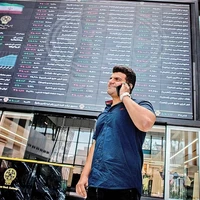
File photo of a young Iranian man who checks his phone outside a store
100%
File photo of a young Iranian man who checks his phone outside a store

Professional networks also reflect the downturn. Users on LinkedIn have publicly said they are seeking new job opportunities, indicating a rise in job seekers among skilled and experienced workers.

Experts warn of lasting damage

Economic journalist Arezoo Karimi said the losses extend beyond immediate income declines, warning of wider consequences for employment and growth.

“This means zero income for businesses that depend on international connectivity. It leads to layoffs and rising unemployment,” Karimi said, adding that daily losses run into tens of millions of dollars.

Karimi said the broader economic impact could reach several times the direct losses, pointing to reduced production and slower economic growth. Inflation, already elevated, is likely to worsen if disruptions continue.

  • Iran's digital economy battered by prolonged blackout

    Iran's digital economy battered by prolonged blackout

“Businesses are not only losing income, they are losing their position in international markets and online visibility. These are damages that cannot easily be reversed,” Karimi added.

With limited access to global markets and tools, many digital workers now face a choice between prolonged uncertainty and leaving the country.

The outage has exposed the dependence of Iran’s digital economy on stable international connectivity, with weeks of disruption enough to dismantle businesses built over years.