Iran rejects US proposal, sets conditions to end war - state media

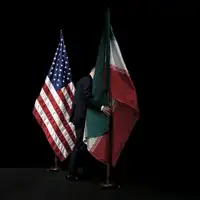
Iran has rejected a US proposal to end the war and set out conditions for any ceasefire, Press TV reported on Wednesday, citing a senior official.

Iran has rejected a US proposal to end the war and set out conditions for any ceasefire, Press TV reported on Wednesday, citing a senior official.
“Iran will end the war when it decides to do so and when its own conditions are met,” the official said, adding: “No negotiations will be held prior to that.”
“Iran’s defensive operations will continue until its conditions are met,” the official said, describing the US proposal as “excessive.”
The official outlined demands, including a halt to attacks and assassinations, guarantees against future conflict, payment of war damages, an end to fighting across all fronts involving allied groups, and recognition of Iran’s authority over the Strait of Hormuz.
The comments come after a senior Iranian official told Reuters that Pakistan had delivered a US proposal to Tehran and that Turkey or Pakistan could be considered as venues for possible talks.






Israel’s military said on Wednesday it carried out strikes on weapons production sites in Tehran linked to aerial and naval systems.
The military said the targets included facilities producing weapons for Iran and allied groups including Hamas and Hezbollah.
It added that air defense positions, including an anti-aircraft missile launcher, were also struck.
The United Nations Human Rights Council on Wednesday backed a resolution by Persian Gulf states and Jordan condemning Iran’s attacks on regional countries, after their diplomats told the body they faced an “existential threat” from Tehran’s strikes.
The 47-member council adopted by consensus a motion brought by Bahrain, Kuwait, Oman, Qatar, Saudi Arabia, the United Arab Emirates and Jordan, decrying Iran’s “unprovoked and deliberate” attacks, calling on Tehran to immediately cease them and demanding full and swift reparations for victims.
Kuwait’s ambassador, Naser Abdullah H. M. Alhayen, told the Geneva-based council that Persian Gulf states were confronting “an existential threat to international and regional security” and said Iran’s actions were undermining international law and sovereignty.
The United Arab Emirates’ ambassador, Jamal Jama al Musharakh, said Iran was attempting to destabilize the international order through “reckless adventures of expansionism.”
The resolution came during an emergency session on the widening regional conflict, in which regional states, the European Union and ASEAN members condemned Iran’s attacks in the Persian Gulf and the Strait of Hormuz.
UN High Commissioner for Human Rights Volker Turk warned that the conflict could draw in countries around the world on an unprecedented scale and urged influential states to use all available means to help end the war.
He said: “Attacks on civilians and civilian infrastructure must end. If they are deliberate, such attacks may constitute war crimes.”
Iran defended its actions and said more than 1,500 civilians had been killed in US-Israeli strikes so far.
Iran’s ambassador to the UN in Geneva, Ali Bahreini, said: “We fight on behalf of all of you against an enemy that, if not restrained today, will be beyond containment tomorrow,” referring to Israel.
Oman, one of the sponsors of the resolution and a previous mediator between Washington and Tehran, was among the few states to note that US-Israeli strikes had preceded Iran’s retaliation.
Ambassador Idris Abdul Rahman Al Khanjari said those strikes “were the spark that ignited the escalation currently affecting the region and the consequences are threatening states and their vital economic interests and their security and stability.”
The council’s motion also asked the UN rights chief to monitor the situation. An independent rights group, the International Service for Human Rights, cautioned against “selective outrage” and called for scrutiny of abuses by all sides.
Germany’s foreign minister said on Wednesday he hopes efforts to hold talks with Iran will be given a chance to succeed.
“It is commendable that the US President has postponed his ultimatum to the Iranian regime for a few days and is now seeking negotiations,” Johann Wadephul said, referring to President Donald Trump.
“Iran’s regime would be well-advised to respond to this now. So, if there is a window of opportunity for diplomacy, we should definitely give talks a chance,” he said.
North Koreans are increasingly worried about the possibility of overseas troop deployments as the Iran war intensifies, with rumors of involvement spreading in border regions and among families of military-age men, according to reports from North Korea.
Daily NK reported that residents in northern areas were closely following the war and asking whether it could eventually pull Pyongyang in.
One source said some were alarmed that the fighting had continued despite the killing of Iran’s top leader.
“Some parents with sons about to be conscripted are worried it could lead to overseas deployment,” the source said, while others urged caution, saying, “The war in Russia is not even over – would they really send troops to the Iran war as well?”
The same report said rumors tied to the conflict were spreading in Yanggang and other northern areas, adding to a broader sense of unease already fueled by worsening living conditions.
Residents were said to be more focused on rising prices and food shortages than on military achievements. According to sources cited by the outlet, repeated missile launches have drawn a cold response from the public as inflation and exchange-rate pressure deepen the burden on households.
“Which people would applaud this in such a situation?” one source said. Others complained that “it would be better if they reduced the number of launches and brought in more rice,” reflecting frustration that resources were being directed toward military activity rather than basic needs.
Another source said rhetoric about strengthening defense or expanding strike capabilities was failing to resonate with ordinary people.
“Words like ‘strengthening defense capabilities’ and ‘strike capacity’ do not even register with residents,” the source said, adding that for people struggling to survive day to day, the only welcome news would be lower prices for rice and other essentials.
The reports suggest a widening gap between official propaganda and public sentiment, with concerns about deployment, food costs and daily survival outweighing state messaging about military strength.
North Korean state media, however, has used the Iran war to reinforce its long-held argument for retaining and expanding nuclear weapons.
Leader Kim Jong Un this week accused the United States of carrying out “state terrorism and acts of aggression throughout the world” in comments widely interpreted as referring to the war.
According to KCNA, Kim said North Korea had made the decision to “permanently and irreversibly consolidate the possession of nuclear weapons,” adding that Pyongyang was “prepared to respond” whether its adversaries chose confrontation or peaceful coexistence.
Iran’s intelligence ministry said on Wednesday it had arrested 39 people in Tehran, describing them as members of “terrorist groups and enemy’s mercenaries.”
Some of those detained were accused of planning to form an operational cell in Sistan and Baluchestan province, while others were accused of helping create psychological pressure online or passing information to hostile networks, according to the statement.
The ministry also said security forces seized explosives, firearms, ammunition and Starlink devices.