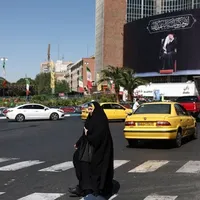
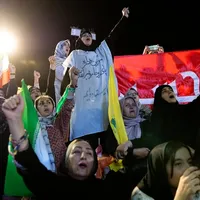
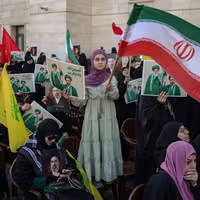
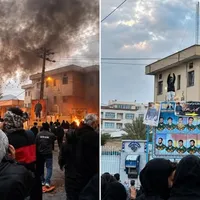
After two weeks of upheaval — including the death of a supreme leader, the appointment of a successor and a war that has touched much of the country — Tehran’s newspapers are increasingly focused on the daily struggle of Iranians trying to make ends meet under fire.
Across the press, economic anxiety is now front and center.
The economic daily Donya-ye Eghtesad warned of a “red alert for the economic situation,” while Jomhouri Eslami struck a more pragmatic tone with the headline: “The need to be honest with the people in an emergency situation,” urging officials to “separate people’s livelihoods from politics.”
Coverage of the Strait of Hormuz also featured prominently on Monday’s front pages. The hardline Kayhan, whose editor is appointed by the Office of the Supreme Leader, vowed that “Iran’s response will make the enemies regret their actions in this war of wills.”
Ettela’at, another newspaper linked to that office, called on the government to “prevent looming famine and scarcity of goods,” taking a markedly different line from Kayhan’s “jihad economy” — a concept long promoted by the late leader Ali Khamenei.
It even suggested rationing essential goods during the Nowruz holidays, which typically last up to two weeks.
Economists quoted in several papers attributed part of the market turmoil to conflicting political signals and the Central Bank’s efforts to stabilize prices in the final days of the year.
Two key articles published Sunday, in Ettela’at and Jomhouri Eslami, captured the broader mood.
Ettela’at argued for “the priority of bread and ethics over political disputes,” criticizing political factions for turning people’s livelihoods into a battleground even during wartime. It urged officials and media to end factional infighting and focus on stabilizing prices to prevent further erosion of social trust.
Jomhouri Eslami, for its part, advised officials to remove advisers who mislead them and distract from the public’s real problems.
Three broad camps emerged in the press over the weekend.
Hardline outlets like Kayhan blamed the crisis on the war and called for resistance. Reformist papers including Etemad and Sharq described a deadlock and urged major change, including national reconciliation.
More centrist titles such as Ettela’at and Jomhouri Eslami framed the moment as a test of governance, calling for transparency, responsiveness and effective market control.
Despite their differences, nearly all newspapers agree on one point: the coming Iranian year, beginning March 20, is likely to be decisive for the country’s economy, its leadership and its social stability.