UK foreign minister does not deny rejecting US use of RAF bases over Iran
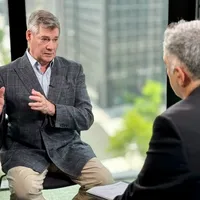
UK Foreign Secretary Yvette Cooper on Friday did not deny that London had rejected a US request to use Royal Air Force bases in potential operations related to Iran when asked directly by ITV, while emphasizing a preference for negotiations.
“The UK and the US have a long, deep security partnership. We work immensely closely on the issue of Iran,” Cooper said. “That is why we’re supporting the US talks taking place with Iran, because, frankly, the Iranian regime has continued to pose a security threat, has continued to pursue nuclear weapons.”
“That is why we have supported sanctions and also efforts to increase diplomatic and economic pressure on the regime. That’s what we believe is the right thing to do,” she added.
Sam Afshari, 17, was shot during protests in Karaj and later killed in hospital, according to his father, who says security forces fired the fatal shot.
The breathing tube was already in his mouth when, according to his father, the final shot was fired. It is one of many accounts emerging from Iran’s January protest crackdown.
Seventeen-year-old Sam Afshari had been taken to Madani Hospital in Karaj, near Tehran, after being shot on January 8 during protests near Mehran Square in the city’s Azimieh district. Witnesses later told his family that doctors were attempting to save him and that he was still conscious when asked his name.
“He had the breathing tube in his mouth. They came and shot him. A final bullet,” his father, Parviz Afshari, told Iran International’s English podcast Eye for Iran.
That day, protests spread across Iran as demonstrators took to the streets demanding an end to the Islamic Republic. Sam was among them.
“They went for a free Iran,” Parviz said. “They went out to protest with bare hands. But they returned to their families with bullets in the back of the head and bullets in the back.”
Sam was his only child—an unimaginable loss, his father said, that many Iranian families are now struggling to understand and explain.
Sam Afshari as a toddler in Iran.
Sam was born in 2008 in Karaj and had turned 17 just weeks before his death. He was studying computer networks and hoped to continue his education abroad.
“This year he was supposed to come here so we could sort out his papers,” his father said, speaking from Germany. “He wanted to continue his studies, go to university and study computer engineering.”
His father described him as cheerful and ambitious.
“He joked a lot. We laughed so much,” Afshari said. “We were always in video contact, talking about the future.”
“I don’t think he went out because of poverty,” he added. “He went out because of his beliefs. He wanted democracy and the right to speak his mind.”
According to accounts later gathered by the family, Sam was shot from behind near a security police post at Mehran Square. Residents in a nearby apartment building attempted to pull the wounded teenager into their parking area to protect him.
Security forces arrived shortly afterward and took him away, his father said.
“They took my child with them.”
A hospital employee later informed the family that Sam had been transported to Madani Hospital along with other injured protesters. Witnesses told relatives that when medical staff asked his name, he answered “Sam,” indicating he was still conscious.
Hours later, he was dead.
"At the hospital they finished him off with a shot to the back of the head. The bullet came out through his cheek," Parviz said.
Because internet access had been cut during the unrest, Afshari said he did not learn what had happened until days later, when communication was briefly restored. Family members searched hospitals and morgues before his brother located the name “Sam Afshari” on a list of the dead at Beheshte Sakineh morgue in Karaj.
When Sam’s mother was brought to identify the body, she initially could not recognize him because of severe injuries.
“One side of my child’s face was destroyed,” Afshari said. “The back of his head too.”
She confirmed his identity only after asking officials to uncover a tattoo on his chest bearing the word “Mother” written in Latin script.
“When they saw the tattoo, they realized, yes, tragically — it was Sam.”
According to the family, authorities initially ordered that Sam be buried quietly at night in a remote area. After negotiations and payments, relatives secured permission to bury him closer to Karaj, but cemetery space was scarce.
“There were so many graves,” his father said. “They said there was simply no space.”
At Kalak-e Bala cemetery in Karaj, Sam was buried above another young protester because burial plots were already filled.
“Under his grave there is another martyr, Amir Bayati, and above is my son, Sam Afshari,” Afshari said.
Relatives described morgue halls crowded with bodies and refrigerated trucks waiting outside — scenes they said reflected the scale of deaths families were confronting in the days after the crackdown.
'He wanted a free Iran'
As the interview continued, Afshari’s grief gave way to anger and appeals for accountability.
“This is no longer the time for my tears. Now I feel rage,” he said. “If nothing happens, the blood of our children will be trampled. Our people—90 million human beings—are now hostages. Hostages of the Islamic Republic.”
He urged the international community not to remain silent. “The terrorist Islamic Republic must be brought to an end,” he said.
Throughout the interview, he returned repeatedly to the future his son never had.
“He had so many dreams, and I had so many dreams for him,” he said. “We buried this child with thousands of dreams.”
For Afshari, the story ends where it began—with a teenager who left home hoping for a different future. “He went for a free Iran,” his father said. “And we buried him instead.”
From left to right: Ali Fahim, Shahin Vahedparast, Shahab Zohdi, Mohammad-Amin Biglari
A Revolutionary Court in Tehran has sentenced seven protesters, including a 19-year-old, to death after accusing them of setting fire to a Basij base during nationwide protests in January, according to documents reviewed by Iran International.
The sentences were issued on February 6, the source said, despite the defendants’ claims that they were trapped inside the building after it was set ablaze.
Mohammad Amin Biglari, 19, and six other men were convicted of arson of public property, “corruption on earth,” collusion against national security, and “enmity against God”—capital charges under Iranian law.
The others sentenced to death are Shahin Vahedparast Kalur, Shahab Zohdi, Abolfazl Salehi Siavashani, Amirhossein Hatami, Yaser Rajaeifar and Ali Fahim.
Their lawyer, Hassan Aghakhani, told the Emtedad news outlet that the defendants were tried jointly before Judge Abolghasem Salavati, who is under US sanctions, and received the maximum punishment.
Aghakhani said he had been denied access to the case file and that it remained unclear what confession his client was alleged to have made.
19-year-old Mohammadamin Biglari
State television previously aired what it described as confessions by several detainees. In the broadcast, men with blurred faces and closely shaved heads said they had entered the building but did not set it on fire and were trapped inside after others ignited the entrance, blocking their exit.
The charges stem from a January 7 fire at the Kaveh Basij Base near Namjoo Street in eastern Tehran.
Two eyewitnesses who spoke to Iran International said they saw several men set motorcycles ablaze outside the base before others were pushed inside and the entrance was set on fire. One witness said security forces were present but did not intervene.
Iran International cannot independently verify these accounts.
Biglari, who works at a men’s hair salon, was arrested on January 7 and is being held in Qezel Hesar prison, according to information received by Iran International. The detention conditions of the other six defendants remain unclear.
Iran’s judiciary has previously announced thousands of indictments linked to arrests made during the January protests.
Hundreds of US troops have now been evacuated from Al Udeid base in Qatar, The New York Times reported citing Pentagon officials.
There have also been evacuations at the cluster of US bases in Bahrain that house the Navy’s 5th Fleet, the report added.
Later in the day, Fox News dismissed the New York Times report citing a well-placed US official. "The US has NOT evacuated hundreds of US troops from Al Udeid air base in Qatar, nor has it evacuated bases in Bahrain, home to the US 5th Fleet."
The United States told Iran it expects the country to halt uranium enrichment, limit its missile program, and end support for proxy groups, US Ambassador to the United Nations Mike Waltz told Fox News on Thursday.
On Friday, Iran’s Foreign Minister Abbas Araghchi told MSNBC that the US had never demanded zero uranium enrichment from Tehran. In response, Fox News re-aired Waltz’s Thursday remarks to underline that the US position remains unchanged.
Speaking in the broadcast, Waltz said US officials, including Steve Witkoff, Jared Kushner, and Marco Rubio, have repeatedly stressed that there is no reason for Iran to enrich uranium to 60% or 90% unless it intends to develop a nuclear weapon.
“No enrichment capability… zero enrichment,” he urged.
He added that discussions last year included the possibility of a pooled international mechanism with monitoring and oversight by the International Atomic Energy Agency (IAEA), alongside addressing Iran’s missile program and its continued support for proxy groups.
"They [Iran leaders] better negotiate a fair deal," US President Donald Trump told reporters on Friday.
"The people of Iran are a lot different than the leaders of Iran, and it's very, very, very sad situation. 32,000 people were killed in a relatively short period of time," he added, referring to the massacre of Iranian protesters in January.