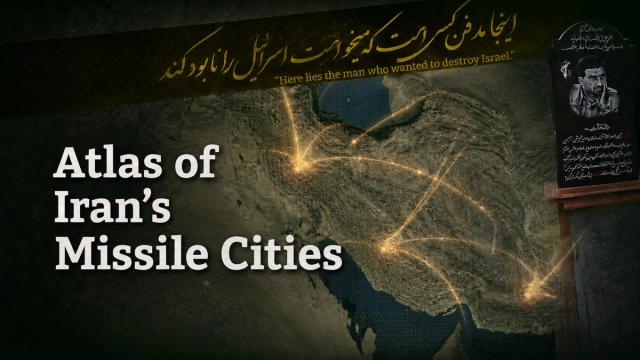
While Iran’s foreign minister is right now visiting Oman for bilateral talks with the United States, in Tehran’s calculus, negotiations now promise steady erosion. War, by contrast, offers a chance – however risky – to reset the balance.
This marks a shift from the Islamic Republic’s long-standing view of war as an existential threat. Today, senior decision-makers appear to believe that controlled confrontation may preserve the system in ways diplomacy no longer can.
That belief explains why war is no longer unthinkable in Tehran, but increasingly framed as a viable instrument of rule.
At the core of this shift lies a stark assessment: the negotiating table has become a losing field.
This is not because an agreement with Washington is impossible. It is because the framework imposed by the United States and its allies has turned diplomacy into a process of cumulative concession.
When nuclear limits, missile restrictions, regional influence, and even domestic conduct are treated as interlinked files, Iranian leaders see talks not as pressure relief, but as strategic retreat without credible guarantees of survival.
From Tehran’s perspective, diplomacy no longer buys time. It entrenches vulnerability.
In that context, confrontation begins to look less like recklessness and more like a way out of a narrowing corridor.
War as a domestic instrument of control
Why war? Because war is the one scenario in which the Islamic Republic believes it does not necessarily lose.
Domestically, the regime faces its most severe legitimacy crisis in decades.
Widespread repression, the killing of protesters, economic collapse, and a society increasingly resistant to fear-based governance have eroded the state’s traditional tools of control.
Under these conditions, war serves a powerful political function. It rewrites the rules of governance.
In wartime, dissent can be reframed as collaboration with the enemy. Protest becomes sabotage. Opposition becomes a national security threat.
Emergency logic compresses public space and legitimizes measures that would provoke backlash in peacetime.
For the Islamic Republic, war is not primarily imagined as a catastrophe imposed from outside. It is a mechanism that restores hierarchy, discipline, and fear at home.
This logic is not unique to Iran, but it has taken on renewed urgency as the Islamic Republic confronts a society it can no longer reliably intimidate into submission.
Externally, Tehran’s calculations rest on another assumption – that the United States wants to avoid a prolonged war.
The experiences of Afghanistan and Iraq, combined with Washington’s cautious posture toward the war in Ukraine, have reinforced the belief that the US lacks the political appetite for a long, grinding conflict.
From Tehran’s vantage point, even a military strike would likely be limited.
Airstrikes, cyber operations, or narrowly defined attacks are forms of pressure the Islamic Republic believes it can absorb.
This feeds into a core element of Iran’s survival doctrine: without foreign ground forces, the system is not collapsible.
Military action that stops short of sustained ground involvement is therefore seen as manageable.
More than that, Iranian leaders believe escalation can be shaped by exporting costs across the region.
By threatening US allies and regional partners, Tehran calculates that a drawn-out confrontation would quickly become politically and economically unattractive for Washington.
In this reading, a limited war could push human rights concerns off the global agenda, expose divisions among Western allies, unsettle energy markets, and ultimately force a return to narrower negotiations.
This strategy, however, rests on a dangerous assumption: control.
Wars that begin with expectations of containment rarely remain contained.
In a volatile and heavily armed region, escalation chains are hard to manage, and actions Tehran defines as deterrence may be read in Washington as crossing red lines.
Still, the trajectory is clear.
The Islamic Republic has concluded that it loses at the negotiating table, but may endure – or even regain leverage – in sustained tension.
That belief explains why war is no longer treated as a last resort, but increasingly as a calculated, if perilous, component of its survival strategy.