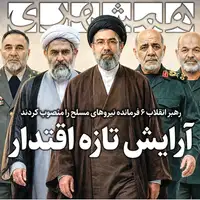
Iran army to hold drill near Iraq border


Iran’s army will hold a military exercise on Tuesday and Wednesday in the western border town of Qasr-e Shirin, local officials said.
The county governor said the drill would take place on Feb. 3 and 4 and warned residents that sounds of explosions would be linked to the exercise.
Qasr-e Shirin lies near Iran’s border with Iraq.

Iran’s Revolutionary Guard aerospace commanders told lawmakers on Monday that Iran’s “war room” is active and forces are ready at any moment to enter conflict and respond to any hostile act, according to a parliamentary spokesman.
Ebrahim Rezaei, spokesman for parliament’s national security and foreign policy committee, said a senior commander briefed the panel on regional developments, military deployments and the security situation.
Rezaei said the commander told lawmakers Iran has high intelligence oversight of its adversaries and is monitoring all their movements, adding that operational plans are in place for any potential confrontation.
The briefing warned that if the United States “does something foolish” and carries out an attack, it would be drawn into a wider regional conflict, which the commander described as “the greatest advantage for us,” Rezaei said.
He added that US military and economic interests in the region are within Iran’s operational range.
Rezaei said commanders also cited Iran’s performance during a 12-day war, claiming Iran was able to penetrate Israel’s missile defense shield with a success rate of more than 50%.
The commanders told lawmakers Iran’s offensive and missile capabilities have improved since the 12-day conflict and that its abilities exceed what has been publicly demonstrated, Rezaei said.
He said the briefing concluded that any hostile act would be met with a “decisive, crushing, regret-inducing” response in line with orders from the Supreme Leader.

US Senator Tom Cotton said on Sunday that Iran must not be allowed to develop a nuclear weapon and warned Tehran to take President Donald Trump’s words seriously.
“President Trump has been clear: Iran’s terrorist regime can never have a nuclear weapon,” Cotton said in a post on X.
“The Ayatollahs are well-aware of our military’s capabilities and would be wise to take President Trump’s words seriously,” he added.
Iran will not negotiate over its nuclear activities or missile capabilities, a senior lawmaker said on Monday, while saying Tehran remains open to talks under clear conditions.
Alaeddin Boroujerdi, a member of parliament’s national security and foreign policy commission, said peaceful nuclear knowledge, along with missile and drone capabilities, were not negotiable.
“Peaceful nuclear knowledge, like missile and drone capabilities, are red lines of the Islamic Republic and are not open to negotiation,” he said.
Boroujerdi said Iran had always been serious about negotiations but stressed that the country’s policy was not one of war, adding that Tehran was ready for talks based on what he called clear and logical terms.
Tehran’s foreign ministry spokesman also addressed mounting tensions with Washington, saying Iran had learned from what he described as repeated US “bad faith” over the past decade and stressing that “threats are not compatible with diplomacy.”
At the same time, he said Iran remained committed to diplomacy to safeguard its national interests and regional stability, and that Tehran was reviewing the “structure” of any potential negotiations as regional states pass messages between the sides.
Details of various diplomatic processes to manage tensions with the US are being examined, he added.
Baghaei said lifting sanctions remained a core priority for Iran, arguing that the nuclear issue had long been used as a pretext to pressure Tehran, and that any confidence-building would have to be matched by the removal of what he called “unjust” sanctions.
Baghaei also dismissed speculation over military drills, saying there had been no change in Iran’s regular exercises, including annual joint naval drills with Russia and China, and accused some media of trying to inflame public anxiety.
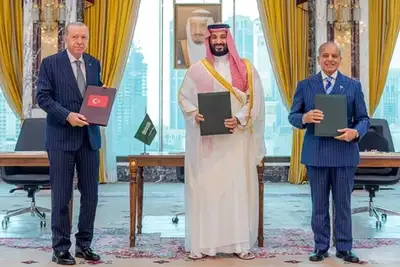
Iran’s Foreign Minister Abbas Araghchi held separate phone calls with his counterparts in Egypt, Saudi Arabia and Turkey to discuss regional and international developments, Iranian media reported, as Tehran faces rising US threats.
IRGC outlet Tasnim said Araghchi has stepped up outreach to regional capitals in recent weeks, focusing in particular on Washington’s warnings toward Iran. He also traveled to Turkey last week for talks with President Tayyip Erdogan and Foreign Minister Hakan Fidan.
The diplomatic push comes as Qatar’s prime minister and foreign minister made a brief visit to Tehran on Saturday to meet Araghchi and Iran’s top security official Ali Larijani.
Axios reported late Sunday that Turkey, Egypt and Qatar are working to arrange a meeting this week in Ankara between US envoy Steve Witkoff and Iranian officials – a claim not confirmed by Tehran.”