• العربية
  • فارسی
Brand
  • Iran Insight
  • Politics
  • Economy
  • Analysis
  • Special Report
  • Opinion
  • Podcast
  • Iran Insight
  • Politics
  • Economy
  • Analysis
  • Special Report
  • Opinion
  • Podcast
  • Theme
  • Language
    • العربية
    • فارسی
  • Iran Insight
  • Politics
  • Economy
  • Analysis
  • Special Report
  • Opinion
  • Podcast
All rights reserved for Volant Media UK Limited
volant media logo

Iran’s internet shutdown enters thirteenth day, Cloudflare Radar says

Jan 21, 2026, 21:14 GMT+0

Iran’s internet shutdown has entered its thirteenth day, with the country remaining almost completely offline despite brief periods of limited traffic, web monitoring service Cloudflare Radar said on X.

Most Viewed

Iran factions clash over interim US deal as Trump weighs final call
1
INSIGHT

Iran factions clash over interim US deal as Trump weighs final call

2
EXCLUSIVE

Qatar rejects Iran’s demand for unrestricted release of $12 billion in funds

3

Greek man charged in Britain over alleged targeting of Iran International journalist

4

Hardline rallies turn Iran’s streets into pressure front against US talks

5
PODCAST

Was the Iran war leverage or a lifeline for Tehran?

Banner
Banner

Spotlight

  • Was the Iran war leverage or a lifeline for Tehran?
    PODCAST

    Was the Iran war leverage or a lifeline for Tehran?

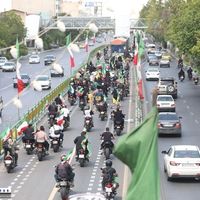
  • Hardline rallies turn Iran’s streets into pressure front against US talks

    Hardline rallies turn Iran’s streets into pressure front against US talks

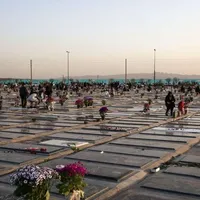
  • Names of some Iran protest victims vanish from Tehran cemetery database

    Names of some Iran protest victims vanish from Tehran cemetery database

  • How four Khamenei family names map the Islamic Republic’s inner circle
    INSIGHT

    How four Khamenei family names map the Islamic Republic’s inner circle

  • Witnesses describe gunfire, blocked exits and deadly market fire in Rasht
    SPECIAL REPORT

    Witnesses describe gunfire, blocked exits and deadly market fire in Rasht

  • Iran’s lion-and-sun flag at center of FIFA row before 2026 World Cup

    Iran’s lion-and-sun flag at center of FIFA row before 2026 World Cup

•
•
•

More Stories

Trump says hopes for no 'further action' on Iran

Jan 21, 2026, 20:26 GMT+0
Trump says hopes for no 'further action' on Iran
100%

US President Donald Trump said on Wednesday that Iran had halted the killing of protestors after his warnings of a military intervention and he hoped for no further action on the country.

Trump was asked by a CNBC reported about the movement of a US carrier strike group to the region following the deadliest crackdown by the Islamic Republic on protestors in its history.

"A lot of people are wondering whether that's a prelude to further action," interviewer Joe Kernen asked Trump at the World Economic Forum in Davos, Switzerland.

“We hope there’s not going to be further action,” Trump replied. “They were shooting people indiscriminately on the streets. This was a big thing for me. They were going to hang 837 mostly young people."

Trump had warned Iran's leadership early in protests which first erupted on Dec. 28 not to kill demonstrators and later encouraged them to take over institutions, adding in a social media post that "help is on the way."

According to medics and government sources speaking to Iran International, the death toll from the deadly security response totals at least 12,000 people.

"When you did successfully hit Fordow, you got a lot of grief, and the Democrats were doing it," Kernen added, referring to June 22 US attacks on Iranian nuclear sites. "Now the grief is, oh, you promised to do something in Iran. Now there are at least finger points that you said you're going to help the protesters, and now you're not, so you can't win."

Trump replied: "If I came up with the cure to cancer, they'd say, why didn't you do it fast?" He added: "Look, they're sick people. They really are there. They call it Trump derangement syndrome."

The interviewer persisted: "Should we stay tuned in Iran?"

"I guess. I mean, look, it's a rough place. It's a place that we hit very hard," Trump replied.

"We're going to find out where they are now about what they're going to do with nuclear. They can't do the nuclear," he said. "The one thing I've been strong on: they can't do the nuclear."

"Now, this attack that we did at the time, which is now a little bit older than what happened in Venezuela recently, which was equally as good - but the attack in Iran, if they do it, it's going to happen again," Trump said, without elaborating.

US senator rejects prospect of Iran deal, urges tougher stance

Jan 21, 2026, 19:22 GMT+0

US Senator Lindsey Graham pushed back against suggestions that Iran’s leadership could change course and be engaged diplomatically.

“Anyone who believes that the ayatollah is remotely interested in changing his ways does not understand the history of the ayatollah and the murderous regime,” Graham posted on X. “You cannot do a deal with evil. You have to confront it. In this case, that means standing behind the people of Iran.”

“I was unnerved by statements being made by people involved in the Iran file suggesting that if the ayatollah could change his ways, we might be able to reach an agreement with the regime,” he added.

Graham comments came after US Middle East envoy Steve Witkoff told Bloomberg in Davos that Washington believes the standoff with Tehran could be “diplomatically settled” if Iran signals a willingness to change, without elaborating.

Iran's rulers are betting on the iron fist

Jan 21, 2026, 18:50 GMT+0
•
Ata Mohamed Tabriz
Iran's rulers are betting on the iron fist
100%
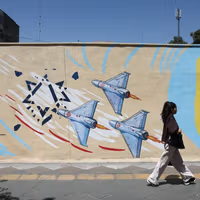
Pedestrians cross a street in Tehran with a large mural depicting clenched fists holding the Iranian flag looming in the background, January 19, 2026

The unprecedented brutal crackdown on recent protests in Iran suggests Tehran's rulers are no longer attempting to govern a discontented society but are in open conflict with it.

The large-scale killing of protesters may look like a panicked security response, but it is better understood as a calculated effort to destroy protest both on the streets and in people’s minds.

By deploying overwhelming force, the state is seeking to reframe protest as an act that guarantees death—so dangerous that it becomes irrational to attempt.

This logic has been reinforced by the nationwide internet shutdown. Cutting communication is not simply about hiding abuses from the outside world; it is about isolating protesters from one another, breaking networks of trust, and leaving individuals to face fear alone.

When information collapses, collective will fractures. The aim is to ensure that even before a demonstration forms, the decision to join it feels like a solitary, suicidal gamble.

The state has effectively pushed society into an impossible position, where enduring daily life is as unpleasant—and as unimaginable—as any attempt to change it. This paralysis is not accidental. It is Tehran’s endgame, and increasingly its only means of survival.

'Us against them'

The violence of January 9 and 10 served another purpose as well: consolidating power from within.

By tying the survival of the political system to the actions of those carrying out repression, the state has produced what might be called forced loyalty. Security forces and affiliated actors are drawn into violence so severe that there is no path back.

Once hands are stained with blood, survival becomes inseparable from the survival of the system itself. This creates a hardened core of enforcers whose only perceived option is to push forward, no matter the cost.

This dynamic encourages a “scorched earth” approach. The conflict is no longer managed or contained; it is framed as a total struggle between “us” and “them,” with protesters cast as enemies rather than citizens.

In such a framework, compromise is not weakness—it is betrayal. Mediation disappears. Violence becomes the only remaining language.

Murky repression

By ignoring collective demands and stripping the public of political relevance, the Islamic Republic has effectively dismantled politics itself. What remains is not governance, but a permanent security posture.

The use of plainclothes forces and paramilitary units fits squarely within this logic. By blurring the boundary between state and society, the authorities have sought to reframe repression as “people against people.”

Protesters are portrayed as violent elements within society, already dehumanized through labels such as “rioters” or “terrorists.” This allows the state to deflect responsibility while deepening social fragmentation.

Slain senior Revolutionary Guard commander Hossein Hamedani once boasted about mobilizing convicts and thugs to suppress protests. “They are not afraid of blood,” he said.

Their role is not only physical repression but also narrative production: muddying responsibility, normalizing brutality, and casting doubt on the moral legitimacy of protest itself. Their unofficial status also provides the state with plausible deniability.

Burned bridges

At the same time, the machinery of repression has become increasingly bureaucratic. Killings are absorbed into routine procedure; violence is carried out as a duty—lawful, necessary, even sacred.

Statements from military and security institutions during this period make clear that the deaths of protesters are not seen as a national loss, but as a means of preserving the political order.

This moment also exposes a deeper vulnerability. A system that securitizes everything produces nothing but control and coercion. Maintaining such a structure requires constant expenditure—of resources, manpower, and legitimacy—both at home and abroad.

A crisis in the domestic security sphere cannot remain contained indefinitely; it will eventually spill outward, generating external pressure and international consequences.

What is unfolding in Iran is therefore not a temporary crackdown. It is the outcome of a long shift from governing society to confronting it as an enemy.

It is almost impossible to predict where Iran is headed, but its rulers appear to have bet on the iron fist—suspending politics for a permanent emergency and burning all bridges back to mediation and consent.


Israel raises alert level over possible US strike on Iran - Haaretz

Jan 21, 2026, 18:14 GMT+0

Israel’s defense establishment has raised its level of alert in recent days amid concerns that US President Donald Trump may have decided to strike Iran possibly within days, the Israeli newspaper Haaretz reported on Wednesday citing security officials.

The officials said that while there have been no public indications from Washington of such a decision, Israel’s defense authorities are taking seriously the possibility that an attack could be imminent and are preparing both the home front and military forces for a range of scenarios.

Senior military officials were quoted as saying they recognize that Trump’s decision-making is unpredictable and that even if he opts to carry out an attack, he could reverse course at the last moment.

Security officials said cooperation with US counterparts is close, adding that they do not rule out a scenario in which the Israel Air Force would strike targets in Iran in response to missile fire at Israel.

According to the report, the defense establishment increasingly assesses that if there is a US strike on Iran, Iran’s leadership would weigh whether and how to respond, including the possibility of drawing Israel into the confrontation through missile launches.

However, senior Israel Defense Forces officials stressed there is no certainty that Iran would choose Israel as its initial target. They said the likelihood that Iran would escalate and involve Israel directly would rise only if a US attack were prolonged or if Iran perceived a genuine threat to the stability of its leadership.

Wounded protester hid in body bag to survive, rights group says

Jan 21, 2026, 17:35 GMT+0

Iran Human Rights Documentation Center said it received an account describing how a wounded protester remained motionless inside a plastic body bag for three days out of fear that security forces would kill him, before his family found him alive.

The group said the family searched for the man for three days before going to Kahrizak, where they looked among bodies for him. They instead found him alive but in critical condition, with severe gunshot wounds.

According to the account, the man survived without food or water while staying still to avoid being detected. His family later managed to take him out and transfer him to a hospital for treatment, the group said.

Iran Human Rights Documentation Center said the account, which it has not been able to independently verify because of widespread internet restrictions, offered a stark picture of the crackdown on protests, the treatment of the wounded and the uncertainty faced by families.