Iran crackdown left 16,500 dead, 330,000 injured - Sunday Times
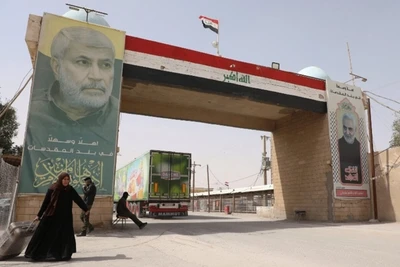
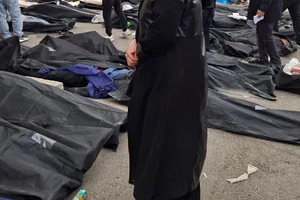
People gather at the Kahrizak facility south of Tehran to collect the bodies of loved ones killed during the protests. (January 2026)
At least 16,500 protesters have been killed and about 330,000 injured during Iran’s unrest, according to a report compiled by doctors inside the country and cited by The Sunday Times, as a near-total internet blackout has made independent verification increasingly difficult.
The report, based on information from a network of medical professionals across Iran, said the injuries included widespread gunshot wounds and severe eye trauma, with hundreds to thousands suffering permanent blindness.
Iran’s Supreme Leader Ali Khamenei acknowledged for the first time on Saturday that “several thousands” had been killed since protests began three weeks ago, blaming the violence on protesters and foreign enemies.
The doctors’ report said most deaths occurred over two days during what it described as the most violent phase of the crackdown in the Islamic Republic’s 47-year history, with most victims believed to be under 30.
Professor Amir Parasta, an Iranian-German eye surgeon and medical director of Munich MED, told The Sunday Times the data was gathered through doctors communicating via smuggled Starlink satellite terminals after internet access was cut on January 8.
“This time they are using military-grade weapons,” Parasta was quoted as saying, adding that doctors were seeing gunshot and shrapnel wounds to the head, neck and chest. He said at least 700 to 1,000 people had lost an eye.
Figures compiled from eight major eye hospitals and 16 emergency departments cited in the report put the number of injured between 330,000 and 360,000. One Tehran eye hospital, Noor Clinic, documented around 7,000 eye injuries alone, according to the report.
An ophthalmologist quoted by The Sunday Times said the volume of pellet-related eye injuries had overwhelmed hospitals. Another witness cited said more than 800 eye removals were performed in a single night in Tehran.
Medical sources said some patients died due to blood shortages, with one surgeon quoted as saying security forces had at times prevented blood transfusions.
Witnesses who spoke to The Sunday Times described security forces firing live ammunition at protesters, including shots aimed at heads, and deploying snipers on rooftops. Accounts also described the use of Kalashnikov rifles and machineguns mounted on vehicles.
The report said many wounded protesters avoided hospitals out of fear of arrest, while some injured patients were allegedly taken from operating theatres by security forces.
Several witnesses said bodies were removed from streets by security forces and transferred to other cities, while families were pressured to pay large sums to retrieve remains.
Iranian authorities have repeatedly blamed the unrest on foreign powers, including the United States and Israel. In his address, Khamenei described protesters as “foot-soldiers of the United States” and claimed they were armed with weapons imported from abroad.
The protests began in late December over economic grievances and rapidly spread nationwide, intensifying after January 8 following a call to demonstrate by Reza Pahlavi, son of Iran’s late shah.
Despite the scale of reported casualties, the full extent of the violence remains unclear due to the ongoing communications blackout, now in its tenth day, and restrictions on independent reporting.
Human rights activists and medical professionals cited in the report warned that the true toll could be higher, saying many deaths and injuries have gone unrecorded amid fear, secrecy and the continued presence of security forces across Iranian cities.
Outside the building of the General Directorate of Prisons of Semnan Province
A Swiss citizen Iran says died by suicide in prison was a 64-year-old tourist, a Swiss foreign ministry spokesman told Iran International, adding that Switzerland is seeking more details on his arrest and death from Tehran.
The foreign ministry added on Friday that the individual had been living in South Africa for the past 20 years and was traveling in Iran as a tourist.
The email response from the ministry said that the Swiss embassy in Iran was earlier denied access to the prisoner and now wants Tehran to provide full information about his arrest and death.
"Since Switzerland was informed of the arrest, the Swiss Embassy in Tehran has been in daily contact with the Iranian authorities to obtain more information about the circumstances of the arrest and to gain access to the detained Swiss citizen," the foreign ministry said.
"However, due to the accusations (espionage – national security), the requested consular access was not granted," it added. "Switzerland is demanding that the Iranian authorities provide detailed information."
The Swiss citizen who allegedly committed suicide in Semnan Prison on Thursday had been arrested while collecting soil samples in Iran’s central desert during an Israeli airstrike, media affiliated with Islamic Revolutionary Guard Corps reported.
Meanwhile, local media quoted unnamed Iranian official as saying that person was conducting espionage when he was arrested. The name of the Swiss citizen and the circumstances of his arrest and death remain unclear.
“This individual used prior intelligence training to take their own life during a specific opportunity,” Mashregh News, a publication affiliated with the Islamic Revolutionary Guard Corps (IRGC), reported late Thursday, citing an unnamed security official.
"Switzerland is demanding that the Iranian authorities provide detailed information on the reasons for his arrest and a full investigation into the circumstances of his death," the Swiss foreign ministry said.
The individual, detained by the IRGC Intelligence Organization, was accused of gathering information in a sensitive area during Israel's October air attack. The media report specifically said that this occurred during the Shahroud attack, which targeted an IRGC missile facility. Satellite imagery from Planet Labs later revealed significant damage to the site, known for building ballistic missiles and launching rockets as part of Iran’s space program.
After their arrest, the person was transferred to Semnan Prison, where they allegedly revealed information about their network and communication links, according to the outlet.
A local judiciary official confirmed the death on Thursday, saying that the Swiss national, facing espionage charges, had committed suicide in their cell.
Switzerland has also confirmed the death. "The FDFA confirms the death of a Swiss citizen in Iran," spokesperson Pierre-Alain Eltschinger told Iran International. "The Swiss Embassy in Tehran is in contact with the local authorities to clarify the circumstances of the death in an Iranian prison," he added.
According to Mizan, Iran's judiciary news website, the detainee asked their cellmate on Thursday morning to purchase food from the prison canteen. While alone in the suite, the detainee reportedly took their own life. "Prison officials immediately intervened to save the individual, but their efforts were unsuccessful," Mohammad Sadegh Akbari, a local judiciary official, was quoted as saying. “Suicide has been definitively confirmed.”
Iran has arrested dozens of dual nationals and foreigners in recent years, often on charges of espionage or security-related offenses. Some of these detainees have been released in exchange for deals involving Iranians held in foreign prisons.