Iranian education officials said on Friday that schools in some provinces would remain closed and move to online classes until next week, as protests intensified and authorities imposed sweeping internet restrictions.
Provincial education departments, including those in East Azarbaijan and Tehran, have announced that classes will be suspended in person and held virtually.
The decision comes as widespread internet and phone outages have disrupted daily life and communications across large parts of the country.
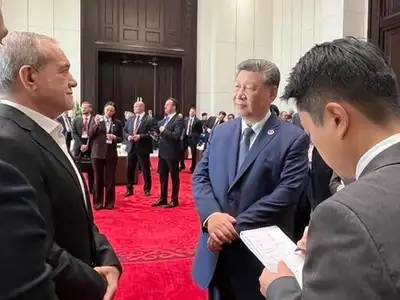

Several messages were posted on the social media account of Iran’s Supreme Leader Ali Khamenei on Friday, repeating remarks he made in a televised speech earlier, as the country remained under severe internet restrictions.
One post said: “Last night in Tehran & some other cities, a bunch of people bent on destruction came and destroyed buildings that belong to their own country in order to please the President of the US and make him happy.”
The posts appeared as much of the Iranian public remained cut off from the internet, with widespread outages affecting access to news, messaging apps and social media platforms.

Tehran’s public and revolutionary prosecutor Ali Salehi said on Friday that authorities would show no leniency toward those he described as engaging in arson, destruction of public property and armed clashes with security forces.
He said those involved in such acts would be charged with moharebeh — waging war against the state — an offence that carries the death sentence under Iranian law.
“Our response will be deterrent, and their ruling is moharebeh,” Salehi said.
Iran’s Revolutionary Guards intelligence organization issued a warning to protesters on Friday, saying the continuation of the current situation was “unacceptable.”
“We warn that the continuation of this situation is unacceptable,” it said in a statement, adding that the blood of those killed in what it described as recent “terrorist incidents” was on the hands of their planners.
The statement added that the organization vows to protect what it described as the achievements of the Islamic Republic and public security as a “red line.”

EU foreign policy chief Kaja Kallas said on Friday that Iran’s leadership was showing its “true colours” by ignoring protesters’ demands and using what she called excessive force.
“The Iranian people are fighting for their future. By ignoring their rightful demands, the regime shows its true colours,” Kallas wrote on X.
She said images from Tehran showed “a disproportionate and heavy-handed response by the security forces,” adding: “Any violence against peaceful demonstrators is unacceptable.”
Kallas also criticized the internet shutdown. “Shutting down the internet while violently suppressing protests exposes a regime afraid of its own people,” she said.

X changed its Iran flag emoji to the historical lion and sun symbol, users reported on social media on Friday.
The previous emoji reflected the flag of the Islamic Republic, which features a red emblem introduced after the 1979 revolution.
The lion and sun motif was used on Iran’s flag for centuries before being removed following the revolution and is now widely associated with Iran’s pre-revolutionary era.
The new flag, associated with Iran's monarchy, is now appearing on the official X accounts of Islamic Republic officials and state media including the IRGC-affiliated Tasnim News.