Iran hosts trilateral meeting with China and Saudi Arabia

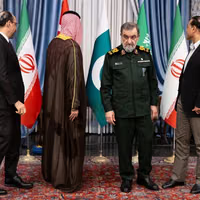
Iran, China and Saudi Arabia held a trilateral meeting in Tehran on Tuesday, the third since their 2023 normalization agreement brokered in Beijing, state media reported.
Iran, China and Saudi Arabia held a trilateral meeting in Tehran on Tuesday, the third since their 2023 normalization agreement brokered in Beijing, state media reported.
Deputy Foreign Minister Majid Takht-Ravanchi headed the Iranian delegation. A preparatory session with diplomats and experts from the three countries was held on Monday, according to ISNA.
The meeting reviewed progress in implementing the Beijing accord, which restored diplomatic relations between Tehran and Riyadh after a seven-year rift and set out commitments to reopen embassies and expand political and economic ties.
According to China’s foreign ministry, the three sides called for an immediate halt to Israeli actions against Palestine, Lebanon, and Syria, and condemned violations of Iran’s national sovereignty and territorial integrity. The statement also said the parties look forward to expanding cooperation in various fields, including economics and politics.
The previous rounds of the trilateral committee were held in Beijing and Riyadh, where the sides reaffirmed respect for sovereignty and non-interference and welcomed China’s continued mediation to support regional dialogue.
The Tehran meeting followed a flurry of recent diplomatic activity involving Iran and its regional neighbors. Last month, senior officials from Turkey and Saudi Arabia also visited Tehran for high-level talks widely seen as efforts to manage regional tensions through dialogue.
At the same time, new reports shed light on broader diplomatic exchanges behind the scenes.
According to an exclusive report by Iran International, the Trump administration responded to a message from Iranian President Masoud Pezeshkian, conveyed through Saudi Crown Prince Mohammed bin Salman, by reaffirming its three preconditions for any talks with Tehran: a halt to uranium enrichment, an end to Iran’s support for regional armed groups, and restrictions on its ballistic missile program.
Reuters earlier reported that Pezeshkian’s letter to the crown prince, sent before his late-November visit to Washington, said Iran “does not seek confrontation” and remains open to diplomacy if its rights are guaranteed.
During that trip, US President Donald Trump said he was “open” to a new deal with Tehran, while Mohammed bin Salman pledged to “do our best to help reach a deal between America and Iran.”
Supreme Leader Ali Khamenei later dismissed reports of Iranian outreach via Riyadh as “pure lies,” though it remains unclear whether he was briefed on the exchange or if Tehran chose to deny it after the US response.