The paper said interruptions in care have intensified feelings of helplessness, despair and the recurrence of mental health symptoms among those unable to continue.
While the official psychotherapy tariff for the current Iranian year, which began in late March, is set at 5,000,000 to 6,200,000 rials ($4–$5) per session, actual prices in Tehran range from 10,000,000 to 50,000,000 rials ($8–$42), the report said.
It added that the minimum monthly wage for a married worker with two children is about 163,000,000 rials (around $137), while the average monthly income nationwide is 240,000,000 to 250,000,000 rials ($202–$210).
At these income levels, each therapy session costs the equivalent of one-third to one-fifth of a monthly salary for middle- and lower-income households.
Ham-Mihan’s report said that to respond to rising demand, the government has expanded a network of community mental-health centres known as Seraj, with about 100 centres now operating nationwide offering basic support.
However, it added that these centers do not offer psychotherapy and that coverage remains uneven and capacity limited, particularly outside major cities, forcing many patients toward the more expensive private sector.
The report cited a national study published this summer by Iran’s National Institute of Health Research found that 62.5% of people with psychiatric disorders felt they needed treatment in 2021–22, but only 35.7% received services — a rate unchanged from a decade earlier.
Cost was one of the main barriers, alongside stigma and the belief that symptoms would resolve without professional help.
Last December, Iran’s Health Ministry said one in four people in the country suffers from a psychiatric disorder, almost double the global estimate of one in eight according to World Health Organization (WHO) mental-health data.
Global data show Iran carries a heavier mental-health burden than the world average, with mental disorders accounting for 10.3% of total disability-adjusted life years (DALYs) in 2019 compared with roughly 8% globally, according to the Global Burden of Disease Study (GBD), published by the UK-based medical journal The Lancet.
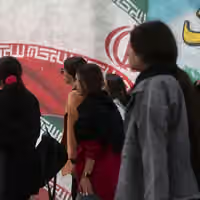
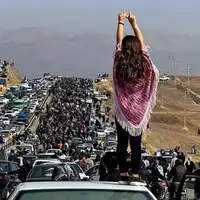
Meanwhile, last November, Iranian authorities announced plans to open a treatment clinic for women who defy the country's compulsory hijab rules.
The initiative, announced by Mehri Talebi Darestani, head of the Women and Family Department at the Tehran Headquarters for the Promotion of Virtue and Prevention of Vice, would offer what she described as “scientific and psychological treatment for hijab removal,” signaling the government’s focus on behavioral enforcement even as access to mental-health care remains limited.