• العربية
  • فارسی
Brand
  • Iran Insight
  • Politics
  • Economy
  • Analysis
  • Special Report
  • Opinion
  • Podcast
  • Iran Insight
  • Politics
  • Economy
  • Analysis
  • Special Report
  • Opinion
  • Podcast
  • Theme
  • Language
    • العربية
    • فارسی
  • Iran Insight
  • Politics
  • Economy
  • Analysis
  • Special Report
  • Opinion
  • Podcast
All rights reserved for Volant Media UK Limited
volant media logo

Iran’s Guards say Israel lost 12-day clash, warn tougher response

Dec 1, 2025, 08:25 GMT+0
Brigadier General Ali-Mohammad Naeini, the IRGC’s spokesman and deputy for public affairs

Iran’s Revolutionary Guards said Israel suffered a decisive setback in a recent 12-day confrontation and warned that any further aggression would meet a stronger Iranian response, according to the force’s spokesman speaking on state television.

Brigadier General Ali-Mohammad Naeini, the IRGC’s spokesman and deputy for public affairs, described the fighting as a high-intensity hybrid conflict and said Iran’s adversaries misread the sources of Tehran’s power, including mass-mobilization structures such as the Basij that he credited with sustaining social and logistical support during the flare-up.

“The Zionist regime suffered a decisive defeat in the 12-day war,” Naeini said. “If the enemy undertakes any new act of mischief or aggression, it will receive a more serious response, and there is no doubt about that.”

Naeini said Iran’s missile, cyber and electronic-warfare units operated with high tactical readiness and that production lines remain active.

Naeini also said: “The armed forces of the Islamic Republic are currently at the highest levels of tactical readiness, armament and innovation.”

Most Viewed

Ideology may be fading in Iran, but not in Kashmir's ‘Mini Iran'
1
INSIGHT

Ideology may be fading in Iran, but not in Kashmir's ‘Mini Iran'

2
INSIGHT

Hardliners push Hormuz ‘red line’ as US blockade tests Iran’s leverage

3
VOICES FROM IRAN

Hope and anger in Iran as fragile ceasefire persists

4

Iran International says it won’t be silenced after London arson attack

5

US sanctions oil network tied to Iranian tycoon Shamkhani

Banner
Banner

Spotlight

  • Hardliners push Hormuz ‘red line’ as US blockade tests Iran’s leverage
    INSIGHT

    Hardliners push Hormuz ‘red line’ as US blockade tests Iran’s leverage

  • Ideology may be fading in Iran, but not in Kashmir's ‘Mini Iran'
    INSIGHT

    Ideology may be fading in Iran, but not in Kashmir's ‘Mini Iran'

  • War damage amounts to $3,000 per Iranian, with blockade set to add to losses
    INSIGHT

    War damage amounts to $3,000 per Iranian, with blockade set to add to losses

  • Why the $100 billion Hormuz toll revenue is a myth
    ANALYSIS

    Why the $100 billion Hormuz toll revenue is a myth

  • US blockade targets Iran oil boom amid regional disruption
    ANALYSIS

    US blockade targets Iran oil boom amid regional disruption

  • Iran's digital economy battered by prolonged blackout
    INSIGHT

    Iran's digital economy battered by prolonged blackout

•
•
•

More Stories

Ex-president says Iran still in ‘no war, no peace’ limbo months after 12-day war

Nov 30, 2025, 11:03 GMT+0

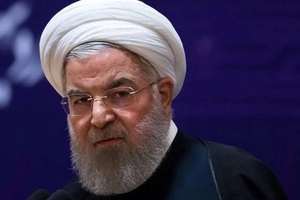
Former Iranian president Hassan Rouhani said Iran remains in a fragile security limbo months after the 12-day war in June, warning that the country cannot restore stability or economic confidence without rebuilding deterrence and addressing persistent public insecurity.

Rouhani told former ministers and senior officials that Iran had entered a prolonged period of strategic uncertainty following the 12-day confrontation, arguing that the absence of clear deterrence has left the country exposed to regional pressures and foreign threats.

Rouhani said that “after five months have passed since the 12-day war, we are still in a situation of neither war nor peace, and there is no sense of security in the country. Whether actual security exists or not is another matter.”

He added that “when people do not feel secure, talking about economic growth, lowering inflation or attracting investment has little meaning. This feeling of insecurity – psychological insecurity, social insecurity, intellectual insecurity, mental insecurity – exists.”

  • Comeback or last stand? Rouhani in crosshairs of Iran’s power struggle

    Comeback or last stand? Rouhani in crosshairs of Iran’s power struggle

  • Diplomatic concessions and reform needed to forestall war, Rouhani warns

    Diplomatic concessions and reform needed to forestall war, Rouhani warns

He said national security in any country rests on deterrence and on stopping adversaries from initiating conflict.

Rouhani tied Iran’s own shortfalls in deterrence to regional instability, saying neighboring states still rely heavily on the United States and Israel for security. He said Iraq, Syria, Lebanon and Jordan do not control their airspace or security environments in ways that would limit hostile activity, and that this has reduced Iran’s strategic buffer zone.

“Unfortunately, we do not currently have broad regional deterrence. Our neighboring countries – Iraq, Syria, Lebanon and Jordan – are, unfortunately, operating in environments largely shaped by the United States and Israel.”

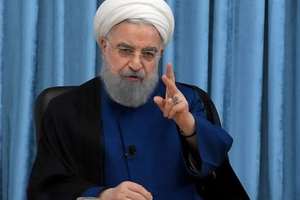
Former Iranian president Hassan Rouhani during a meeting with former ministers and senior officials in Tehran on November 26, 2025
100%
Former Iranian president Hassan Rouhani during a meeting with former ministers and senior officials in Tehran on November 26, 2025

He warned that this landscape has created what he described as unusually free access for Israel, saying “Israel moves up to our borders in undefended and open airspace” and “the sky up to Iran has become completely safe for the enemy.”

Rouhani said national cohesion and accurate assessments of Iran’s own capabilities remain essential for maintaining deterrence. He cautioned against overestimating Iran’s military or technological strengths and said misjudging adversaries could lead to strategic miscalculations.

Rouhani said renewed diplomacy remains essential even if political negotiations are difficult. “In politics, a complete dead end is very rare. We must make extra efforts to resolve issues.”

He said avoiding a renewed conflict ultimately rests with Iran, adding “whether war happens again is in our hands.”

Iran army chief says foreign powers must leave region

Nov 29, 2025, 11:06 GMT+0

Iran’s army chief said on Saturday that foreign forces should leave the region, saying regional states are capable of maintaining security in the strategic Strait of Hormuz, state media reported.

“Peace, stability and security in the vital and strategic Strait of Hormuz are important for all nations of the region, including the Islamic Republic of Iran, and we are their guardians,” Major General Amir Hatami said at a naval ceremony in southern Iran.

He said Iran and its neighbors have lived and worked in the region for centuries, adding that “those who are not from this region and have no place here should leave.”

Hatami said any attempt to disrupt regional stability would “create disorder,” and that the countries bordering the Persian Gulf should share its benefits “under fair conditions.”

Iran adds repaired destroyer and floating base

The remarks came as Iran added the destroyer Sahand and the floating base Kordestan to its navy, in what the army described as a move to strengthen maritime power and technical self-reliance.

The Sahand, a domestically built Moudge-class frigate fitted with cruise missiles and radar-evading technology, capsized during repairs at the southern port of Bandar Abbas last year after water entered its ballast tanks. The Navy later refloated and restored it.

The Kordestan floating base is designed to serve as a mobile port supporting naval and non-naval units far from Iranian shores. Mehr news agency said it “can play an important role in supporting combat and logistics operations at sea.”

Hatami said Iran’s forces remain ready to respond to any threat. “Our forces will not wait for an enemy to attack,” he said. “We are ready to deliver a decisive and crushing response wherever our national interests require.”

Iran says it seized two vessels carrying 80,000 liters of smuggled fuel

Nov 29, 2025, 07:57 GMT+0

Iranian authorities said they seized two vessels carrying 80,000 liters of smuggled fuel near the island of Kish in the Persian Gulf on Saturday.

Ali Salemizadeh, the prosecutor of Kish, said the boats were stopped under a judicial order as part of operations by a naval task force formed to combat fuel smuggling. He said the alleged smugglers had modified the structure of the boats and installed extra tanks on deck to move the fuel out of the country.

No details were given about the ownership, registration, or crew of the vessels, or about where they were headed.

Salemi­zadeh said authorities would continue to act firmly against fuel trafficking networks, which officials in Tehran say cause heavy losses to the state due to large price gaps with neighboring countries. Fuel smuggling is common in southern Iran, where heavily subsidized prices make it profitable to resell fuel abroad.

The announcement came amid a series of maritime enforcement operations by Iran in recent months. Earlier this month, Iran’s Revolutionary Guards said they had seized a Marshall Islands–flagged tanker off the coast of Makran, confirming reports from maritime security firms that the ship had been diverted toward Iranian waters after being approached by small boats in the Gulf of Oman.

Iran says such seizures are carried out under judicial orders to prevent illegal fuel or cargo transfers. But Western officials and shipping sources say the country has often used maritime enforcement as leverage in regional and sanctions-related disputes.

Iran’s coast and the Strait of Hormuz are key routes for global oil shipments, and Tehran has increased patrols there as part of what it calls efforts to safeguard national interests and counter smuggling.

Iran Navy adds repaired destroyer and new floating base

Nov 29, 2025, 07:35 GMT+0

Iran added the floating base Kordestan and the destroyer Sahand to its navy on Saturday, the army said, in a move it described as a boost to its maritime power and technical self-reliance.

Sahand, a Moudge-class frigate built in Iran, joined the navy in 2018 and is equipped with cruise missiles and stealth technology designed to evade radar detection, state media said. It sank last year during repairs at the southern port of Bandar Abbas after water entered its ballast tanks, causing it to lose balance and partially submerge. The navy said it later refloated and repaired the ship.

The Sahand had been readied for an anti-piracy mission in the Indian Ocean after leading an Iranian flotilla to the Red Sea and Gulf of Aden amid attacks on commercial vessels in the region, according to state media. In 2021, it drew international attention when a US diplomatic campaign stopped it from docking in the Western Hemisphere. Washington believed it was carrying weapons and heading toward Venezuela, but the vessel eventually changed course toward the west coast of Africa, US officials said at the time.

The Kordestan floating base is designed to act as a mobile port city capable of supporting naval and non-naval combat units far from Iranian shores. Mehr news agency said the base “is essentially a port city that can play an important role in supporting naval and non-naval combat units at sea.”

The army also unveiled new missile-equipped speedboats, unmanned aerial and underwater systems, and electronic and coastal defense equipment during the ceremony.

Major General Amir Hatami, commander of the Iranian army, and Rear Admiral Shahram Irani, head of the navy, attended the event along with provincial governors, lawmakers, clerics and families of fallen navy personnel.

A narrowed path: IAEA standoff edges Iran closer to conflict

Nov 28, 2025, 21:30 GMT+0
•
Shahin Modarres

The UN nuclear watchdog’s latest rebuke shows that Iran’s turn to nuclear ambiguity is deepening concerns and may accelerate an escalation that all sides insist they want to avoid.

The IAEA Board of Governors’ late-November resolution delivered one of the clearest signals yet that global patience with Iran’s nuclear posture has reached its limit.

Passed by a wide majority, the measure criticized Tehran’s “lack of serious cooperation,” echoing Director General Rafael Grossi’s warning that inspectors still lack access to critical facilities damaged in the June 2025 Iran–Israel conflict.

Equally significant was the political alignment behind the vote. European governments that once urged restraint joined the United States in backing public censure, arguing that Iran’s growing stockpile of 60% enriched uranium and continued restrictions on inspectors have rendered partial transparency untenable.

Only Russia and China opposed the resolution; most others abstained rather than defend Tehran.

Iran responded with open defiance, calling the resolution “political” and voiding a September agreement with Grossi that both sides had said would open the door to renewed inspections.

Shortly after the Vienna vote, atomic energy chief Mohammad Eslami ordered the expansion of enrichment.

State media framed the move as “a clear message” to the West—pressure rather than engagement. Increasingly mistrustful of the IAEA, Tehran now portrays the Agency as an extension of hostile powers.

The view from Israel, US

The dispute has shifted from a technical compliance issue to a broader strategic challenge the international community is no longer willing to overlook.

For Israel, the resolution reinforces long-standing fears that Iran is concealing elements of its program. The vote adds urgency by validating the view that transparency is deteriorating.

Israeli planners argue that without swift diplomatic progress, preemptive action may become unavoidable. The June 2025 conflict—sparked soon after an IAEA report found Iran in non-compliance—remains a fresh precedent.

Washington and European capitals are recalibrating as well. U.S. rhetoric has sharpened, with officials stressing that “all options are on the table.”

According to diplomatic intermediaries, Washington recently conveyed a pointed message urging Tehran to re-engage—possibly through a Saudi-facilitated track.

Siege mentality, asymmetric escalation

Tehran interprets these developments as part of a coordinated pressure strategy aimed at weakening the Islamic Republic.

The June strikes, snapback-style sanctions, and the latest IAEA censure are portrayed domestically as evidence that diplomacy is futile. That narrative deepens the sense of encirclement and pushes Tehran toward deterrence calculations rooted in worst-case assumptions.

Iran’s strategy increasingly reflects the belief that it cannot win a conventional confrontation.

After the June war, which damaged key radar and air-defense nodes, Tehran has struggled to restore parts of its network and appears to be prioritizing asymmetric survivability: mobile missile units, underground facilities, and electronic-warfare assets.

Rebuilding a much-depleted Hezbollah appears to be another priority, with Israeli officials warning repeatedly of new money and arms transfers.

Shrinking paths

That trajectory is unsurprising given the belief in Tehran—expressed almost daily by officials and pundits—that another military conflict with Israel is a distinct possibility. The standoff with the IAEA only hardens that outlook.

By refusing meaningful cooperation, Tehran closes off opportunities to rebuild trust or stabilize the situation. Its growing reliance on asymmetric deterrence could rais the risk of miscalculation.

Israel and the West, seeing a regime that appears cornered and increasingly unpredictable, may conclude that delay only increases future costs.

Pressured militarily and strained economically, the Islamic Republic now faces a shrinking set of choices that increasingly converge on a binary: compromise or confrontation. What is clear after this week’s IAEA resolution is that Iran has rarely been more isolated—or more on edge.