Iran's FM urges Sri Lanka and Maldives to oppose US sanctions
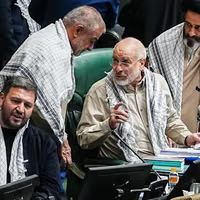
Iranian Foreign Minister Abbas Araghchi
Iranian Foreign Minister Abbas Araghchi warned that international law was at risk of being undermined by the United States, he wrote in letters to his counterparts in Sri Lanka and the Maldives, Iran’s ambassador in Colombo said on Friday.
Ambassador Alireza Delkhosh quoted Araghchi as saying, “We must support international law. This is not only about Iran, it is about the dignity of international law.” He said the minister warned, “Today Iran is the target, tomorrow it may be South Asian countries and the day after African states.”
Delkhosh said the message urged governments to resist pressure from Western powers. “International law has become a plaything for the United States. This decision, taken with Western countries, is very dangerous for international law,” he said.
Araghchi told the two South Asian countries that the latest sanctions showed the fragility of global rules. “This moment is a critical test for the credibility of international law,” the minister wrote, according to the envoy.
The letters came after the United Nations reimposed sanctions on Iran last month through the snapback mechanism. Britain, France and Germany triggered the process, saying Tehran had failed to meet commitments under the 2015 nuclear deal.
The European Union on Monday reinstated sweeping sanctions on Iran’s nuclear and ballistic programs, restoring bans on oil exports, banking, transport and energy trade that had been lifted under the nuclear deal. The EU said Iran had breached its obligations and noted that its enriched uranium stockpile was far above agreed limits.
US tightens pressure
The United States on Wednesday announced sanctions on 38 individuals and companies from Iran and China accused of supplying Iran’s military procurement network. The Treasury Department said the network provided missile technology and helicopter parts to Iran’s defense ministry. It said the move was part of efforts to enforce renewed UN sanctions and deny Tehran access to advanced technologies.
Iran has rejected the return of UN sanctions as illegal and without effect. The foreign ministry said any attempt to revive resolutions that ended in 2015 was “null and void” and created no obligation for member states.
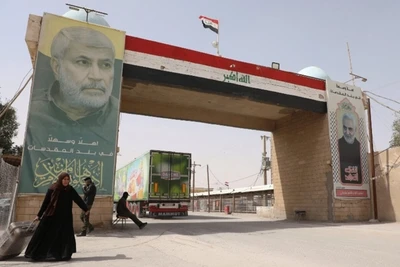
Outside the building of the General Directorate of Prisons of Semnan Province
A Swiss citizen Iran says died by suicide in prison was a 64-year-old tourist, a Swiss foreign ministry spokesman told Iran International, adding that Switzerland is seeking more details on his arrest and death from Tehran.
The foreign ministry added on Friday that the individual had been living in South Africa for the past 20 years and was traveling in Iran as a tourist.
The email response from the ministry said that the Swiss embassy in Iran was earlier denied access to the prisoner and now wants Tehran to provide full information about his arrest and death.
"Since Switzerland was informed of the arrest, the Swiss Embassy in Tehran has been in daily contact with the Iranian authorities to obtain more information about the circumstances of the arrest and to gain access to the detained Swiss citizen," the foreign ministry said.
"However, due to the accusations (espionage – national security), the requested consular access was not granted," it added. "Switzerland is demanding that the Iranian authorities provide detailed information."
The Swiss citizen who allegedly committed suicide in Semnan Prison on Thursday had been arrested while collecting soil samples in Iran’s central desert during an Israeli airstrike, media affiliated with Islamic Revolutionary Guard Corps reported.
Meanwhile, local media quoted unnamed Iranian official as saying that person was conducting espionage when he was arrested. The name of the Swiss citizen and the circumstances of his arrest and death remain unclear.
“This individual used prior intelligence training to take their own life during a specific opportunity,” Mashregh News, a publication affiliated with the Islamic Revolutionary Guard Corps (IRGC), reported late Thursday, citing an unnamed security official.
"Switzerland is demanding that the Iranian authorities provide detailed information on the reasons for his arrest and a full investigation into the circumstances of his death," the Swiss foreign ministry said.
The individual, detained by the IRGC Intelligence Organization, was accused of gathering information in a sensitive area during Israel's October air attack. The media report specifically said that this occurred during the Shahroud attack, which targeted an IRGC missile facility. Satellite imagery from Planet Labs later revealed significant damage to the site, known for building ballistic missiles and launching rockets as part of Iran’s space program.
After their arrest, the person was transferred to Semnan Prison, where they allegedly revealed information about their network and communication links, according to the outlet.
A local judiciary official confirmed the death on Thursday, saying that the Swiss national, facing espionage charges, had committed suicide in their cell.
Switzerland has also confirmed the death. "The FDFA confirms the death of a Swiss citizen in Iran," spokesperson Pierre-Alain Eltschinger told Iran International. "The Swiss Embassy in Tehran is in contact with the local authorities to clarify the circumstances of the death in an Iranian prison," he added.
According to Mizan, Iran's judiciary news website, the detainee asked their cellmate on Thursday morning to purchase food from the prison canteen. While alone in the suite, the detainee reportedly took their own life. "Prison officials immediately intervened to save the individual, but their efforts were unsuccessful," Mohammad Sadegh Akbari, a local judiciary official, was quoted as saying. “Suicide has been definitively confirmed.”
Iran has arrested dozens of dual nationals and foreigners in recent years, often on charges of espionage or security-related offenses. Some of these detainees have been released in exchange for deals involving Iranians held in foreign prisons.