Iran says sanctions move by Europe would halt UN nuclear inspector access
Iran’s deputy foreign minister warned on Wednesday that if three European countries move to trigger international sanctions at the United Nations, progress toward resuming the work of nuclear inspectors would be thwarted.
Kazem Gharibabadi added that France, Germany and the United Kingdom are not authorized to invoke provisions of the Joint Comprehensive Plan of Action (JCPOA), a 2015 nuclear deal, since they are no longer active participants in the agreement.
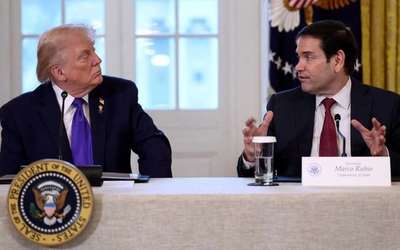
France, Germany, the United Kingdom, and the European Union told US Secretary of State Marco Rubio they will trigger the UN snapback sanctions mechanism against Iran on Thursday, Axios reported, citing three sources with direct knowledge.
European officials told Axios the decision follows months of unproductive talks. The European powers, known as the E3, had warned Iran they would act by the end of August unless Tehran resumed nuclear negotiations with the US, restored access for UN inspectors and addressed concerns over its stockpile of highly enriched uranium.
A senior European diplomat said Iran had taken no clear steps to meet these demands and failed to offer detailed proposals during a meeting in Geneva this week. The diplomat said Iran was in "clear violation" of the nuclear agreement and left no room to extend the deadline.
Iran has launched a clean-up operation at a nuclear-related site in northern Tehran that was struck by Israeli airstrikes in June, in a move that will likely remove evidence of any past nuclear weapons development work, a research group said on Wednesday.
Satellite images analyzed by the Institute for Science and International Security show damaged buildings being cleared at the Mojdeh site, also known as Lavisan 2, over a period of several weeks this summer.
“The rapid work by Iran to quickly demolish and clear the rubble of these important buildings appears to be an effort to sanitize the site,” the institute said.
Iran’s currency weakened sharply on Thursday as European nations prepared to trigger the return of United Nations sanctions under the snapback mechanism, deepening economic pressure on the Islamic Republic and adding to uncertainty around its nuclear program.
The sharp drop extends a steady decline in the rial over recent weeks. Currency dealers quoted the dollar at around 1,030,000 rials on the open market, according to local reports, compared to 957,000 rials last week.
Britain, France and Germany will begin the process of reimposing United Nations sanctions on Iran on Thursday, Reuters reports, citing two European diplomats.
The move, known as the “snapback” mechanism, is being initiated after the three governments said Iran failed to offer tangible commitments during nuclear talks earlier this week. A letter will be delivered to the UN Security Council later today.
The E3 hopes the action will pressure Iran to resume full cooperation with international inspectors and engage seriously in negotiations within the next 30 days. Tehran has warned it will respond harshly if sanctions are restored.
Iran’s currency weakened sharply on Thursday as European nations prepared to trigger the return of United Nations sanctions under the snapback mechanism, deepening economic pressure on the Islamic Republic and adding to uncertainty around its nuclear program.
The sharp drop extends a steady decline in the rial over recent weeks. Currency dealers quoted the dollar at around 1,030,000 rials on the open market, according to local reports, compared to 957,000 rials last week.
Reuters has reported that Britain, France and Germany could begin the snapback process as early as Thursday after Iran failed to resume talks or restore cooperation with the International Atomic Energy Agency. The three countries set a late August deadline earlier this month.
Markets react to snapback risk
The currency’s continued slide has heightened concerns among traders and the public, as sanctions could further restrict Iran’s access to global markets and increase pressure on imports, inflation, and employment.
Once triggered, the snapback process leads to the automatic reimposition of UN sanctions after 30 days unless the Security Council adopts a resolution to continue lifting them — a step that any permanent member can veto.
The measures would freeze Iranian overseas assets, ban arms deals with Tehran, and penalize missile development activities. They could also affect oil sales to China, one of Iran’s top customers.
Earlier this month, Iran International reported that Iran’s Intelligence Ministry has warned senior officials and companies to prepare for renewed economic disruptions. Confidential guidance cited risks of "severe currency fluctuations, reduced purchasing power, increased unemployment, layoffs, and heightened social discontent."
Business group warns of worst-case currency spike
Iran’s Chamber of Commerce this week published a report forecasting three scenarios for the economy in the event of snapback sanctions. In its most pessimistic case, the rial could fall to 1.65 million per dollar, with annual inflation reaching 90 percent by the end of the year. Economic growth was projected to remain negative under all scenarios.
Time running out
The current UN resolution allowing use of the snapback mechanism is set to expire on October 18. Russia, which will assume the rotating presidency of the UN Security Council that month, has floated proposals to extend the measure. After the resolution expires, any future effort to restore UN sanctions would likely face a veto from China or Russia.
Under the existing mechanism, any party to the 2015 nuclear deal can initiate snapback by notifying the Security Council of Iranian non-compliance. Sanctions would then be automatically reinstated after 30 days unless the Council votes to continue lifting them — a step that can be blocked by any permanent member.
In recent weeks, Iran has made only limited diplomatic efforts to prevent that outcome. Foreign Minister Abbas Araghchi said last week that talks alone were unlikely to avert further escalation, noting that negotiations had been ongoing when the June conflict with Israel erupted. “Sometimes war is inevitable,” he said in an interview with state media.
The IAEA, meanwhile, has called for inspections to resume “as soon as possible.” Inspectors were recently present to observe fuel replacement at the Bushehr nuclear reactor, operated with Russian support, but broader access to key enrichment and research sites remains suspended.