Ramezan-Ali Choubdari, head of public relations for the Imam Hassan Mojtaba unit of the Islamic Revolutionary Guard Corps (IRGC) in Alborz province, was killed in an Israeli strike on Monday, Iranian state media ISNA reported Wednesday.
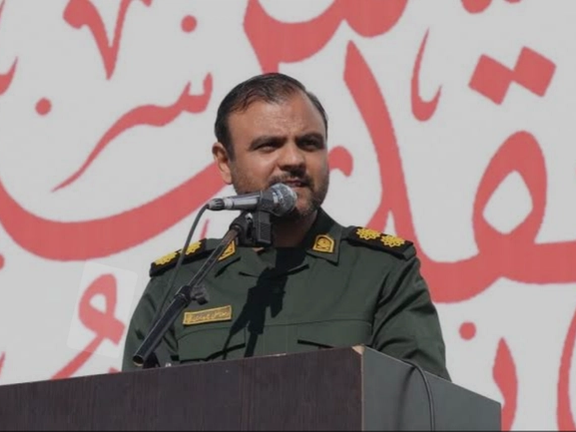
Ramezan-Ali Choubdari, head of public relations for the Imam Hassan Mojtaba unit of the Islamic Revolutionary Guard Corps (IRGC) in Alborz province, was killed in an Israeli strike on Monday, Iranian state media ISNA reported Wednesday.
Israel carried out a wide-scale military campaign inside Iran over a 12-day conflict, striking more than 1,480 targets and launching around 1,500 air sorties that dropped 3,500 munitions, Israeli media and defense sources reported.
The campaign, focused largely on western Iran and Tehran, also included long-range strikes as far as Mashhad airport, approximately 2,300 km from Israel.
According to data from the Israeli military and national rescue services (MDA), 29 Israelis were killed during the conflict – 28 by Iranian missile fire and one woman reportedly suffering cardiac arrest during air raid sirens.

The Israeli Air Force conducted 600 mid-air refueling operations during the offensive, which also targeted 80 Iranian air defense systems and 250 missile launch platforms.
Eight nuclear sites across Iran were bombed, with severe damage reported at two key facilities. Initial waves of airstrikes targeted Natanz and Isfahan, while subsequent attacks hit Arak, Parchin, Karaj, Bonab, and Tehran.
According to analysis by the Institute for National Security Studies (INSS), the strikes significantly degraded Iran’s nuclear infrastructure and eliminated much of the country’s strategic launch capability.
Iran fired approximately 600 missiles at Israeli territory in retaliation. Fatalities were recorded in multiple cities, including Rishon LeZion, Haifa, Petah Tikva, Kiryat Ata, and Beersheba. More than 30,000 buildings across Israel were damaged during the hostilities.