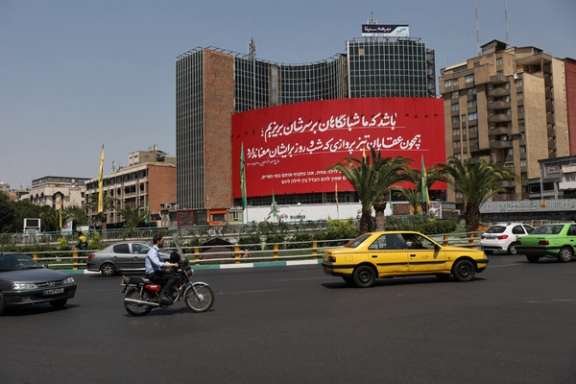
Israel’s recent airstrikes on Iran, which targeted nuclear sites and key military figures, suggest a dual objective: not only delaying Tehran’s nuclear program but also aiming to destabilize the Islamic Republic establishment, a Reuters analysis said.
The attacks struck Iran’s nuclear facilities at Esfahan and Natanz, missile factories, senior military commanders, and nuclear scientists, dealing a blow to both Iran’s military capabilities and its regional prestige.
Reuters interprets the targeting of senior officials as an attempt to undermine the security apparatus supporting Iran’s leadership.
Israeli Prime Minister Benjamin Netanyahu directly addressed the Iranian people, urging them to rise up, echoing past Israeli operations that contributed to political shifts in Lebanon and Syria.
However, experts caution that deep-rooted opposition to Israel within Iran and strong internal security forces make overthrowing the government uncertain. Analysts also say Israel lacks the capability to fully dismantle Iran’s nuclear program alone and may rely on prolonged strikes and potential US cooperation.

Israeli airstrikes on Iran’s nuclear infrastructure have inflicted damage on aboveground facilities but have not destroyed the deeply buried centrifuges or the country’s stockpile of near-weapons-grade uranium, the Washington Post reported on Saturday, citing nuclear experts and imagery analysis.
“We struck at the heart of Iran’s nuclear enrichment program,” Israeli Prime Minister Benjamin Netanyahu said following the attacks. However, analysts suggest that the core of Iran’s capability—particularly at hardened sites like Fordow and Natanz—remains intact.
“Until I know that Fordow is gone and until I know where that highly enriched uranium is and whether it’s usable, I consider us on the clock,” said Richard Nephew, a former US nuclear negotiator and fellow at the Washington Institute for Near East Policy.

Fordow and Natanz, Iran’s two main enrichment facilities, are fortified deep underground.
Experts cited by the Washington Post said only the US-made Massive Ordnance Penetrator could potentially damage them—an option not available to Israel.
“Israel can damage key Iranian nuclear facilities, but Israel can’t destroy hardened sites like Fordow without US military assistance,” said Kelsey Davenport of the Arms Control Association.
According to satellite imagery reviewed by analysts, the strikes at Natanz knocked out electrical infrastructure and destroyed a small research facility but spared the underground production site.
“They’ve disabled the facility by destroying the power substation, but they haven’t destroyed the facility in a way that would impact Iran’s long-term breakout capacity,” said Decker Eveleth, a missile and nuclear programs researcher.
Strikes were also reported at other locations, including a uranium metal facility in Isfahan, the heavy water reactor in Arak, and a military base near Tabriz. Yet analysts believe Iran’s enriched uranium and key centrifuges remain untouched.
“The centrifuge production hall at Natanz appears undamaged,” said Jeffrey Lewis of the Middlebury Institute, warning that Iran can continue to produce critical components. “So I presume they’re going to keep on making them.”
Former CIA analyst Kenneth Pollack suggested that Israel may pursue other tactics, including cyberattacks or special operations, to degrade Iran’s program further.
Experts also warned that the attacks could also strengthen hardliners in Iran pushing for an overt nuclear weapons capability. “The political momentum will doubtless shift to the bomb advocates,” said Jim Walsh of MIT.

Israel’s strikes on Iran recall the surprise attack on Egypt in 1967, but in aim and execution they more closely resemble the recent campaigns against Hamas and Hezbollah that targeted leadership and capabilities to force strategic paralysis.
The strike was broad in scope, targeting senior commanders, nuclear sites, missile systems, weapons production facilities, and scientists involved in military projects.
Crucially, it came as the Islamic Republic was preparing for Sunday’s negotiations with Washington—amplifying the element of surprise. The tactics were highly unexpected and caught Tehran off guard.
Israel’s main goal was to eliminate the regime’s senior military hierarchy. That aim was largely achieved.
Confirmed killed were Mohammad Bagheri, Chief of the Armed Forces General Staff; Hossein Salami, IRGC Commander-in-Chief; Gholam Ali Rashid, head of Khatam al-Anbiya Central Command; Amir Ali Hajizadeh, IRGC Aerospace Force Commander; Mehdi Rabani, IRGC Deputy for Operations; and Ali Shamkhani, senior advisor to Supreme Leader Khamenei and head of the nuclear program.
The assassinations point to deep Israeli intelligence penetration into Iran’s security structure. Mossad appears to have access to top-level information.
Former Intelligence Minister Ali Younesi had warned a while ago that Israeli infiltration was so extensive senior officials should fear for their lives—a warning that now seems prescient.
Israel also killed several top nuclear scientists—the “brains” behind the weapons program. The knowledge infrastructure suffered a major blow, though not total collapse. Some veteran scientists have been confirmed dead, marking a serious setback to Iran’s nuclear ambitions.
Equally damaging, Iran’s air defenses collapsed at the critical moment. The November strike and this latest assault suggest Tehran’s systems are unable to counter Israeli air superiority when it matters most.
Israel’s air force targeted nuclear sites, especially in Natanz. While Tehran has disclosed little, Israeli officials say—and reported explosions suggest—that key infrastructure, built at enormous cost, was destroyed.
Israel also asserts to have struck multiple missile and rocket sites, as well as weapons factories, destroying hundreds of missiles and drones hidden underground. If confirmed, this would further demonstrate Israel’s deep military intelligence reach. Iran’s offensive capability has been badly degraded, though not entirely neutralized.
The operation was carried out by the Israeli military and Mossad. It showed not only air dominance but also intelligence and technological superiority—enough to operate freely on Iranian soil.
Israel has signaled the operation is ongoing.
Its vow to continue strikes suggests a preselected target bank and a broader strategy aimed at reducing Iran’s military threat to the lowest level.
The approach mirrors campaigns against Hamas and Hezbollah: dismantle leadership, cripple retaliatory capacity, and push the remaining structure toward surrender.
Former US envoy Brett McGurk told CNN that fears of a broader war with Iran are “overheated,” citing the deaths of key Iranian figures who would coordinate Tehran’s response.
“The Trump Admin is clearly into some major preparations for possible military action vs Iran,” former US ambassador to Israel Dan Shapiro said on X.
“These steps don't necessarily mean military action is imminent. Still time for talks, it takes time to move people out.”
“But these are steps that it would make sense to take as part of preparations, and to show seriousness. Provides important leverage in nuclear talks,” he said on Wednesday.

Democratic lawmakers on the sidelines of the Trump administration's high-stakes nuclear talks with Iran largely hope for their success but lament being cut out of a process playing out behind closed doors.
While hawkish Republicans and a lone Democratic Senator John Fetterman have vocally questioned Iran's nuclear intentions as Trump has pushed for harsher terms, mainstream members of the caucus have mostly kept mum.
House Minority Leader Hakeem Jeffries told Iran International "that a future agreement must be stronger than its predecessor—enforceable in a lasting way, with real consequences for violations.”