"Israel's attacks will certainly not go unanswered, and the gates of hell will soon be opened upon them," new IRGC chief-commander Mohammad Pakpour said.
"Israel will face a painful fate," he added.


A United Nations-backed conference co-hosted by France and Saudi Arabia to advance a roadmap toward a two-state solution between Israel and the Palestinians has been postponed following Israel's military strikes on Iran, Reuters reported on Friday.
A Western diplomatic source in Riyadh said the decision was partly due to the escalating conflict. "The Saudi-French conference is being postponed, in part because of the attacks on Iran," the source said.
A second source familiar said some delegations from the Middle East would not or could not come due to developments.
Chief rabbis in Israel have unprecedentedly advised the public to avoid attending synagogue services on Shabbat and imposed strict limits on funerals, restricting them to 15 minutes and 10 attendees.
This marks a rare move, as religious gatherings have typically continued even during past crises such as the COVID-19 pandemic.
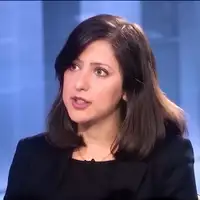
Some Iranians expressed gratitude to Israel for assassinating military and political military officials they viewed with contempt in video and voice messages sent to Iran International TV.
“I wanted to thank Israel and Uncle Netanyahu for what they did last night and to tell Iran: You are nothing. (You say you are) a power in the region, but three of your top commanders were killed in a single attack,” a viewer said in his message.
“I want people to get out [on the streets to protest] and be united with each other and to topple this blood thirsty government,” she added.
Iranian media reported on Friday that Davoud Sheikhiyan, a senior commander in the Islamic Revolutionary Guard Corps (IRGC) Aerospace Force’s air defense unit, was killed in Israeli strikes on Iran.
Sheikhiyan is believed to have played a key role in Iran’s air defense operations within the IRGC’s Aerospace Division, which oversees missile and drone capabilities.

The European Union on Friday voiced grave concern over rising tensions in the Middle East following Israeli strikes on Iranian nuclear sites and Tehran’s military response, calling for restraint and a return to diplomacy.
Speaking at the IAEA Board of Governors in Vienna, the EU said it remains committed to ensuring Iran does not acquire nuclear weapons and reaffirmed support for a negotiated solution.
"The European Union expresses serious concern about the risk of a spiral of violence in the Middle East," the EU delegation said. "It remains a key security priority for the EU to ensure through diplomatic means that Iran does not acquire a nuclear weapon."
“We urge all parties to abide by international law, show restraint, and avoid targeting of civilians and any steps which could lead to serious consequences such as potential radioactive release.”