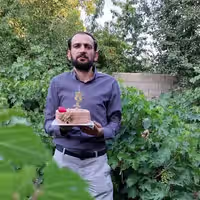
A senior Iranian parliamentarian said any US push to revive nuclear diplomacy must start with the complete removal of sanctions.
“In the negotiating room, the position of the Islamic Republic of Iran is absolutely clear and firm: full sanctions relief must be implemented,” Abbas Moqtadaei, deputy chair of the parliament’s national security committee, said.
Moqtadaei added that while Tehran remains committed to the peaceful nature of its nuclear activities and is ready to offer assurances, this “does not mean retreat,” describing it as part of Iran’s longstanding strategic posture.
“With internal strength and regional presence, we have no need to offer concessions,” he said.
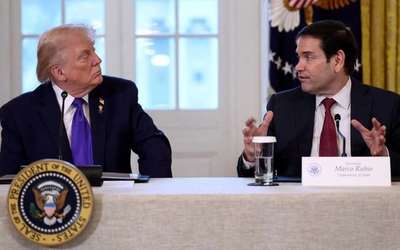
Israeli Prime Minister Benjamin Netanyahu was upset by US President Donald Trump’s remarks on Wednesday that he had not yet decided whether Iran would be allowed to enrich uranium under a new nuclear deal, NBC News reported.
Netanyahu has been frustrated for weeks by Trump’s refusal to support military strikes on Iran’s nuclear facilities and his preference to pursue a deal aimed at preventing Tehran from acquiring a nuclear weapon, according to the two US officials, two Middle Eastern diplomats, and two other sources familiar with the tensions.
“They’re worried about any deal,” one US official said, referring to the Israeli government.
Israel has made clear to Washington that it opposes any agreement that allows Iran to retain uranium enrichment capabilities, the officials and diplomats said. Trump, however, has expressed openness to Iran maintaining a civilian nuclear program.
“We haven’t made that decision yet,” Trump said Wednesday when asked about Iran’s enrichment rights.
The US dollar climbed in Iran’s open market on Sunday as the fourth round of nuclear talks between Tehran and Washington got underway.
According to financial websites, the dollar rose by more than 20,000 rials in a single day, reaching up to 850,000 rials. Compared to the end of last week, the currency has gained over 30,000 rials.
Last week, the currency sharply declined after the planned fourth round of indirect talks was postponed due to unspecified reasons.
That drop saw the rial fall past 870,000 to the dollar, erasing gains made during earlier rounds of diplomacy in Oman.
While the rial had shown some recovery to around 795,000per dollar following the third round of talks, the renewed uncertainty surrounding the negotiations has seemingly put downward pressure on the currency.

Even if the United States smiles and speaks kindly, it remains Iran’s enemy, said Nadergholi Ebrahimi, an Iranian parliamentarian from Arak.
Reacting to Donald Trump’s demand for the dismantling of Iran’s nuclear program, Ebrahimi said, “Whether America smiles, frowns, speaks gently, or holds bullets in its hands, it is still our enemy and we must not be lulled into excessive optimism or neglect.”
He added that negotiations should continue only if they lead to the lifting of sanctions, but warned, “If Trump’s insistence on dismantling our nuclear facilities continues, we will call for the talks to be cut off.”

Any decision on reaching a deal with the United States ultimately lies with Supreme Leader Ali Khamenei, said Asadollah Badamchian, head of Iran’s Islamic Coalition Party.
“If tomorrow Khamenei says we shouldn’t sign a deal with America, we must say yes, sir,” he told supporters.
Dismissing warnings of a possible US military strike, Badamchian said, “They say America wants to attack—attack what? A few power plants? Even Israel couldn’t hit us.”
He also demanded the US return frozen Iranian assets and questioned its right to block Tehran’s trade with other countries.
He defended discounted oil sales to China, saying Iran has the right to offer lower prices in exchange for essential imports.

Israeli Foreign Minister Gideon Saar said on Sunday that Iran, which he described as "the most dangerous regime in the world," must not be allowed to obtain nuclear weapons.
At a press conference in Jerusalem, Saar said, “Iran is the most dangerous state in the world... The most dangerous regime must not be allowed to obtain the world’s most dangerous weapon."
Saar called for the dismantling of Iran’s uranium enrichment facilities and urged international partners to ensure the Islamic Republic is not permitted to acquire additional weaponry.
“Tehran's enrichment infrastructure must be dismantled,” he said. “Iran must not be allowed to acquire new weapons or further entrench its military capabilities.”