Demanding end to enrichment erodes chances of a deal, Araghchi warns US
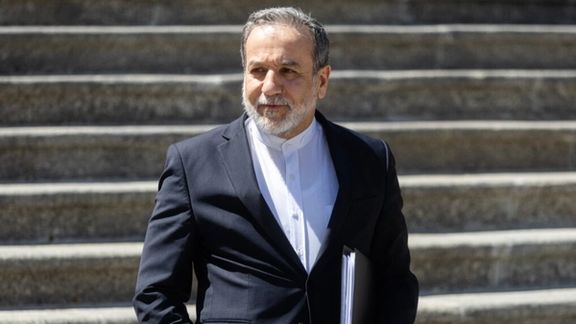
Iran's foreign minister on Friday dismissed his American counterpart Marco Rubio's demand that Tehran halt all uranium enrichment, saying Tehran "has every right to possess the full nuclear fuel cycle as a founding signatory to the NPT."
Abbas Araghchi also warned the US that "maximalist positioning and incendiary rhetoric achieve nothing except eroding the chances of success."
"A credible and durable agreement is within reach. All it takes is firm political will and a fair attitude," he said.
In an apparent response to Rubio, Araghchi said that "there are several NPT members which enrich uranium while wholly rejecting nuclear weapons."
"Apart from Iran, this club includes several Asian, European, and South American nations," he added.
Rubio told Fox News on Thursday that “the only counties in the world that enrich uranium are the ones that have nuclear weapons.”
The UN nuclear watchdog said in March that Iran is only non-nuclear armed state enriching uranium to 60%. Several countries which do not possess nuclear weapons, including Japan, Brazil, Germany and the Netherlands, enrich uranium at lower levels.
President Masoud Pezeshkian’s campaigned on transparency, but his administration is presenting inflated and misleading data about Iran’s energy sector in an apparent bid to soothe public dissatisfaction with deepening blackouts.
In recent months, authorities have repeatedly cited sizeable increases in gasoline and natural gas production and some officials have even assured the public that this summer’s looming electricity shortfall will be resolved.
But a confidential document from the Oil Ministry obtained by Iran International shows these claims are not only inaccurate, but the country's energy shortages are in fact accelerating.
Iran currently suffers from year-round energy deficits. During peak demand season, electricity and natural gas shortages climb as high as 25%, while the gasoline shortfall reaches 30%.
With energy development projects stagnating, officials have turned to optimistic public messaging, using spurious statistics to suggest improvement that their own confidential data shows does not exist.
In late 2024, Mohammad-Sadegh Azimifar, CEO of the National Iranian Oil Products Distribution Company, said the country’s daily gasoline output had increased by 10 million liters, and diesel by 13 million liters over the past year.
However, a confidential internal report from the same company shows base gasoline production at Iranian refineries increased by only 1.5 million liters in late 2024 compared to the same period in 2023. Even for the entire year, the growth was just 3.5% or just 3.76 million liters per day.
Diesel output showed similarly modest growth—just 3% or 3.38 million liters per day for the year. Meanwhile, consumption of both fuels jumped by 7.5% in 2024, or 7 million liters per day, further deepening Iran’s fuel deficit.
Despite the absence of any new refineries in recent years, the government has continued to push over 1.5 million low-efficiency domestically manufactured vehicles into the market annually—adding more strain on fuel demand.
In 2024, Iran’s daily base gasoline production was around 101 million liters, while consumption topped 123 million liters.
Gasoline output lags consumption as additive use in fuels rises
Boosting additives
The government’s main strategy for managing this growing gap, according to the Oil Ministry report, has been to dilute refinery-grade gasoline with large volumes of substandard additives.
These additives include various chemical compounds, fuels from petrochemical plants, and the controversial chemical MTBE—a compound banned in many Western countries due to its environmental and health hazards—as well as industrial octane boosters.
While additive use stood at just 5 million liters per day or 6% of total gasoline in 2018, it now exceeds 20 million liters or over 20% of the fuel supply, raising serious concerns about air quality and public health.
The same confidential report also revealed that only one-quarter of gasoline produced in Iranian refineries meets European standards and even within that limited share it is not fully clear whether the fuels truly adhere to required specifications.
Gas production: claims versus reality
The head of South Pars Gas Complex recently announced a 6 billion cubic meter increase in gas fed into the national grid in the last fiscal year, ending on March 20. The South Pars field alone accounts for 73% of Iran’s natural gas supply.
Simultaneously, the CEO of the Iranian Central Oil Fields Company—which provides around 25% of the nation’s gas—said the company boosted production by 10 million cubic meters per day during the autumn and winter, equating to at least 2 billion cubic meters of annual growth.
Based on these statements, Iran should have increased its gas production by at least 8 billion cubic meters last year.
However, international institutions such as the International Energy Agency (IEA) and the Gas Exporting Countries Forum (GECF)—of which Iran is a member—have both estimated Iran's gas output growth at only around half that amount.
From 2010 to 2020, Iran enjoyed annual gas production growth rates above 5%. But from 2021 to 2024 the rate has fallen to around 2% on average. The IEA forecasts that in 2025, gas production will rise by just over 1%.
Iran must agree to end all uranium enrichment in a nuclear deal or be prepared to face attack, Republican Congressman Mike Lawler told Iran International's Eye for Iran podcast.
“Iran is not going to win this,” said Lawler during the podcast. “The sooner they come to that realization and acceptance, the better the outcome will be for everybody.”
The explosion on Saturday at Iran's Rajaei port was caused by a chemical fire that began in a shipping container, The Washington Post reported citing visual evidence and explosives experts.
The report cited a surveillance video first published on X showing a forklift driving into and out of a shipping container at the port when moments later flames appear inside the container followed by a large blast.
The report quoted Gareth Collett, a retired British Army Brigadier who specialized in counter-terrorist bomb disposal as saying that the video could “depict confined storage of an oxidizer.”
The incident was likely caused by a violent chemical reaction that resulted in a fire and led to the explosion, the report cited four unnamed explosive experts as saying.
The experts said the color of the smoke indicated that nitrate-containing compounds, or perchlorates, were present at the site of the explosion.
Three experts cited by The Post said perchlorates and some nitrates can be used for rocket fuel, but also have domestic uses in large quantities, like fertilizer.
Iran's president Masoud Pezeshkian in an event to mark May Day, Tehran, Iran, April 30, 2025
President Masoud Pezeshkian's government has yet to mount a defense to parliamentary motions aiming to impeach two of his ministers following the port blast that killed scores and injured more than a thousand people.
Hardline MPs have initiated a process that may result in Pezeshkian losing his energy minister Abbas Aliabadi and transport minister Farzaneh Sadeq, but the president has yet to enter the fray.
The inaction could be calculated, hoping that the impeachments calm a public angered by the tragic event and the lack of accountability. It could also deflect attention from the state entities involved in the port's operations which would otherwise take most of the heat for the apparent accident.
First to be named in the parliament was Sadeq, one of the very few female ministers in the history of Iran. She was to be held accountable for “oversight and inefficiency,” according to five MPs sponsoring the motion.
Calls to impeach Aliabadi gained traction shortly after. MPs blamed him for power outages that harmed households and industries. Surprisingly, some from the pro-Pezeshkian camp backed the motion.
“When a minister is weak, he must be replaced,” former presidential candidate Mostafa Hashemi Taba was quoted as saying by the moderate daily Arman-e Melli.
Another moderate outlet, Khabar Online, reported that hardliners in Iran's parliament—mainly from the ultraconservative Paydari Party—had been planning to remove both ministers since March, following the ousting of economy minister Abdolnasser Hemmati.
Back then, the administration didn't concede without a fight.
Officials and moderates outlets launched a campaign warning that impeachments would weaken the administration’s legitimacy, some even asserting cryptically that supreme leader Ali Khamenei viewed Pezeshkian's government as the Islamic Republic's last viable option and opposed destabilization.
Hardliners often submit multiple impeachment motions to increase the chances of at least one being approved for parliamentary debate.
Unofficial reports in Iranian media suggest Sadeq may be removed to show the government is responding to public demands.
Those with most power—and more likely to be culpable for the port blast—are expected to remain untouched: the Revolutionary Guards (IRGC), for example, or the Mostazafan Foundation, which operates under Khamenei’s office.
The IRGC likely imports weapons materials through the port, which a subsidiary of the foundation operates.
The motion to impeach Sadeq has over forty signatures to date, according to an official tally, which can be read as a sign of things to come as no more than ten is required to set off the proceedings against a minister.
Previous initiatives to impeach Sadeq fell short, according to unofficial reports in Tehran's media, because Pezeshkian had hinted in closed session that she was Khamenei’s preferred candidate.
This time, the only outlet to come out in support of the transport minister is Etemad, whose proprietor Elias Hazrati serves as the government’s public relations chief. The daily has framed the motion as a move against the government.
Pezeshkian or his team are yet to publicly defend the two embattled ministers. It is a rare silence, perhaps signaling their patience until an actual battle in the parliament if and when the impeachment takes place.
Mike Lawler, US representative for New York's 17th congressional district since 2023
Iran must agree to end all uranium enrichment in a nuclear deal or be prepared to face attack, Republican Congressman Mike Lawler told Eye for Iran.
“Iran is not going to win this,” said Lawler during the podcast. “The sooner they come to that realization and acceptance, the better the outcome will be for everybody.”
“If Iran doesn’t comply, then action will have to be taken,” he added.
Despite his hardline stance, Lawler supports diplomacy before war.
“It would be foolish not to try diplomacy first.” Invoking Reagan’s "trust but verify" adage, Lawler said diplomatic engagement was a tool to avoid war and not a sign of weakness.
Oil sanctions
The New York representative is one of the Congress's most vocal advocates of stepping up pressure on Tehran. He recently co-sponsored bipartisan legislation targeting China’s purchase of Iranian crude oil—part of a legislative package responding to Iran’s direct military attacks on Israel last year.
Lawler sees Iran’s oil trade—particularly with China—as the Islamic Republic's financial lifeline.
The Enhanced Iran Sanctions Act of 2025 targets Chinese purchases of Iranian crude oil and cracks down on facilitators like banks and insurers.
“They (Iran) have been the greatest sponsor of terrorism around the globe,” Lawler said. “Their funding stream comes in large measure from the petroleum industry and the illicit oil trade with China. China purchases the vast majority of Iranian petroleum—amounting to a $200 billion revenue increase under Joe Biden’s watch.”
Lawler praised Trump's current strategy, calling it "night and day" compared to that of his predecessor.
Separately on Thursday, President Donald Trump declared that all purchases of Iranian oil or petrochemical products must cease, warning that any buyers would be subject to secondary sanctions. “They will not be allowed to do business with the United States of America in any way, shape, or form,” Trump posted on Truth Social.
Timing of talks is justified
Lawler also rejected criticism from some Iran hawks that the Trump administration is negotiating too early and giving away leverage.
With Iran’s nuclear capabilities more advanced than in years past, he said the urgency is warranted.
“We’re in a different world. Iran is further along today than they were four years ago or eight years ago,” he told Eye for Iran. “So I don’t know how much longer people want to wait.”
That urgency, however, now faces a new obstacle. The fourth round of US-Iran nuclear talks, initially scheduled for May 3 in Rome, has been postponed for reasons still unknown.
Lawler, who represents a district with a significant Persian community, said many of his Iranian-American constituents support a tougher US stance.