"President Trump said the only solution is Iran completely dismantling its program, or we should do it for them. And he's right," the Arkansas Republican wrote on X on Wednesday.
"A nuclear Iran is a direct threat to not just our friends in the Middle East, but to every American."
The statement appeared to walk back comments he had posted earlier in the day in which he focused on Iranian enrichment. US secretary of state Marco Rubio said last week that Iran could be permitted a peaceful nuclear program in a deal.
Many countries maintain civilian nuclear programs with imported enriched uranium.
"They don’t need the centrifuges and highly-enriched uranium for civilian nuclear power,” Cotton said in the audio remarks.

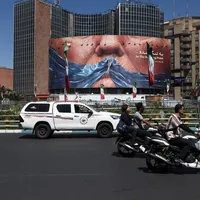
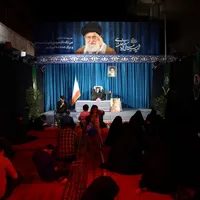
Tehran and Washington are set to resume talks this weekend, but growing calls to condition any agreement on the dismantling of Iran’s nuclear infrastructure are casting a shadow over early optimism.
The hard line on full dismantlement is the newly stiffened public stance of the White House and US envoy Steve Witkoff and has also been pushed by Israel's prime minister, Benjamin Netanyahu, who asserted on Monday that nothing less would be acceptable to his government.
His intervention did not sit well with Tehran.
“Israel’s fantasy that it can dictate what Iran may or may not do is so detached from reality that it hardly merits a response,” Iranian Foreign Minister Abbas Araghchi posted on X, calling Netanyahu "brazen" for telling a US president what to do.
Somewhat surprisingly, he went on to criticize the Democratic administration of Joe Biden in what appeared to be an attempt to court Donald Trump.
“Netanyahu’s allies in the failed Biden team—who failed to reach a deal with Iran—are FALSELY casting our indirect negotiations with the Trump administration as another JCPOA,” Araghchi wrote.
The significance of this public gesture from an Iranian official—at the expense of the man accused of appeasing Tehran almost every week of his term—cannot be overstated.
This shift in tone may be partly driven by the economic fallout from the port fire in Bandar Abbas, which observers believe has deepened Tehran’s financial strain.
The Islamic Republic, and its chief negotiator Araghchi, have every reason to be apprehensive about a breakdown in talks, given the "very bad" alternative mooted by Trump.
The desire to project cautious optimism was also evident in an editorial on Iran Diplomacy, a website closely aligned with the foreign ministry.
The article outlined two scenarios: the U.S. targeting Iran's nuclear sites, or accepting a “new regional order” in which Tehran becomes a key energy supplier to the West. The latter, it said, is the more likely outcome.
In this scenario, according to Iran Diplomacy, Iran-allied armed groups in the region would be redefined and gradually integrated into formal military structures.
Curiously, the piece framed all this as proof of Tehran's deterrent power and Washington's surrender to Iran’s demands, while cautioning against overconfidence when dealing with a president who has a “bad record of undermining commitments.”
Two reformist publications, Sharq and Etemaad, published similar stories on the same day.
Sharq said there was room for cautious optimism while talks continue, noting that major issues remain unresolved.
Etemaad reported that a recent poll showed 8 in 10 respondents support the talks and a potential agreement, provided it protects Iran’s interests and preserves advances in nuclear science and missile technology.
The pro-government publication pointed out that in a similar poll conducted just before the 2015 nuclear deal, fewer people - 7 in 10 - said they favored a deal.
US Central Command (CENTCOM) on Wednesday released images of a joint military exercise with Arab countries of the Persian Gulf region: Qatar, Saudi Arabia, Kuwait, Bahrain, Oman, and the United Arab Emirates.
Eagle Resolve 2025, CENTCOM posted on X, is aimed at "enhancing regional security, fostering interoperability, strengthening cyber security, and refining joint military readiness."

British Defence Secretary John Healey on Wednesday cited Iran's support for Yemen's armed Houthi movement as a reason for a joint US-UK air attack on what he described as a drone manufacturing site.
"Make no mistake, Houthis act as an agent of instability across the region. They continue to receive backing from Iran, both military and financial, and even Russia has attempted to support the Houthi operations," Healey told Parliament.
"The aggression in the Red Sea in the Gulf of Aden is yet another example of how our adversaries are increasingly working together against our interests."
Transport officials in Iran say normal operations have been resumed in the Persian Gulf port of Bandar Abbas are back to normal four day after a huge explosion.
"Loading, unloading, and cargo declaration activities at Rajai Port have returned to normal conditions," Iran's head of Road Transport and Highways Organisation said on Wednesday.
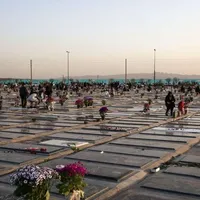
A repair technician with 15 years of experience at Iran's Rajaei port in Bandar Abbas told Iran International that the real death toll from the April 26 explosion could exceed 300 people, including undocumented workers and administrative staff.
"I work as a repair technician and move throughout the entire port," he said. "I know what I’m talking about. The number of dead, including the missing, is over 300."
He said the victims included contract workers from Sina Marine and Port Services company, day laborers who are not officially registered for insurance or taxes, and are paid through off-book bank accounts, as well as undocumented Afghan and Baluch workers who enter the port through side walls to avoid being seen by guards.
He added that 23 women working in the administrative building of the Sina company, located about 200 meters from the blast site, have not been accounted for. "No one has been found from that building—not even the guards or the kitchen staff. Not even the bodies have been returned," he said.
He also described the presence of truck drivers and their companions at the time of the blast. "There were around 80 trucks there, many with drivers' spouses or assistants inside," he said.
The technician said several hours after the explosion, Islamic Revolutionary Guard Corps (IRGC) intelligence officers entered the port and removed or sank around 50 containers that had not exploded but were in the path of the fire. "Some containers were thrown into the sea, others moved to a separate area inside the port complex," he said.