• العربية
  • فارسی
Brand
  • Iran Insight
  • Politics
  • Economy
  • Analysis
  • Special Report
  • Opinion
  • Podcast
  • Live TV
  • Iran Insight
  • Politics
  • Economy
  • Analysis
  • Special Report
  • Opinion
  • Podcast
  • Live TV
  • Theme
  • Language
    • العربية
    • فارسی
  • Iran Insight
  • Politics
  • Economy
  • Analysis
  • Special Report
  • Opinion
  • Podcast
  • Live TV
All rights reserved for Volant Media UK Limited
volant media logo

Iran expands security at buried nuclear sites – think tank

Apr 23, 2025, 14:14 GMT+1Updated: 17:07 GMT+1

Iran is constructing a new security perimeter around two underground tunnel complexes near its Natanz nuclear site, according to a report by the Institute for Science and International Security (ISIS) released Wednesday.

The sites, buried beneath Mount Kolang Gaz La, have not been accessed by international inspectors.

"The creation of a security perimeter around deeply buried sites associated with uranium enrichment suggests that Iran is increasingly worried about an individual or group seeking to enter the tunnel complexes undetected," the report wrote. "Whether this type of protective barrier would be effective against a well-armed and resourced adversary is unclear."

The report, based on satellite imagery from March, shows wall panels and road grading forming a perimeter that connects with the Natanz facility. One of the complexes is new and deeply buried, likely intended to replace a centrifuge assembly plant destroyed at Natanz in 2020. The other dates back to 2007 and appears to be undergoing upgrades.

David Albright, the institute's president, said the new perimeter suggested that the tunnel complexes, under construction beneath Mt. Kolang Gaz La for several years, could become operational relatively soon.

The complexes could be used to store Iran's stockpile of highly enriched uranium or undeclared nuclear materials, and advanced centrifuges that could quickly purify enough uranium for a bomb, Albright was quoted as saying by Reuters.

The ongoing construction appears to underscore Tehran’s rejection of demands that nuclear talks with the US lead to the full dismantlement of its program, Reuters reported. Iran has maintained it has the right to peaceful nuclear technology.

Israel has not ruled out military action. Prime Minister Benjamin Netanyahu insists any deal must result in the complete dismantlement of Iran’s nuclear infrastructure.

Most Viewed

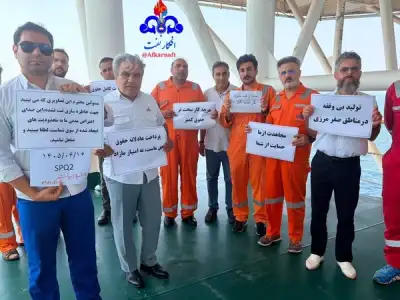
Iran oil workers protest pay conditions at offshore platforms, Assaluyeh
1

Iran oil workers protest pay conditions at offshore platforms, Assaluyeh

2

US carried out covert four-month Hormuz mine-clearing mission - FT

3
ANALYSIS

Iran’s new war strategy seeks to turn blockade into broader economic confrontation

4

US sanctions all Iranian airlines in sweeping aviation crackdown

5
ANALYSIS

Europe’s third-way ambitions on Iran give way to alignment with Washington

Banner
Banner
Banner

Spotlight

  • Iran’s gasoline price hike may add to revenues, but can it ease fuel shortage?
    ANALYSIS

    Iran’s gasoline price hike may add to revenues, but can it ease fuel shortage?

  • Iran deploys security forces as gasoline price rise takes effect
    VOICES FROM IRAN

    Iran deploys security forces as gasoline price rise takes effect

  • Iranian protester undergoes months of secret treatment to save wounded leg
    EXCLUSIVE

    Iranian protester undergoes months of secret treatment to save wounded leg

  • Iran’s new war strategy seeks to turn blockade into broader economic confrontation
    ANALYSIS

    Iran’s new war strategy seeks to turn blockade into broader economic confrontation

  • Europe’s third-way ambitions on Iran give way to alignment with Washington
    ANALYSIS

    Europe’s third-way ambitions on Iran give way to alignment with Washington

  • The gamble behind US attacks on Iran’s oil tankers
    ANALYSIS

    The gamble behind US attacks on Iran’s oil tankers