The two sides had initially agreed to meet in Rome. However, a disagreement reportedly arose between Iranian officials—who insisted on holding the meeting at the Omani Embassy in Rome—and the Italian government, which maintained that the talks should take place at the Italian Foreign Ministry. This prompted Tehran to make a last-minute announcement on the evening of April 14 that the meeting would instead be held in Oman.
The US side has not publicly commented on the dispute over the location. However, President Donald Trump, who had previously expressed cautious optimism following the first round, criticized the week-long gap between meetings, suggesting that Iran was stalling. “They've got to go fast, because they're fairly close to having one, and they're not going to have one,” he said, referring to Iran’s nuclear capability.
Iranian officials had also requested that Omani Foreign Minister Sayyid Badr Albusaidi attend the Rome meeting, though they did not provide an explanation for the request.
While Iran’s state broadcaster—heavily influenced by the ultraconservative Paydari Party—has been reluctant to cover the first and second meetings with the Americans, the government broke its silence by releasing previously undisclosed information exclusively to the Tehran Times, an English-language daily. Notably, this disclosure bypassed the many Persian-language newspapers published in Tehran.
Supreme Leader Ali Khamenei also weighed in on the talks during a speech on Tuesday. Echoing Trump’s earlier tone, he expressed cautious optimism and said the Iranian negotiating team had performed well.
In a commentary, Eco Iran, a Telegram channel known for serious coverage of domestic politics and economics, wrote: “Despite their historic hostility, an agreement is still possible between Tehran and Washington.” The channel added that Trump had succeeded in pushing Tehran to move its red lines. “The meeting showed that neither Iran nor the United States wants another war in the region,” it added.
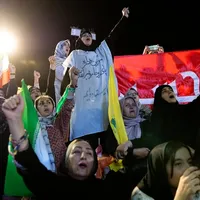
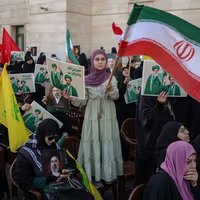
Eco Iran also noted growing anxiety among Iranians at home, with many watching the negotiations closely while fearing that Trump’s patience might wear thin. The channel added that Israel is monitoring the talks with concern—especially as Trump may offer Saudi Arabia access to nuclear technology and uranium enrichment during his upcoming visit to Riyadh.
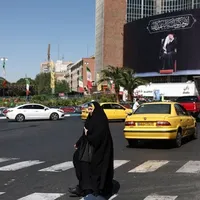
Meanwhile, the pro-reform Telegram channel Jamaran, which is affiliated with former President Mohammad Khatami, posted that many Iranians—particularly those in the middle class—have long supported meaningful engagement with the United States. “Now that the talks have started, the Iranian people are closely watching the developments and discussing them widely,” the channel wrote.
Jamaran added that the public perception is shifting, with many now believing that the government has finally chosen negotiations as a path to address the country’s mounting challenges. It also emphasized that for more than two decades, polls have consistently shown that Iranians favor diplomacy with the West, while also demanding respect for national dignity and interests.
The centrist Telegram channel Emtedad published a commentary by journalist Davoud Heshmati, who welcomed former US Secretary of State John Kerry’s suggestion that any future agreement with Iran should be ratified by the US Senate. He argued that such a step would help reassure Iranians concerned about the possibility of a future US president walking away from the deal.
The comment reflects lingering distrust in Iran toward Trump, with many fearing that even if a new agreement is reached, it could once again be revoked by him—or a successor.