Influential conservative commentator Tucker Carlson said on Monday that the United States could not afford a war with Iran which it would lose.
"Whatever you think of tariffs, it’s clear that now is the worst possible time for the United States to participate in a military strike on Iran. We can’t afford it. Thousands of Americans would die," the former Fox News host wrote on X.
"We’d lose the war that follows. Nothing would be more destructive to our country. And yet we’re closer than ever, thanks to unrelenting pressure from neocons. This is suicidal. Anyone advocating for conflict with Iran is not an ally of the United States, but an enemy."

Israeli Prime Minister Benjamin Netanyahu believes the chances of a nuclear deal between Tehran and Washington are extremely low but will present to Donald Trump today how "a good deal should look like", Axios reporter Barak Ravid reported citing an Israeli official.
"Netanyahu wants the Libya model. Full dismantling of Iran's nuclear program", the official said.
Iran's Foreign Minister Abbas Araghchi said on Sunday that Washington can only dream of an agreement with Iran similar to the 2003 deal with Libya.
His comments came after Republican Senator Tom Cotton said the deal President Trump wants with Iran would be one that neutralizes Tehran's threat completely.
"He prefers a deal like Libya cut with the United States in 2003," Cotton said in an interview posted on X, alluding to Qaddafi's giving up of all WMDs.

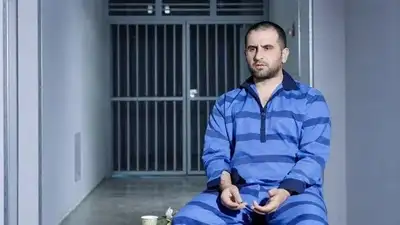
The directors of acclaimed Iranian film My Favorite Cake have each been sentenced to 14 months behind bars on charges of propaganda against the Islamic Republic.
The Revolutionary Court also sentenced Behtash Sanaeeha and Maryam Moghaddam to one year of imprisonment on charges of “producing obscene content” and ordered the confiscation of all related equipment.
Both sentences will be suspended for five years, according to Iranian media outlets.
My Favorite Cake tells the story of an elderly woman living alone in Tehran, navigating the loneliness of old age while seeking new experiences. The film explores themes of personal freedom, love, and human connection.
Authorities have taken issue with the film’s portrayal of life outside state-imposed social restrictions, particularly its depiction of women without mandatory hijabs and scenes that hint at relationships outside conservative norms of unmarried couples.

The film also features scenes where the characters consume alcohol—an act that, while common in private homes, is illegal under Iran’s strict laws.
In Iran, the production, sale and consumption of alcohol have been prohibited since the 1979 Islamic Revolution. Despite the ban, alcohol consumption persists underground, with many Iranians producing homemade wine and spirits.
The film was awarded the FIPRESCI Jury Prize at Berlinale and the Silver Hugo at the Chicago Film Festival.
The film crew's trial comes amid an intensified crackdown on independent filmmakers and artists in Iran, particularly those who challenge state-imposed restrictions.

Iran's President Masoud Pezeshkian said Tehran remains committed to negotiations but rejected engaging under pressure, signaling no shift in its stance toward the United States as tensions have flared.
“We believe in negotiations, but not at any price,” Masoud Pezeshkian said during a meeting with political party representatives late Sunday, according to the official news agency IRNA.
“We are not seeking war, unrest or nuclear weapons. But how can we talk when the US puts us under maximum pressure and threatens us daily?”
US President Donald Trump has extended an offer to Iran for direct negotiations aimed at addressing concerns over its nuclear program.
But the overture was accompanied by a stern warning: failure to engage would result in bombing "the likes of which they (Iran) have never seen before."
Iran's Supreme Leader, Ali Khamenei, swiftly rejected the proposal for direct talks, deeming them meaningless under the prevailing circumstances. Instead, Tehran expressed openness to indirect negotiations facilitated by intermediaries such as Oman.
In response to the US threats, Iran elevated its military readiness and cautioned neighboring countries against supporting any US military actions, warning of repercussions for neighbors who might facilitate an attack.
The escalation has raised international concerns, prompting nations like Russia to offer mediation.
During the meeting, Pezeshkian added that he had phone conversations with all the regional leaders, saying that Tehran’s relations with these countries have improved significantly compared to the past. However, he distinguished the US as a separate case, citing Washington’s longstanding sanctions and coercive policies.
“We negotiate with the world and we are not looking for conflict,” he said. “But we will not submit to humiliation.”
Pezeshkian once again said Iran's nuclear program is not geared toward military purposes. “This isn’t just my personal assurance,” he said. “It’s a religious ruling by the Supreme Leader.”
In 2003, at the onset of Iran's nuclear crisis, Khamenei first said the production, stockpiling, and use of nuclear weapons are forbidden. Six years later, during a more complex phase of the crisis in February 2008, he announced the prohibition in a public speech.
The fatwa by Ali Khamenei prohibiting nuclear weapons has frequently been cited by Iranian officials as evidence of the peaceful nature of the country’s nuclear activities.
However, critics have pointed out that legal opinions can be reversed and public figures in Iran are more frequently mooting the desirability of seeking a bomb.
The official government newspaper - Iran - said on Monday that Khamenei’s alleged fatwa against atomic weapons does not necessarily ban their production – only their deployment and use.
“The issue of nuclear weapons generally involves three components: production, stockpiling, and use or deployment,” the newspaper wrote—drawing a distinction that is rarely considered meaningful in academic or military discussions on nuclear strategy. The article went on to assert, “In the modern era, the possession of nuclear weapons—rather than their use—is inherently deterrent in nature.”
The government’s official newspaper appears to be suggesting that producing and stockpiling atomic bombs is not a big issue as long as Iran says it has a fatwa prohibiting their use.
Iran's deputy parliament speaker Hamidreza Hajibabaei said Monday, "We are willing to engage in indirect negotiations (with the United States) for the sake of maintaining regional security."
Iranian President Masoud Pezeshkian said that while Iran believes in diplomacy, negotiations with the United States would not take place under pressure and threats.
“We believe in negotiations, but not at any price,” Pezeshkian said on Sunday night.
“We are not seeking war, unrest, or nuclear bombs. We are seeking negotiations — but the Americans must also prove that they truly want negotiations.”