• العربية
  • فارسی
Brand
  • Iran Insight
  • Politics
  • Economy
  • Analysis
  • Special Report
  • Opinion
  • Podcast
  • Iran Insight
  • Politics
  • Economy
  • Analysis
  • Special Report
  • Opinion
  • Podcast
  • Theme
  • Language
    • العربية
    • فارسی
  • Iran Insight
  • Politics
  • Economy
  • Analysis
  • Special Report
  • Opinion
  • Podcast
All rights reserved for Volant Media UK Limited
volant media logo

Iran set to amputate fingers of prisoners, Amnesty warns

Apr 4, 2025, 13:53 GMT+1

Iranian authorities are preparing to amputate the fingers of three prisoners as early as April 11, Amnesty International warned on Friday, condemning what it called torture-tainted convictions following unfair trials.

The rights group also called on the international community to urgently intervene to halt the "gruesome plan."

Hadi Rostami, Mehdi Sharfian, and Mehdi Shahivand, held in Urmia Central Prison in northwestern Iran, were informed by prosecutors on March 13 that their amputation sentences would be carried out imminently.

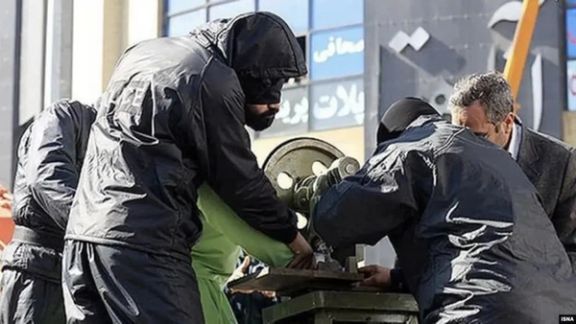
Amnesty International highlighted that authorities in the same prison amputated the fingers of two brothers in October 2024 using a guillotine device.

"Amputation constitutes torture, which is a crime under international law and is a flagrant and abhorrent assault on human dignity," said Sara Hashash, Deputy Regional Director for the Middle East and North Africa at Amnesty International. She called on Iran to immediately halt the sentences and abolish all forms of corporal punishment.

Amnesty International said that the planned amputations are based on confessions obtained under torture and followed grossly unfair trials.

The organization urged that all Iranian officials responsible for ordering or carrying out these acts be criminally investigated and prosecuted, including through universal jurisdiction.

The three men, convicted of robbery in 2019, have consistently maintained their innocence and said that their confessions were forced under torture, including beatings, flogging, and suspension by their limbs.

Despite violating Article 7 of the International Covenant on Civil and Political Rights (ICCPR), to which Iran is a state party, Iranian law prescribes that for certain types of theft, those convicted must “have four fingers of their right hand completely cut off, leaving only the palm and thumb.”

Hadi Rostami reported a broken hand, and Mehdi Shahivand alleged threats of rape. Their requests for investigations into these torture allegations were reportedly ignored by Iranian authorities, including the Supreme Court, according to Amnesty.

According to the Abdorrahman Boroumand Center, a human rights organization, Iranian authorities have issued at least 384 amputation sentences and carried out at least 223 since 1979, with the actual numbers likely higher.

Most Viewed

Ghalibaf defends Iran-US talks amid hardline backlash
1
INSIGHT

Ghalibaf defends Iran-US talks amid hardline backlash

2
INSIGHT

Iran diplomacy wobbles as factions compete to avoid looking soft on US

3
VOICES FROM IRAN

Bread shortages, soaring prices strain households in Iran, residents say

4
ANALYSIS

The politics of pink: how Iran uses cuteness to rebrand violence

5

Scam messages seek crypto for ships’ safe passage through Hormuz, firm warns

Banner
Banner

Spotlight

  • Diplomacy tolls at Hormuz as conflict returns to its doorstep
    OPINION

    Diplomacy tolls at Hormuz as conflict returns to its doorstep

  • Opposition to US talks grows in Tehran as ceasefire deadline nears
    INSIGHT

    Opposition to US talks grows in Tehran as ceasefire deadline nears

  • Tehran moderates see ‘no deal–no war’ limbo as worst outcome
    INSIGHT

    Tehran moderates see ‘no deal–no war’ limbo as worst outcome

  • The future has been switched off here
    TEHRAN INSIDER

    The future has been switched off here

  • Lights out, then gunfire: Witnesses recount Mashhad protest crackdown
    VOICES FROM IRAN

    Lights out, then gunfire: Witnesses recount Mashhad protest crackdown

  • Is Iran entering its Gorbachev moment?
    INSIGHT

    Is Iran entering its Gorbachev moment?

•
•
•

More Stories

UN Rights Council extends Iran probe despite Tehran’s protest

Apr 4, 2025, 10:22 GMT+1

The UN Human Rights Council on Thursday condemned Iran's systematic human rights abuses and extended the mandates of its special rapporteur and the independent international fact-finding mission for another year.

The resolution, submitted by Iceland, Germany, North Macedonia, the Republic of Moldova, and the United Kingdom, passed with 24 votes in favor, 8 against, and 15 abstentions at the end of the council's 58th annual session in Geneva.

The council said in the resolution that it is alarmed by the widespread violations of civil, political, economic, social and cultural rights in Iran, particularly the severe repression of women, ethnic and religious minorities, and the continuing increase in executions.

The resolution condemned Iran’s use of the death penalty to spread fear and silence political dissent. It warned that handing down death sentences for offenses that don’t meet the international standard of “most serious crimes” is a clear violation of global legal norms. Under international law, the death penalty should be reserved only for crimes involving intentional killing.

The council also highlighted the systematic suppression of freedom of expression and assembly, the harassment of journalists, the restrictions on human rights defenders and civil activists, and what it called "the multifaceted violence and discrimination against minorities" as key examples of ongoing human rights violations in Iran.

The resolution extends the mandate of the special rapporteur on human rights in Iran for another year, tasking the role with continuously monitoring the human rights situation, gathering credible documentation of violations, and assessing Iran's progress in implementing previous recommendations.

The special rapporteur is required to present two periodic reports, one to the Human Rights Council and another to the UN General Assembly. The resolution urged Iranian authorities to provide the necessary cooperation and full access for on-site investigations within Iran.

Additionally, the mandate of the Independent International Fact-Finding Mission on Iran, initially established following the nationwide protests in 2022-2023, was also extended for a year.

The mission is mandated to collect and systematically preserve documentation, evidence, and reports related to the suppression of protests, including gender and ethnicity-based discrimination, excessive use of force, and widespread violations of protesters' rights. The goal is to prepare evidence for any future independent legal proceedings to ensure accountability for responsible individuals and entities.

The resolution urged Iran to end systemic impunity by reforming its constitution, criminal laws, and its Judiciary to break the cycle of violence and repression. It called for the repeal or overhaul of compulsory hijab laws and the elimination of discrimination against women and minorities.

The council also demanded fair trials, ensuring that courts operate independently under qualified judges.

It further called for lifting restrictions on civil society, journalists, human rights defenders, and labor activists, safeguarding internet access and peaceful assembly, and releasing all individuals jailed for peaceful activities.

Lastly, the resolution pressed Iran to grant entry and access to the UN special rapporteur and the international fact-finding mission, in line with Iran’s formal invitation to UN human rights bodies.

The Iranian government, which dismisses all accusations regarding human rights violations, has not permitted UN special rapporteurs on human rights to visit the country and conduct investigations.

Iran's ambassador and permanent representative to the UN in Geneva, Ali Bahreini, strongly criticized the adoption of the resolution, labeling it a discriminatory act that undermines the council's credibility.

He argued that the resolution wastes the council's resources and diminishes trust in its work, urging a focus on the situation in Gaza instead.

Amnesty International welcomed the extension and broadening of the Fact-Finding Mission's mandate as a "critical, long-awaited response to the persistent demands for justice from survivors, victims' families and human rights defenders in Iran and in exile."

The organization said that by no longer being limited to the 2022 "Woman Life Freedom" protests, the mission can now investigate other recent or ongoing serious human rights violations and crimes under international law.

The UN's decision follows reports by the fact-finding mission documenting widespread human rights violations, including torture and sexual violence in prisons, which they said constitute crimes against humanity.
Senior Iranian ‘death committee’ judge dies

Apr 3, 2025, 13:43 GMT+1

A high-ranking Iranian judge and member of the so-called Death Committee which oversaw the execution of thousands of dissidents in the late 1980s, has died.

The head or Iran's judiciary issued a condolence message on Thursday saying Hossein Ali Nayeri had been bedridden due to a lengthy illness, attributing the sickness to his years of work.

"Certainly, this ailment was due to many years of service to the holy system of the Islamic Republic of Iran and the judiciary," Gholamhossein Mohseni Ejei was quoted as saying by the judiciary's Mizan news agency.

Nayeri's death comes after a court employee in January shot dead two veteran Supreme Court judges, Mohammad Moghiseh and AliRazini, before killing himself. Initial news reports at the time mentioned a third judge being injured but officials said an injured bodyguard was the only other victim.

Born in 1956, Hossein Ali Nayeri served as the religious judge of Tehran's Evin Prison from 1983 to 1989 and was appointed by the founder of the Islamic Republic Ruhollah Khomeini.

During this period authorities routinely executed political prisoners. Nayeri was a key member of a judicial panel - later known as the "Death Committee" - which condemned thousands of prisoners to death in the summer of 1988.

Following his tenure at Evin Prison, Nayeri served as the Deputy Chief Justice of the Supreme Court from 1989 to 2013 and as the head of the Judges Disciplinary Court from 2013 to 2022.

On Wednesday, a hacktivist group said the Iranian police intelligence agency has issued thousands of gun permits to senior state officials to fend off assassination.

Imprisonment of Christians jumps sixfold as state cracks down on converts

Apr 2, 2025, 09:45 GMT+1

Persecution of Christian converts in Iran has surged sixfold in the past year, with the Center for Human Rights in Iran (CHRI) reporting violent arrests, interrogations, lengthy prison terms, and mistreatment.

Over 300 have been prosecuted in Tehran alone, with nearly 100 more sentenced to lengthy prison terms for simply practicing the faith.

“The Christian community in Iran is facing a crisis. The Iranian authorities are abducting growing numbers of Christians and throwing absurd national security charges at them in order to imprison them for years for doing nothing other than peacefully practicing their faith,” said Hadi Ghaemi, the executive director of CHRI.

While Iran recognizes the three Abrahamic religions, Islam, Christianity and Judaism, conversion out of Islam is deemed a crime equivalent to treason, which can even lead to execution.

Last year, CHRI quotes the Article 18 organization as saying the authorities handed down a total of 263 years in prison to 96 Christians, up from 43.5 years for 22 people in 2023, the arrests carried out by Iran's Revolutionary Guards (IRGC) intelligence agents.

The rights group said the courts typically used a loophole in Article 500 of Iran's Penal Code of 2021 to push the heavy sentences through, since the law stipulates heavy punishments for anyone who commits “any deviant educational or proselytizing activity that contradicts or interferes with the sacred law of Islam”.

Ghaemi added, “The persecution of Christians in Iran is part of the Islamic Republic’s assault on civil liberties, religious freedom, and minority communities, and it reflects the regime’s reliance on fear and repression to maintain control.”

The UN Special Rapporteur on human rights in Iran, Mai Sato, recently called the matter of the persecution of Christians in the country a matter of serious concern that requires immediate attention.

Sato addressed Article18’s joint side event at the UN in Geneva in late January, calling it a “timely opportunity” to assess the reality faced by Christian communities in Iran.

In its 2023/4 annual report on Iran, Amnesty International said religious persecution was rife.

"Religious minorities, including Baha’is, Christians, Gonabadi Dervishes, Jews, Sunni Muslims and Yaresan, suffered discrimination in law and practice, including in access to education, employment, child adoption, political office and places of worship. Hundreds were subjected to arbitrary detention, unjust prosecution, and torture and other ill-treatment for professing or practising their faith."

Highlighting the dangers of conversion, the report added, "People born to parents classified as Muslim by the authorities risked arbitrary detention, torture or the death penalty for “apostasy” if they adopted other religions or atheism."

Iran executed 58 people in March, rights group says

Apr 1, 2025, 09:48 GMT+1

Iran executed at least 58 prisoners in March, a significant rise from the previous year’s tally for the same month, according to the Norway-based rights group Hengaw.

The executions represent a sharp increase of at least 222% compared to March 2024, when only 18 executions were recorded.

Hengaw said it confirmed the identities of all 58 prisoners executed last month, adding that at least four of them were women, three of whom were convicted of murder, while one faced charges related to drug offenses.

Hengaw said that four of the executions were particularly alarming, carried out without prior notice to the prisoners' families, and the individuals not granted final visits before being put to death.

A majority of the executions were related to drug offenses, which accounted for 52% of the cases, in breach of international law. The rest were primarily linked to premeditated murder charges, accounting for 48% of the total executions, according to Hengaw's report.

Last month, the United Nations special rapporteur on human rights in Iran, Mai Sato, warned that the Islamic Republic is increasing its use of executions as a tool to suppress dissent as she presented her first report to the UN Human Rights Council in Geneva.

Sato warned of Iran's increasing use of executions to suppress dissent, with at least 169 executions recorded in January and February alone this year.

"Should this alarming rate remain consistent, the total number of executions could exceed 1,000 this year, a chilling threshold that demands a collective global response,” Sato said.

Iran executed 901 people in 2024, including 31 women, according to the United Nations human rights office.

Australian ambassador targeted in assassination plot in Iran - SBS

Mar 27, 2025, 17:04 GMT+0

Australia's former ambassador to Iran was the target of an assassination plot in 2019 in Tehran, the Australian news outlet SBS reported citing leaked Iranian judicial documents.

The plot, which had not previously been reported, did not appear to involve the Iranian state in any way despite its fraught relationship with US-allied countries.

An Iranian man whom SBS News identified as Kamran - a pseudonym used for privacy reasons - attacked the Australian embassy in Tehran with a Molotov cocktail and later followed the ambassador Ian Biggs with the intent to kill him.

Kamran was arrested before carrying out the attack and was later jailed for 17 months although he was released on parole in 2020, the report said.

The leaked documents, provided to SBS by the Iranian hacktivist group Edaalate Ali, come from a cache of over three million files detailing cases tried in Tehran's Revolutionary Court between 2008 and 2023.

Among these included documents relating to the plot against Biggs, revealing that Kamran’s actions began with setting off a firecracker, followed by throwing two Molotov cocktails and then attempting to purchase a handgun with the intent to murder the ambassador, the report added.

According to the documents cited by SBS, Kamran was charged with “collusion and conspiracy with the intent to act against national security through a plot to commit an act of terror and murder Australia's Ambassador.” While Kamran hired two accomplices, the report said they were later released due to insufficient evidence.

Assailant’s sentence and release

Despite the severity of the charges, Kamran’s sentence was reduced from six years to under four years after he requested a pardon, the report said. However, the decision to reduce the sentence was later withdrawn. Kamran was ultimately paroled after serving just under 18 months in 2020, the report added.

While Kamran’s motivations are not fully clear, the report said he claimed personal grievances related to his time in Australia, including allegations of sexual harassment and financial struggles.

Biggs served as Australia's ambassador to Iran from May 2016 until 2019. During this period, the relationship between Australia and Iran was affected by the Joint Comprehensive Plan of Action (JCPOA), the 2015 nuclear deal aimed at limiting Iran's nuclear program in exchange for sanctions relief.

According to the report, Biggs publicly backed the nuclear deal, and Australia’s position on the deal was aligned with much of the international community at the time.

In May 2023, Biggs assumed the role of Australia's Ambassador to Austria. He also took on responsibilities as Australia's Resident Representative and Governor on the IAEA Board of Governors, Permanent Representative to the United Nations in Vienna, and to the Comprehensive Nuclear-Test-Ban Treaty Organization (CTBTO) Preparatory Commission.

The Australian government, including the Department of Foreign Affairs and Trade (DFAT) and the Australian Federal Police, declined to comment on the incident, the report said.