Senior commander hints at nuclear weaponisation if Iran attacked
A senior commander in Iran’s Revolutionary Guard has warned that Tehran could rethink its defense policy if the country's nuclear sites are hit, in yet another signal by Iranian officials that an atomic bomb could be pursued.
“If threats against our nuclear program materialize, we will reconsider our defense doctrine and the nature of our nuclear program. The meaning of this reconsideration is very clear” the IRGC’s deputy for political affairs Yadollah Javani was quoted by state media on Wednesday.
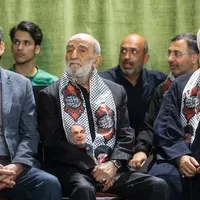
Brigadier General Yadollah Javani, the deputy political commander of the Revolutionary Guards
"The enemy's military action would take Iran's nuclear industry to a new stage, and then there must be a new definition for the Islamic Republic and the axis of resistance in regional and international equations," Javani added, referring to Tehran's armed allies in the region.
"The effects and consequences of Iran's strong counterattack will definitely create a new chapter in the equations and trends of developments in the region and the world."
US secretary of treasury Scott Bessent has asked some of the world’s biggest banks to help Washington in enforcing Iran-related sanctions aimed at cutting Tehran's oil revenue, Bloomberg reported Wednesday citing a transcribe of Bessent's remarks that it said has obtained.
"Our strategy is clear: we will apply economic pressure to the maximum extent possible to disrupt the Iranian regime’s access to the financial resources that fuel its destabilizing activities,” Bloomberg quoted Bessent as saying.
“This includes the billions of dollars each year that Iran generates via its oil sales.”
The leader of an Iran-aligned militia in Iraq warned that a conflict between Tehran and Washington could engulf the Middle East.
"Any war that might break out between Iran and the United States would not be limited to the two parties to the conflict, but would drag the entire region into the fire." Hadi Al-Amiri, the leader of the military and political group the Badr Organization said according to Iraqi state media.
"Any war against Iran will not be a picnic; rather, it will ignite the entire region," he added.
Joe Wilson, a US lawmaker from South Carolina, said on Wednesday that Tehran controls Baghdad citing remarks he attributed to Al-Amiri.
France’s foreign minister Jean-Noël Barrot said military confrontation with Iran is almost inevitable if a deal is not reached, hours after a rare defense cabinet meeting over Iran in Paris.
"We only have a few months until the expiration of this (2015) accord," he told a parliamentary hearing referring to the now-defunct Joint Comprehensive Plan of Action (JCPOA) from which US president Donald Trump withdrew during his first term.
"In case of failure, a military confrontation would seem to be almost inevitable," Barrot said, adding that new EU sanctions on Iran linked to the detention of foreign citizens would be approved in the coming weeks.
Bodyguards form Iran's elite 'protection unit' seen in a drill (Undated)
The Iranian police intelligence agency has issued thousands of gun permits to senior state officials in what a hacktivist group described as an unprecedented response to fear of internal reprisals.
Edalaat-e Ali, a group that has previously leaked surveillance footage and official documents, said the Law Enforcement Command of the Islamic Republic authorized the distribution of over 3,000 pistols to senior government officials.
The weapons, including stun guns and pepper spray, were issued following a clearance process involving three levels of vetting.
"This extraordinary move reveals the extent to which Iran’s leadership anticipates retaliatory action from its own citizens," Edalaat-e Ali wrote on X, saying the measure stemmed from fears that officials would be identified in future uprisings.
The group’s report could not be immediately verified by Iran International, but Iran has seen mounting tensions over economic hardship, water scarcity and political repression in recent months.
According to security sources cited by Edaalat-e Ali, personnel within the Islamic Revolutionary Guard Corps and the Intelligence Ministry had already received similar equipment for years.
The report surfaced shortly after farmers in central Iran torched a water transfer station in Isfahan province, disrupting supply to Yazd, amid a long-running dispute over access to the Zayandeh Rud river.
In January, two Supreme Court judges and clerics Mohammad Moghiseh and Ali Razini, both were shot dead in Tehran in a rare deadly attack on senior officials.
The assailant, a staff member responsible for refreshments at Iran's judiciary headquarters, committed suicide after the shooting. The judges were stalwart ideologues who had handed down harsh sentences on dissidents for decades.
“If the enemies think they can instigate sedition within the country, the Iranian nation itself will respond,” said Supreme Leader Ali Khamenei on Monday.
Security directives have tightened nationwide, particularly at police stations and military facilities, according to the hacktivist group.
Edalaat-e Ali added that daily visitor numbers are now capped and ammunition stores reduced, citing fears that weapons could fall into civilian hands in case of a takeover.
The Iranian government’s response to public dissatisfaction has largely been marked by repression, including what happened in the wake of the death of Mahsa Amini in police custody in September 2022.
The tragedy triggered widespread protests across the country under the slogan “Woman, Life, Freedom".
What began as outrage over Amini’s death rapidly transformed into a broader movement against the government, driven by long-standing political and social grievances. Authorities responded with mass arrests and a forceful crackdown, leading to over 500 deaths among demonstrators, according to rights groups and the United Nations.
Despite the efforts to silence dissent, the likelihood of future unrest remains high, not least as at least one third of the country now lives below the poverty line.
Years of economic mismanagement, widespread corruption, and the weight of international sanctions have deepened crises like fuel shortages and power outages, compounding public anger.
The government’s reluctance to raise fuel prices—mindful of the deadly 2019 protests—highlights its recognition of the growing risk of renewed demonstrations.