Threats to strike Iran's nuclear sites 'unacceptable', Russia says
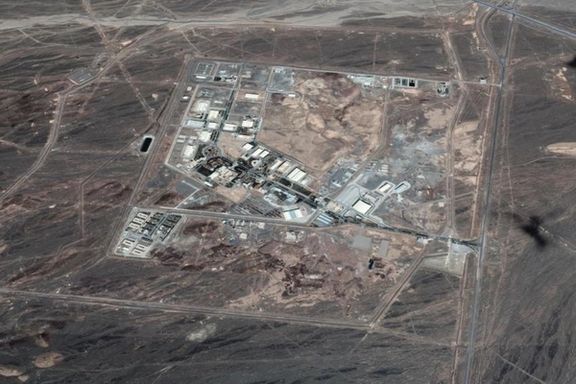
An aerial image of Iran's nuclear facility in Natanz, near Isfahan
Moscow deems 'illegal' the threats against Iran's nuclear infrastructure, Reuters said on Wednesday citing the Russian foreign ministry.
The report follows a discussion between the deputy foreign ministers of Russia and Iran, Sergei Ryabkov and Majid Takht Ravanchi on Wednesday in which the sides accused Western countries of "artificially and unreasonably" inflaming tensions over Tehran's nuclear program.
Using military force against Iran and threatening to strike its nuclear infrastructure would be "illegal and unacceptable," the Russian foreign ministry said, as they would cause "large-scale and irreversible radiological and humanitarian consequences" for the Middle East and the world.
A satellite image of nuclear site in Natanz in central Iran
Moscow has rejected as illegal US threats against Iran's nuclear infrastructure, the Russian foreign ministry said on Wednesday, as tensions between Washington and Tehran have ramped up in recent weeks.
The remarks follow a discussion between the deputy foreign ministers of Russia and Iran Sergei Ryabkov and Iranian deputy foreign minister Majid Takht Ravanchi on Wednesday in which the two sides accused Western countries of "artificially and unreasonably" inflaming tensions over Tehran's nuclear program.
Using military force against Iran and threatening to strike its nuclear infrastructure would be "illegal and unacceptable," the Russian foreign ministry said according to Reuters, as they would cause "large-scale and irreversible radiological and humanitarian consequences" for the Middle East and the world.
US president Donald Trump has repeatedly expressed his preference for a nuclear deal with Iran but warned that a failure to reach one within a timeframe he has set could lead to military action.
Tehran has rejected direct negotiations with the Trump administration and has suggested indirect talks via Oman.
A day earlier, Ryabkov warned against a US strike on Iran and expressed optimism that the stand-off could be resolved diplomatically.
"There is still time, and the 'train has not left the station' yet. We must intensify efforts to reach a reasonable agreement," Ryabkov said in an interview with Russian journal International Affairs.
"Russia is ready to offer its services to Washington, Tehran and all parties interested in resolving this issue," he added.
Kremlin spokesman Dmitry Peskov also said last month that Russian President Vladimir Putin had agreed to mediate nuclear talks between Washington and Tehran.
The US Treasury Department sanctioned an Iranian citizen based in Turkey accused of laundering millions of dollars in support of Yemen’s Houthi rebels, as Washington intensifies efforts to disrupt financial networks backing the Iran-aligned group.
Hassan Jafari allegedly funnelled funds through a network linked to a senior Houthi financial official who was also sanctioned on Wednesday, according to a statement by the US treasury's Office of Foreign Assets Control (OFAC).
"Turkiye-based Iranian money launderer Hassan Jafari has worked with Hushang and Sa’id al-Jamal to launder dollars on behalf of Sa’id al-Jamal’s network, enabling the network’s sanctions evasion schemes," the statement read.
"Jafari also arranged payments worth millions of dollars in support of shipments benefiting the Houthis."
The network is backed by IRGC's Quds Force, according to the US treasury, and has facilitated the purchase of commodities from Russia, including weapons, sensitive goods, and stolen Ukrainian grain, for shipment to Houthi-controlled Yemen.
A senior commander in Iran’s Revolutionary Guard has warned that Tehran could rethink its defense policy if the country's nuclear sites are hit, in yet another signal by Iranian officials that an atomic bomb could be pursued.
“If threats against our nuclear program materialize, we will reconsider our defense doctrine and the nature of our nuclear program. The meaning of this reconsideration is very clear” the IRGC’s deputy for political affairs Yadollah Javani was quoted by state media on Wednesday.
Brigadier General Yadollah Javani, the deputy political commander of the Revolutionary Guards
"The enemy's military action would take Iran's nuclear industry to a new stage, and then there must be a new definition for the Islamic Republic and the axis of resistance in regional and international equations," Javani added, referring to Tehran's armed allies in the region.
"The effects and consequences of Iran's strong counterattack will definitely create a new chapter in the equations and trends of developments in the region and the world."
US secretary of treasury Scott Bessent has asked some of the world’s biggest banks to help Washington in enforcing Iran-related sanctions aimed at cutting Tehran's oil revenue, Bloomberg reported Wednesday citing a transcribe of Bessent's remarks that it said has obtained.
"Our strategy is clear: we will apply economic pressure to the maximum extent possible to disrupt the Iranian regime’s access to the financial resources that fuel its destabilizing activities,” Bloomberg quoted Bessent as saying.
“This includes the billions of dollars each year that Iran generates via its oil sales.”
The leader of an Iran-aligned militia in Iraq warned that a conflict between Tehran and Washington could engulf the Middle East.
"Any war that might break out between Iran and the United States would not be limited to the two parties to the conflict, but would drag the entire region into the fire." Hadi Al-Amiri, the leader of the military and political group the Badr Organization said according to Iraqi state media.
"Any war against Iran will not be a picnic; rather, it will ignite the entire region," he added.
Joe Wilson, a US lawmaker from South Carolina, said on Wednesday that Tehran controls Baghdad citing remarks he attributed to Al-Amiri.