More water worry for Iran as Afghanistan builds new dam

The completion and filling of a dam in Afghanistan has raised concerns in Iran as the two neighbouring countries try to make the most of the region's limited water resources.

The completion and filling of a dam in Afghanistan has raised concerns in Iran as the two neighbouring countries try to make the most of the region's limited water resources.
The Pashdan dam is constructed on Harirud river and could significantly reduce the flow of water to Iran’s eastern province of Khorasan Razavi, where over two million residents depend on the river for drinking water.
Iran faces chronic water shortages, especially during summer. The Pashdan dam and other dams planned on the Afghan section of Harirud river will compound water challenges in Iran’s eastern provinces.
Rasoul Mirayini, a water diplomacy expert told Rouydad24 on Monday: “Although the Pashdan Dam has been filled, with robust diplomacy, the rights of the Iranian people must be secured.”
The dam was built with assistance from an Azerbaijani construction firm. It is Afghanistan’s second major dam on the Harirud in the past decade.
Officials in Kabul say the project is necessary for agriculture. Like many such dams, it would deprive downstream regions in Afghanistan, Iran, and Turkmenistan, of essential water.
The 1973 Helmand River Water Treaty guarantees Iran 820 million cubic meters of water annually, but enforcement has been inconsistent.
Iranian officials accuse Afghanistan of unilaterally disrupting water flow with dams like Kamal Khan, completed in 2021. The construction of new dams, they warn, could trigger a deeper crisis in the drought-hit region.

The Helmand River originates in the Hindu Kush mountains and flows westward into Iran, supplying water to wetlands in the Sistan region, including the Hamoun Lake. However, Iran has not consistently received its share of water.
In 1999, the Taliban completely stopped the river’s flow, exacerbating environmental and economic challenges in the region.
The dispute reflects broader challenges of water management in a region plagued by climate change, prolonged drought, and rising demand.
Afghanistan, as an upstream country, argues that its projects are essential for national development. Iran, however, views the disruptions as violations of existing agreements that threaten its eastern provinces’ water security.
The wetlands in Sistan have largely transformed into salt flats, with the once-thriving wildlife now vanished and many local villages abandoned.
In 2019, after nearly two decades of drought, water from the Helmand River reached the Sistan wetlands in southeast Iran, partially reviving the Hamoun-e Hirmand Lake, recognized as a UNESCO Biosphere Reserve.
Despite diplomatic engagements, including Iran’s hosting of Taliban delegations, the water dispute has no subsided.
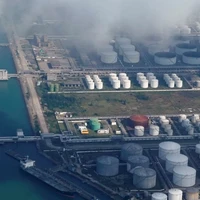
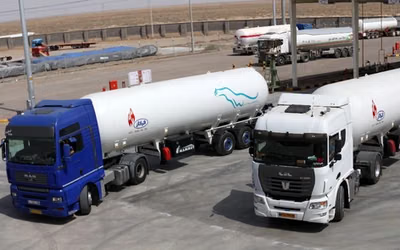
Iran is struggling with a sharp decline in oil exports to China and seeks to offload reserves stored in Chinese ports ahead of Donald Trump's return to Washington.
Data from Kpler, a commodity intelligence company that tracks oil tankers, reveals that Iran's oil exports to China have been declining since October. Over the past two months, daily oil deliveries from Iran to China have dropped below 1.3 million barrels, which is 550,000 barrels fewer than in October.
Meanwhile, Iran's unsold floating oil reserves have more than doubled during this period, reaching approximately 20 million barrels.
A source at the National Iranian Oil Company, confirming the significant decline in oil exports, told Iran International that the primary issue lies in logistics. The source explained that recent US sanctions targeting dozens of oil tankers have complicated the transport of Iranian oil to East Asian waters and its covert delivery to China: “Iran hopes to resolve this issue in the coming months by purchasing more tankers,” the source who wished to remain anonymous added.
So far, 380 tankers carrying sanctioned Iranian oil have been identified, with half added to the US blacklist.

Homayoon Falakshahi, a senior Kpler analyst, emphasized the challenges created by recent US sanctions on 35 tankers involved in covertly carrying Iranian oil, noting that half of the so-called "dark fleet" of tankers have been blacklisted.
These mostly old and uninsured tankers play a critical role by turning off their automatic identification systems, transferring cargoes mid-sea to other tankers, altering documents and oil branding via intermediaries, and ultimately delivering the shipments to Chinese ports.
Falakshahi also noted that Iran's only customers in China are small independent refineries known as teapots: “These refineries, due to their low efficiency and high pollution, are under pressure from Beijing to either modernize or shut down”.
Over the past few months, at least three Chinese teapots have officially declared bankruptcy.
Iran's oil reserves in China
In addition to its floating oil reserves, Iran is grappling with challenges related to its oil stocks stored at onshore facilities in Chinese ports.
Recently, Iran International reported, citing an informed source, that the Iranian government, with mediation by the Islamic Revolutionary Guard Corps (IRGC), is attempting to sell $1 billion worth of its oil reserves stored in Dalian Port, China.
The source provided updated information on December 27, revealing that the Iranian government has also launched coordinated efforts to release oil stored in Zhoushan Port, China.
According to the source, Iranian officials have begun investing in renting foreign, non-sanctioned oil tankers to conceal Iran's involvement in these efforts:
"Iran is carrying out operations to load this oil onto these tankers and then move it out of Chinese territorial waters to transfer the cargo mid-sea to other tankers. This is being done to hide the Iranian origin of the oil and to prevent exposure of its release and sale."

It is not precisely clear how much oil Iran has stored in Chinese ports. However, the value of the Islamic Republic's oil reserves in Dalian Port is estimated to be around $1 billion, equivalent to approximately 12 million barrels.
Iran’s oil exports and floating reserves
Kpler data shows that both the loading of oil from Iranian ports and the unloading of Iranian oil at Chinese ports sharply declined during November and December.
In addition to logistical issues and the shutdown of some Chinese "teapot" refineries, Donald Trump’s return to the presidency on January 20 with his pledge to "revive the maximum pressure policy" against the Islamic Republic is another factor behind the sharp drop in Iran’s oil exports to its sole customer, China.
During Trump’s previous presidency, US sanctions imposed on Iran in 2018 reduced Iran’s daily oil exports to below 350,000 barrels in 2019. Before the sanctions, Iran was exporting 2.5 million barrels per day.
Trump’s maximum pressure policy caused Iran’s floating oil reserves to surge to 110 million barrels in 2021. This is partly because some of Iran's oil exports are, in fact, gas condensate, produced from gas fields. If Iran wants to halt condensate production, it would also need to stop gas production, which is not feasible.
At that time, a significant portion of Iran’s floating oil reserves consisted of condensates.
With the surge in Iran’s oil exports to China during Joe Biden’s presidency, Iran delivered a large portion of its floating oil reserves to Chinese refineries. By January of this year, Iran’s floating condensate reserves dropped to zero for the first time since US sanctions, and this trend has continued.
However, since September, Iran’s floating crude oil reserves have doubled due to the decline in Chinese purchases, reaching 20 million barrels. Vortexa estimates this figure to be closer to 50 million barrels.
Iran stopped delivering oil to Syria after the fall of the Bashar al-Assad. However, in the first 11 months of this year, Iran delivered an average of 56,000 barrels of oil per day to Syria.
Overview of exports in 2024
On average, Iran has loaded 1.55 million barrels of oil per day this year, marking a 17% increase compared to 2023. Approximately 94% of these shipments have been delivered to China.
The cessation of oil shipments to Syria this month and the decline in Iranian oil deliveries to China, dropping below 1.3 million barrels over the past two months, come as President Masoud Pezeshkian’s government has set an ambitious target of exporting 1.85 million barrels of oil per day in next year’s budget bill.

Business owners and employees in Tehran’s historic bazaar staged a rare strike on Sunday against runaway inflation and soaring foreign currency rates, spurring protests in other commercial hubs in the capital.
Unrest in Iran's historic heart of commerce reflects the bleak outlook of the country as it faces dire economic straits. In 1979, protests in the bazaar heralded the onset of the Islamic Revolution which toppled Iran's monarch.
The strike, which began with shoe sellers in the 15th Khordad area, quickly spread to other sectors.
Videos shared with Iran International show merchants in the bazaar chanting “Don’t be afraid, close up,” and “Brave merchants, support, support".
A fabric merchant who joined the protest cited the impact of surging raw material costs, exacerbated by the devaluation of Iran’s currency.
“With the dollar now above 810,000 rials, our expenses have skyrocketed,” the merchant said. “Many workshops have shut down, and even those still running are struggling to sell goods in such a sluggish market.”
The protests soon expanded to key commercial hubs, including Abbasabad Market and Baghe Sepahsalar, known for fabric and shoe vendors.
Hamidreza Rastgar, head of Tehran’s Chamber of Guilds, acknowledged the discontent among manufacturers.
"Producers fear that items priced at these exchange rates will simply be out of reach for most consumers,” he said.
The Iranian rial’s sharp depreciation has had ripple effects across the economy. For merchants, it has created an untenable mix of higher costs and reduced consumer demand as at least one third of Iran is now living below the poverty line.
Security forces were deployed to control the demonstrations and gatherings appeared to have subsided by the end of the day.
There were no immediate reports of violence, but the heavy presence of law enforcement forces highlighted the Islamic Republic's sensitivity to unrest in this economically vital area.
Iran's economy is in its worst state since the founding of the Islamic Republic in 1979, with US-led sanctions over its nuclear program, support for militant groups and arms transfers for Russia's war on Ukraine squeezing the country.

Fifty percent of Iran’s industrial parks have ceased operations due to power outages, according to the employers' representative in the Supreme Labor Council, as the electricity cuts further hamper the economy.
“Several power plants are out of operation, and some industries have shut down. We faced power issues in the summer, and now in winter, we are dealing with both electricity and gas shortages,” said Ali-Asghar Ahaniha in an interview with the Revolutionary Guards-affiliated Tasnim on Saturday.
The energy crisis, marked by widespread electricity shortages and gas deficits, has disrupted industries across the country. Aging infrastructure, international sanctions, and poor management have compounded the problem, leading to the shutdown of approximately 80 power plants.
During the winter, Iran faces a daily shortfall of at least 260 million cubic meters of gas, further straining the electricity supply.
Iran has vast oil and gas reserves, much of which it cannot tap due to US-led sanctions which stall investment and technology improvement.
Ahaniha highlighted the strain caused by the crisis, noting employers are under immense pressure during the year-end period due to bonuses and additional costs.
“In a year dubbed the 'Year of Production Leap,' the lifeline of production and industry must be preserved. When the wheels of industry turn, employment and people's income flourish,” he said, criticizing the ministry of energy for prioritizing residential consumption over industrial needs.
The crisis has caused significant losses in industrial regions, where power cuts have resulted in damages amounting to hundreds of billions of rials. Ahaniha also criticized recent electricity and gas price hikes, arguing that industries have filed complaints against the ministry of energy, saying the increases were unlawful.
Iran’s electricity shortage was estimated at 14,000 megawatts during the summer. Heavy state subsidies have encouraged inefficient energy consumption, while geopolitical tensions and sanctions have hindered infrastructure investments.

Iranian government politicians and clerics scrambled on Friday to counter mounting public disdain for their international and domestic setbacks, reaching for outlandish explanations and blasting critics.
President Masoud Pezeshkian announced in a meeting on Friday that the worst is over in electricity and gas shortages which have plagued the country for over a month.
“Forecasts indicated that the state of the network could have been much worse than it is today," Pezeshkian reassured the public, saying the power grid was now stable
But ordinary Iranians routinely plunged in the dark have seen no improvement.
Yet another power plant near the capital stopped producing electricity on Friday due to shortage of diesel fuel, which has largely replaced dwindling natural gas supplies during the high demand cold season.
Gas production, Iranian media reported is down by up to a third even as Iran holds the world’s second largest reserves. Diesel supplies too are limited.
Iran’s largest natural gas reserves are in the Persian Gulf, in a field shared with Qatar which is a successful producer.
However, the natural pressure of the gas field has been declining in the last four years and Iran does not have the necessary technology to adequately tap its economic crown jewel.
Western technology and financial sanctions in place and lack of money for investment make it unlikely that they ever will.
At the same time, the Iranian currency stood at a historic low against major currencies, with the US dollar trading well-above 800,000 rials late on Friday. The battered currency has lost one-third of its value since early September.
Since the ouster of its lifelong ally in Syria’s Assad dynasty earlier this month, the Islamic Republic has found itself on the backfoot not only at the domestic front with the energy crisis, but also in foreign policy.
Several politicians and high-level officials on Friday either tried to sound the alarm or blame internal and external enemies for the existing state of affairs.
“Today is a day for national unity and cohesion. Enemies have surrounded us from all sides, yet we fear nothing, for this is the trait of God's supporters," Chairman of the Expediency Council Ayatollah Sadeq Amoli Larijani said in a public gathering.
"Wise strategy and divine virtue dictate that we preserve divine values. Let us avoid words that lead to division.”
Mohammad-Hossein Safavi, a Friday Prayer Imam in northern Iran, lashed out at Jews and Israel as the root cause of the Islamic Republic's troubles.
“According to God's words in the Quran, the Jews are the most hostile beings and exert all their efforts to infiltrate Islamic societies,” he told his congregation.
Opponents of the Islamic Republic on social media are trying to divine when it will fall, similar to Bashar al-Assad in Syria.
Some give it just weeks, while others say it will not survive until the end of 2025. Their dire domestic situation and regional defeats are not lost on officials and clerics, who try to show strength or blame enemies.

Nearly 150 welders at Tehran Refinery have been fired, and 15 representatives of oil contract workers face dismissal for protesting unpaid wages and demanding better conditions as the government continues to quash dissent.
The 150 workers were fired following demonstrations at the Tehran Refinery when workers protested four months of unpaid wages.
A source speaking to Iran International said they have now been blacklisted by the refinery, barring them from any future employment there.
The Ministry of Intelligence has reportedly pressured the welders, demanding they identify individuals who shared footage of the strike with the media, the source added.
Additionally, Etemad newspaper reported that 15 representatives of third-party contract workers in Iran's oil industry are also facing dismissal for advocating for improved wages and benefits for the estimated 120,000 workers they represent.
The representatives were referred to the supervisory body and have since been summoned for questioning. Two have already been formally dismissed, five are awaiting dismissal orders, and eight others are awaiting summons.
The contract workers have been demanding wage standardization and benefits comparable to employed workers, including shopping vouchers, loans, and access to recreational facilities, since 2022.
Thousands of them held multiple protests in 2022 and 2023 leading to summons and interrogations but failing to achieve any significant changes in their working conditions.
In November, they sent a letter to the National Iranian Drilling Company (NIDC) management and provincial officials, detailing what they called insulting treatment and requests for unjustified commitments by security personnel in response to their protests.
The workers' representatives told Etemad that the Ministry of Oil has not provided any legal justification for criminalizing the protests.
While dismissals of protesting workers began under former President Ebrahim Raisi, the latest dismissal order was issued under President Masoud Pezeshkian, shortly after a new secretary was appointed to the selection board.
The suppression of labor protests in some private and contracting workshops has been a trend since the 2010s, intensifying in the early 2020s.
Since the uprising of 2022, the government has become even more tough in its reactions to protests, with laborers across a variety of sectors facing dismissal or even legal action for industrial action.
Workers have faced various repercussions including layoffs, wage cuts, restrictions on leave and overtime, fabricated legal cases, prosecution for disturbing public order, demotions, and workplace bans.